

Recently accusations of bullying have been made by members of Opera Australia. The details are reported in Limelight, but the newspaper article by Nathaneal Cooper is more illustrative of the general workplace mental health challenges of those in the performing arts. Performers are one of the most visible and fragile sectors of insecure and precarious work. Solutions to hazards and clues to strategic improvements might be more evident and practical if the bullying was assessed through the prism (and legislative obligations) of occupational health and safety (OHS) and insecure work.
Category: health

HR inching its way to an OHS epiphany
A new Human Resources (HR) article shows some promise in addressing the institutional factors that lead to poor mental health in workers.
The website for Human Resources Director asks, “Should HR be concerned about employee economic insecurity?” I would ask, “how can it not be?” given that Australian research over the last twenty years and international research since early last century has identified that job insecurity is one of several major factors in poor mental health for workers and other occupational health and safety (OHS) outcomes. HR should also be anticipating a renewed duty of care from the upcoming national OHS regulations on psychologically healthy workplaces.
Confrontation with PM involves workers’ compensation
Last week Australian media covered a confrontation between Prime Minister Scott Morrison and a pensioner, Ray, in Newcastle. Most of the coverage focused on Ray’s criticism of the commitments of the Morrison Government to support and reward those citizens willing to “have go”. The full 5-minute video provides a much better context to the man’s complaints than do the short edits on most media bulletins. That context seems to include concerns about workers’ compensation and the processes of the Dust and Diseases Board.
Should heartlessness be the status quo?
On April 7, 2022, prominent trade unionist Luke Hilakari had an opinion piece published in The Age newspaper titled “Paul was told he has arthritis. His workplace injury was far more serious”. Hilakari told a story, familiar to many, of one man’s journey from workplace injury to impecunious hardship.
The story is tough to read and full of injustices, but the political point of the article is lost. The Victorian Government has been provided with a report that could reduce the bureaucratic and surveillance challenges faced by Paul, but the system itself will not change.

Why don’t we act on the evidence?
Several years ago, I worked for an organisation that handed out awards for exceptional efforts and achievements. One time the award was given to a worker who had worked in the office for most of the weekend to meet a semi-important deadline. I was horrified as that worker had sacrificed important “downtime” with family friends and his own welfare with no time in lieu. But he was lauded by the boss.
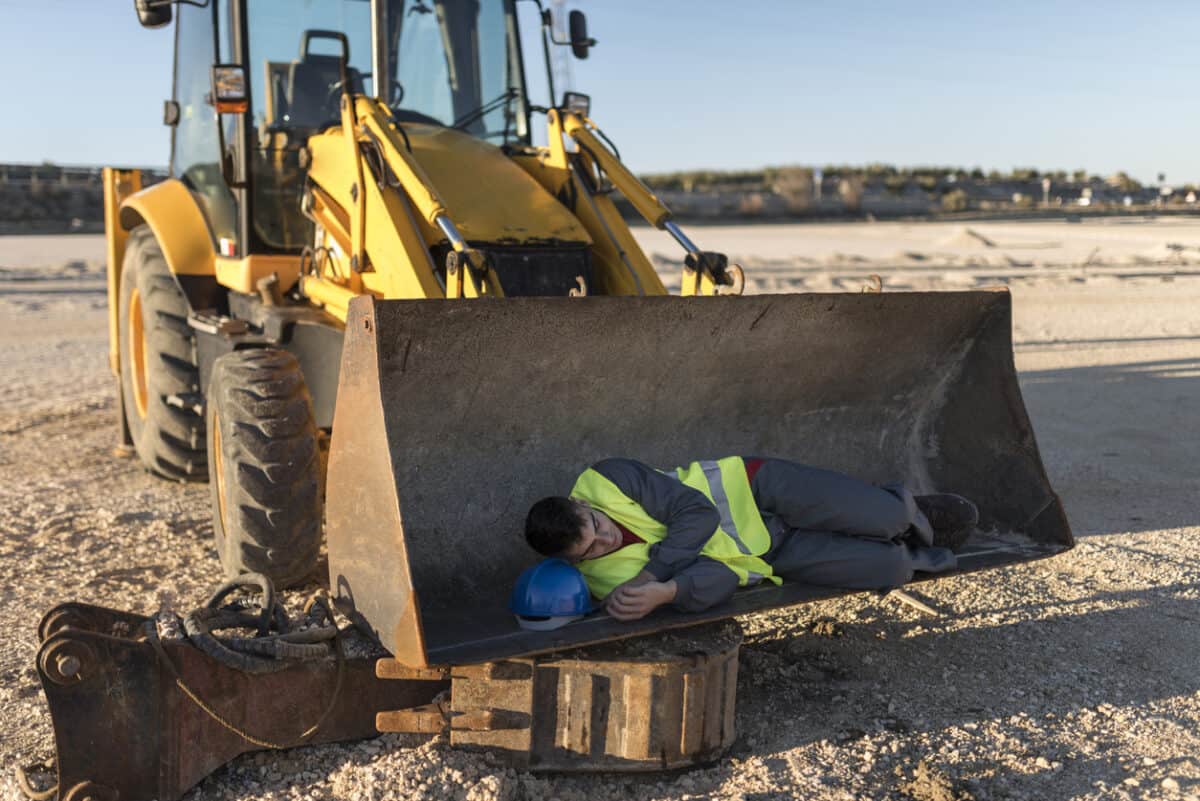
Rewarding those who sacrifice their own health and safety for the apparent good of the company must change as there is increasing evidence that working long hours increases serious health risks. An extensive research project for the World Health Organisation has found:
We need a revolution in how we think about working hours
If there was only one way available to improve the health and safety of workers in Australia, it would be to limit and enforce working hours to those in the official Awards and job descriptions.
This situation which would really be simply a case of working-to-rule, would need to be supported by other not unreasonable changes, in no particular order:

Why bother with the Federal Government on OHS matters?
Australian political debate has a recurring thread of State and Federal responsibility. Currently, this debate focuses on the emergency response for floods in Queensland and New South Wales. Before this was the COVID response and the Black Summer bushfires. This argument over responsibility has trickled along for many years, for Constitutional and other reasons, including occupational health and safety (OHS).
Some years ago, all the Australian governments had a stab at resolving the split without reforming the Constitution through the OHS harmonisation strategy. It tweaked the system without Constitutional reform, but OHS will remain primarily a State and Territory matter (except for Comcare). This allows Prime Minister Scott Morrison to make bold statements (and some not-so-bold) about national problems like sexual harassment in Australian workplaces or worker exploitation in agriculture, understanding that the local jurisdictions are the ones who need to fix and police the problems.