
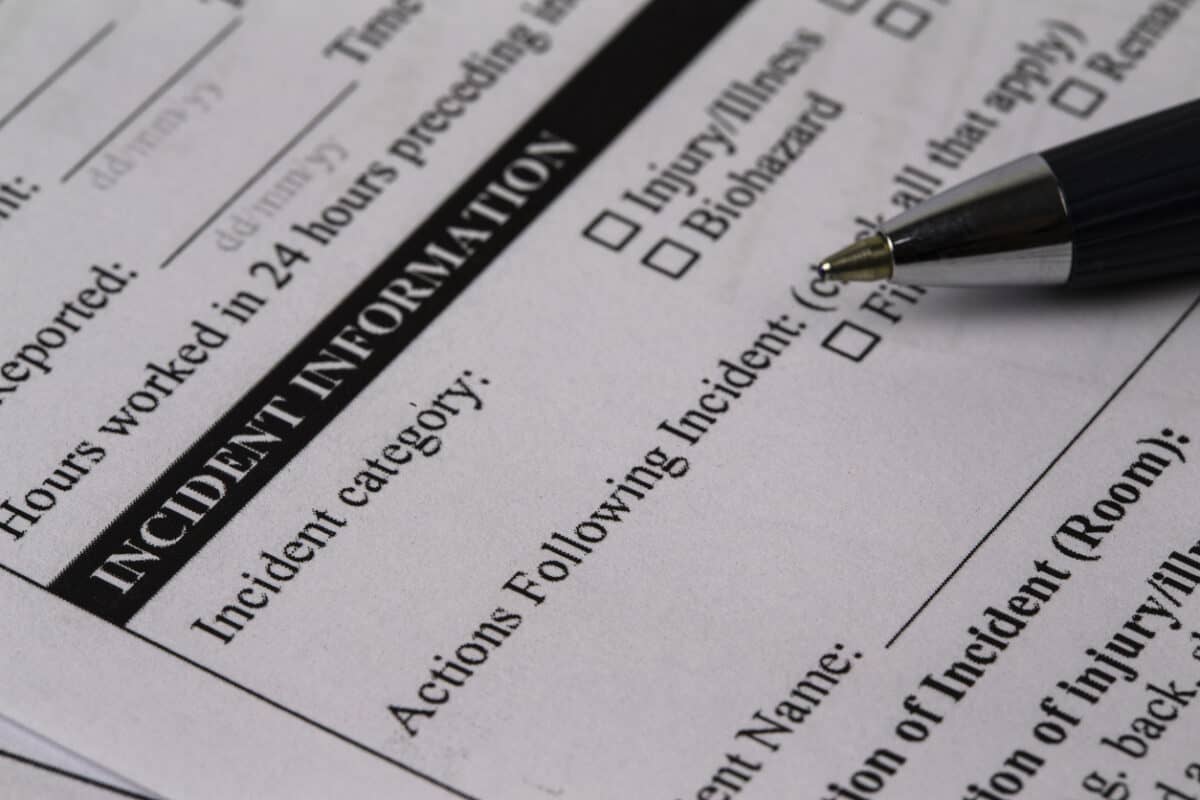
Recently the Victorian Government proposed six-monthly reports on psychologically hazardous incidents from employers to the OHS regulator, WorkSafe. The aim is to improve the pool of data available to the government in order to tailor harm prevention and reduction initiatives and a red tape campaign from employers is expected. These incident summaries are not the same as reporting a Notifiable Incident to WorkSafe but the notifiable incidents categories are overdue for a review and, maybe, an expansion.
Category: health

What does the IPCC report on climate change say about work?
Global warming will affect the way we work. This was acknowledged in the most recent report from the International Panel on Climate Change. The 3,676-page report cited several research papers related to these changes. Below is a list of those papers and comments on the abstracts, where available.
Vanos, J., D. J. Vecellio and T. Kjellstrom, 2019: Workplace heat exposure, health protection, and economic impacts: A case study in Canada. Am. J. Ind. Med., 62(12), 1024-1037, doi:10.1002/ajim.22966. https://pubmed.ncbi.nlm.nih.gov/30912193/
This abstract recommends “Providing worksite heat metrics to the employees aids in appropriate decision making and health protection.” This research adds to one’s state of knowledge but may not help with which on-the-ground decisions need to be made.
Break the (structural) bias
March 8 is International Women’s Day, one of the biggest celebratory and lobbying days of the year. The media releases and public statements have already started rolling out over the weekend. Today and tomorrow, important speeches will be made and many will focus on workplace issues, and the subset of occupational health and safety-related matters, such as job security, respect, physical safety, psychological health and equal pay.
The challenge for the audience and the speakers is whether structural change and prevention are advocated or whether the speakers are endorsing remediation, early intervention, and other strategies that apply only after harm has occurred.

On mental health, everyone wants to win
In response to the first of this series of articles on Victoria’s proposed Psychological Health regulations, one reader provided an excellent outline of one of the roads leading to the proposal. It is certainly worth looking back to the Boland Review and recommendations, but it is also worth considering some of the politics around Minister Stitt’s announcement in May 2021.
Recently WorkSafe Victoria’s Principal Psychological Health and Safety Specialist, Dr Libby Brook, was interviewed on the Psych Health and Safety Podcast. In providing background to the proposed regulations, politics was touched upon, sort of, but it was good to hear directly from a WorkSafe representative on the issue and the proposed regulations. The interview illustrated some of the strengths and weaknesses in the regulations.

What is a psychological incident?
The Regulatory Impact Statement (RIS) for Victoria’s draft Psychological Health Regulation does not seem to define what is meant by a psychosocial incident. (If I have missed it, please include a reference in the comments section below) In trying to establish a workplace mental health demographic, the RIS states that:
“As there is currently no legislative reporting requirements for psychosocial incidents, voluntary calls received by WorkSafe’s advisory service have been used as a proxy to estimate the prevalence of psychosocial incidents in the workplace.”
page 34
It is a pretty fluffy determination that the RIS accepts, further illustrating the need for additional data. The advisory service figures record 80% of psychosocial calls relate to bullying.
Continue reading “What is a psychological incident?”
Is red tape justified?
One of the interesting features of the Psychological Health regulations proposed by the Victorian Government last month is the requirement for employers to provide regular six-monthly reports on psychological incidents.
The Regulatory Impact Statement (RIS) states that:
“…the proposed regulatory amendments will require employers to keep written records of prevention plans for prescribed psychosocial hazards and impose reporting requirements on medium and large employers.”
page 9
Will workplace psychological regulations work?
Recently the Victorian Government released its proposed Occupational Health and Safety Amendment (Psychological Health) Regulations supported by a 106-page Regulatory Impact Statement (RIS) written by Deloitte Access Economics. Public consultation and submissions are welcome up to the end of March 2022.
These regulations have been promised by the Victorian Government for some time and are likely to be debated in Parliament later in this (election) year. The RIS raises substantial questions, but the Regulations stem from primarily a political decision, so those political promises need to be examined.
This is the first of a series of articles on psychological health and the proposed regulations over the next few days.