Quinlan’s time capsule includes useful OHS perspectives

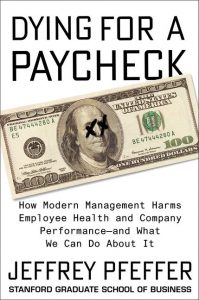
Professor Michael Quinlan has been writing about occupational health and safety (OHS) and industrial relations for several decades. His writing has matured over that time as indicated by his most recent book, Ten Pathways to Death and Disaster.  In 1980, one of his articles looked at OHS through the prisms of Capitalism and Marxism.  It is remarkable how much an article that was written early in Quinlan’s career and at a time when OHS was considered another country remains relevant today.  This perspective contrasts strongly with the current dominant thinking on OHS and as a result sounds fresh and may offer some solutions.

In Quinlan’s 1980 article, “The Profits of Death: Workers’ Health and Capitalism”*, he writes that

“contrary to popular belief there is no objective irrefutable definition of illness”.

This could equally be applied to safety.  But searching for THE definition of things can lead to everlasting colloquia of academic experts without helping those who need to work within and apply safety concepts.

Subscribe to SafetyAtWorkBlog to continue reading.
Subscribe Help
Already a member? Log in here

Insurer-led rehabilitation case management does not work

On the eve of a Return-to-Work symposium in Hobart, Alex Collie, challenged the a seminar audience, as all good speakers should.  His analysis of research data has found the following confronting information:

  • “main service delivery mechanism (case management) is ineffective at best, harmful at worst,
Subscribe to SafetyAtWorkBlog to continue reading.
Subscribe Help
Already a member? Log in here

New report provides important data on occupational health

A recent report from the UK Society of Occupational Medicine highlights several issues of note to the occupational health and safety (OHS) professional. But it is also worth looking at the SOM’s media release.

As well as offering financial costs and benefits of good occupational health management the full report also contextualises occupational health:

“The report cites a survey of 1,000 UK employers in which respondents gave their most common reasons to spend on health and wellbeing initiatives as: a motivated and healthy workforce is more productive (41%); to attract and retain staff (25%); to be perceived as a caring employer that takes duty of care requirements seriously (21%). Meanwhile, a survey of 1,000 employees found that they were more likely to choose an employer who took employee health and wellbeing seriously (66%) and would feel they have a duty to work harder for such an employer (43%). The survey results are reflective of the intangible as well as tangible benefits of occupational health.”

Continue reading “New report provides important data on occupational health”

Do open plan offices and sit/stand desks create as many problems as they solve?

The mainstream media regularly includes articles and, increasingly, advertorials, about the modern workplace, usually office buildings, that are designed to foster creativity, communication, productivity and improve physical health.  In many of these workplaces, it quickly becomes apparent that there are never enough meeting rooms for confidential discussions, making the coffee shop in the foyer or a nearby building, essential venues for conversations that would, in the past, be conducted in an office.

It also does not take long for a lot of the workers to be at their desks wearing earbuds or headphones in order to negate the noise that the modern workplace allows and creates.  This need for isolation and concentration is contrary to the intentions of the office designers.  It is not simply a reflection of the modern ipod technology but a human desire for privacy, focus, diligence and productivity.  New research  seems to indicate that the situation is not helped by sit/stand desks.

Subscribe to SafetyAtWorkBlog to continue reading.
Subscribe Help
Already a member? Log in here

Workplace mindfulness? The jury is still out

At a well-attended La Trobe University alumni seminar in May 2017, researchers discussed the reality and the hype surrounding mindfulness. They explained the varieties of mindfulness, the clinic research history over the last four decades and the personal advantages of living mindfully. However in the workplace and organisational context, they said that there was insufficient evidence to show benefits from workplace mindfulness in this “emerging area of research”.

The seminar was hosted by Latrobe University with three speakers

Many mindfulness advocates have developed programs that they claim can offer substantial benefits to workplaces by increasing productivity and reducing injury and illness, primarily, by changing the behaviours and attitudes of employees.  This individual approach is often dropped into a workplace and promoted as an organisational opportunity.  But the La Trobe researchers mentioned that this is a very recent perspective.

Subscribe to SafetyAtWorkBlog to continue reading.
Subscribe Help
Already a member? Log in here

The OHS benefits of a single lunchtime meeting

Being a member of a local safety group provides nuggets of occupational health and safety (OHS) information from speakers and members in a broad range of industries and occupations.  The May 2017 meeting of the Central Safety Group at which Wayne Richards spoke provoked several OHS thoughts about safety, leadership and culture. One was that Transdev…

Subscribe to SafetyAtWorkBlog to continue reading.
Subscribe Help
Already a member? Log in here
Concatenate Web Development
© Designed and developed by Concatenate Aust Pty Ltd