Families of the Dead speak to government

Last time we looked at the Australian Senate Inquiry into “The framework surrounding the prevention, investigation and prosecution of industrial deaths in Australia“, various submissions were considered.  The Inquiry is continuing to hold public hearings, the most recent of these provided an opportunity for relatives of deceased workers to present their arguments.  It is an enlightening insight into a pain that few of us will face but also into the struggles of many to effectively enforce workplace health and safety with, and without, Industrial Manslaughter laws.

The first couple at the 17 July 2018 hearing was Michael and Lee Garrels, the parents of 20-year-old 

Subscribe to SafetyAtWorkBlog to continue reading.
Subscribe Help
Already a member? Log in here

Michalak’s evidence should change the wellbeing and OHS industries

Dr Rebecca Michalak has only recently come to my attention, mainly through challenging some of my statements on social media.  I was able to meet her and watch her presentation at the Safety Institute of Australia’s National Health and Safety Conference in May 2018.  It is likely her voice will become heard more broadly in coming years as she challenges elements of the Establishment.

Many elements of Michalak’s conference presentation can also be heard in the Fit For Work Podcast of Sally McMahon but there were a couple of statements that were notable.

Coping Strategies

“I had a theory that it’s not either/or – it’s an “it depends” thing and what I found across all well-being outcomes, six coping strategies and two samples – that’s 48 mediations – it makes no difference and in fact, most coping strategies make well-being worse.” (emphasis added)

Subscribe to SafetyAtWorkBlog to continue reading.
Subscribe Help
Already a member? Log in here

Lessons in integrity and discipline

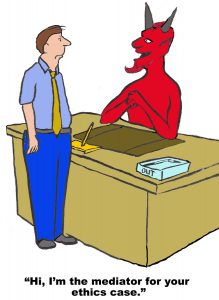
Australia’s occupational health and safety (OHS) profession was late to the process of certifying its members.  The Safety Institute of Australia (SIA) has been running its certification program for a couple of years so it is difficult to assess the benefit to members and the community but a critical element in any certification is the treatment of members who breach the Code of Ethics or Code of Conduct.  The revelations of corruption and misconduct from Australia’s Royal Commission into Misconduct in the Banking, Superannuation and Financial Services Industry provide important lessons in integrity and fairness to all professions.
Subscribe to SafetyAtWorkBlog to continue reading.
Subscribe Help
Already a member? Log in here

Duty of care needs a moral analysis

In my readings on Industrial Manslaughter, a reader recommended a book to help me understand how the world works.  I haven’t found the time to read it through because I get angry and/or depressed, but I wanted to share a suggestion that may help clarify our occupational health and safety (OHS) obligations and provide a reconsideration of the employer’s duty of care.

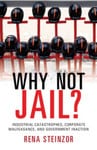
In “Why Not Jail? – Industrial Catastrophes, Corporate Malfeasance, and Government Inaction“, Rena Steinzor summarised some work by David Luban and others in a research paper called “Moral Responsibility in the Age of Bureaucracy“. Steinzor outlines five managerial duties:

Subscribe to SafetyAtWorkBlog to continue reading.
Subscribe Help
Already a member? Log in here

Flogging the banks could help safety

Australia’s Royal Commission into banking and financial services is a few months in and the evidence provided of wrongdoing is so substantial that those who were critical of the need for such an investigation are admitting they were wrong.
SafetyAtWorkBlog is applying the logic that occupational health and safety (OHS) succeeds best when it is part of the organisational culture.  Australia has often held its banking and financial services as “world-class” and many of that industry sector’s leaders have been prominent in speaking about the importance of leadership and corporate morality.

The financial and banking industry’s credibility and authority in Australia is gone and the OHS profession can learn much from this failure, even when the failure is in its early stages of exposure.

Subscribe to SafetyAtWorkBlog to continue reading.
Subscribe Help
Already a member? Log in here

First WHS Review submission released is hard work but useful

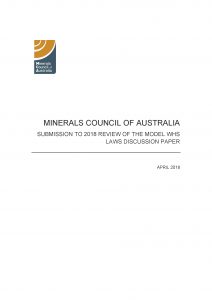
The Minerals Council of Australia (MCA) has released its submission to the Independent Review of Work Health and Safety Laws.  It is a good example of the business-speak that can erode the effectiveness of clear communication, but the submission is still revealing.  Here is an example from its Executive Summary:

“A nationally-consistent, risk-based preventative Work Health and Safety (WHS) regulatory system, supported by industry-specific regulation, would deliver benefits based on greater certainty, consistency and efficiency. It would also help to ensure that compliance challenges do not detract from the practical tasks of identifying, managing and minimising risk and the continuous improvement of safety and health outcomes by companies.” (Page 3)

So, the MCA wants national occupational health and safety (OHS) laws?

Subscribe to SafetyAtWorkBlog to continue reading.
Subscribe Help
Already a member? Log in here

iWitnessed tool holds promise for workplace safety

On April 3, 2018, the University of Sydney launched a new app

”to assist victims and witnesses record information in a way that can help with convictions and prevent miscarriages of justice”.

This immediately sparked my interest in using the app as a record of workplace incidents.

iWitnessed is intended as a tool to assist a person’s memory when confronted by an incident or a traumatic event.  The app steps you through the basic evidence-gathering questions of what happened, where, when, who was injured etc.  

Subscribe to SafetyAtWorkBlog to continue reading.
Subscribe Help
Already a member? Log in here
Concatenate Web Development
© Designed and developed by Concatenate Aust Pty Ltd