FIFO, Fairness and the Future

Trucks in Super Pit gold mine, Kalgoorlie, Western Australia

SafetyAtWorkBlog’s article about the safety of Fly-In, Fly-Out workers has generated some discussion through its mention on LinkedIn which has raised some interesting points.

A common thread seems to be that it is impractical to build townships and facilities to support remote mine workers and which also provide services to workers’ families. One commenter posed these questions:

“Are we going to drag the FIFO families out to these areas, build houses for them, along with all the associated infrastructure to support them, for what may be only a 3-5 year construction program? Is it fair to drag the partners and families of FIFO workers away from their family supports (parents/friends, etc)? Away from decent medical care? Away from schools/universities?”

This may have been intended as rhetorical but prompts a question that I frequently ask when I consult with clients – “why not?”

Subscribe to SafetyAtWorkBlog to continue reading.
Subscribe Help
Already a member? Log in here

You have to be in it to influence it

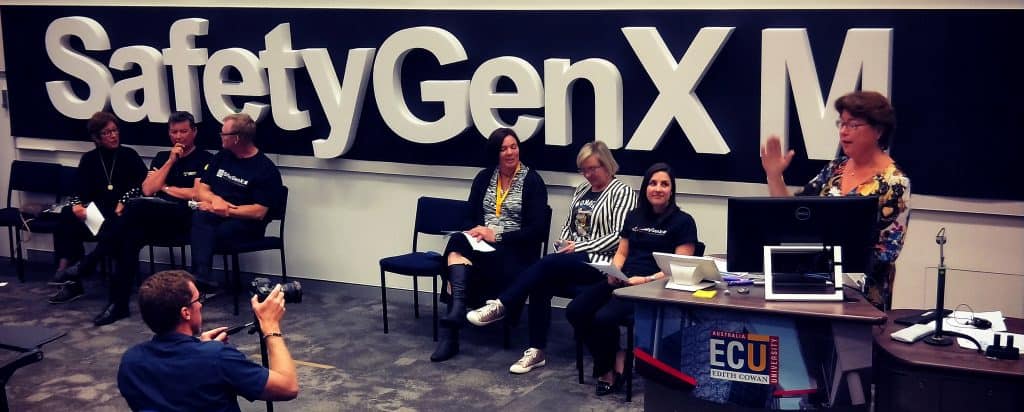
Kevin Jones with Marie Boland in March 2018

The public submission process for Australia’s Independent Review of Work Health and Safety Laws closes today.  So finish up your draft and tell the Government what is working and what is not. BUT if you cannot finish the draft, do what I did, and contribute directly to the Review using its online (Engage) portal which will remain open until the end of May 2018.

Safe Work Australia has told SafetyAtWorkBlog that the Review continues to seek: 

Subscribe to SafetyAtWorkBlog to continue reading.
Subscribe Help
Already a member? Log in here

We need to ask tougher questions about FIFO

On the recommendation of one of my subscribers I am currently listening to a podcast called Food For Thought which includes a discussion on the mental health issues associated with the Fly-In -Fly-Out (FIFO) work structure.  This article is being written as I listen to the podcast so follows the threads as spoken.

Various major Australian inquiries have been held into the occupational health and safety of FIFO workers for the mining sector. The potential psychological harm of FIFO is indisputable so why aren’t we asking the tough questions and thinking about the harm that we are allowing to occur?

Source: istockphoto

Continue reading “We need to ask tougher questions about FIFO”

OHS needs a Benchbook too

Australia’s Fair Work Commission (FWC)  has released the latest (March 2018) edition of its Anti-Bullying Benchbook.  This is a regularly published document that offers background to its decisions and definitions used by the FWC through case studies and plain-English explanations.  The Benchbook clearly states that any occupational health and safety (OHS) issues are to be directed to the relevant OHS regulator but the book provides useful insight to a more (and limited) industrial relations approach to workplace bullying.

A major attraction of the

Subscribe to SafetyAtWorkBlog to continue reading.
Subscribe Help
Already a member? Log in here

“We cannot buy the health of people with money”

Source: Melody Kemp

By Melody Kemp

Walking my dog along the Mekong in Vientiane, new piles of building rubble litter the river bank. The capital has long had a problem with plastic waste, but as unbridled wealth spreads and humble buildings are replaced by garish McMansions, building rubble is turning up in the general detritus. Among the bricks was what looked like the residue of shattered Asbestos Cement sheets; but without necessary skill and a microscope how could anyone tell?

A Vietnamese trader arrives. He rifles through the remains, takes a few of the bigger bits, tosses them in the trailer behind his bike and leaves with a nod.  Later, in the main street outside a hardware shop, a large box of mixed waste lies waiting for collection.  Laos do not separate their waste at source and while there may be provisions for hazardous waste, procedures are not observed. Out of date drugs, toxic chemicals, poohy nappies are tossed into or along the river; are burned or go into general land fill sites. Or are scavenged.

Those few minutes epitomised some of the social/behavioural difficulties of controlling hazardous materials in any of the Mekong nations.  Things are changing thanks to the efforts of ex-ILO Technical Adviser Phillip HazeltonContinue reading ““We cannot buy the health of people with money””

Sexual harassment Code developed in isolation

Screen Australia has released its sexual harassment code of conduct.  If any film project in Australia desires government funding it will need to comply with this Code.  The Code is a good starting point and will need support from a broad range of elements of the entertainment industry but this Code is indicative of problems with many such codes that see the issue as a legal one rather than a safety and cultural one.

Subscribe to SafetyAtWorkBlog to continue reading.
Subscribe Help
Already a member? Log in here

iWitnessed tool holds promise for workplace safety

On April 3, 2018, the University of Sydney launched a new app

”to assist victims and witnesses record information in a way that can help with convictions and prevent miscarriages of justice”.

This immediately sparked my interest in using the app as a record of workplace incidents.

iWitnessed is intended as a tool to assist a person’s memory when confronted by an incident or a traumatic event.  The app steps you through the basic evidence-gathering questions of what happened, where, when, who was injured etc.  

Subscribe to SafetyAtWorkBlog to continue reading.
Subscribe Help
Already a member? Log in here
Concatenate Web Development
© Designed and developed by Concatenate Aust Pty Ltd