OHS changes to come in wake of the Western Australia election result

It is rare to find an occupational health and safety (OHS) seminar that is captivating but there is almost always some useful bits of safety information, hopefully enough to make attendance worthwhile.

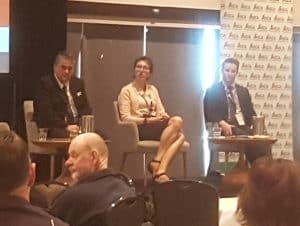
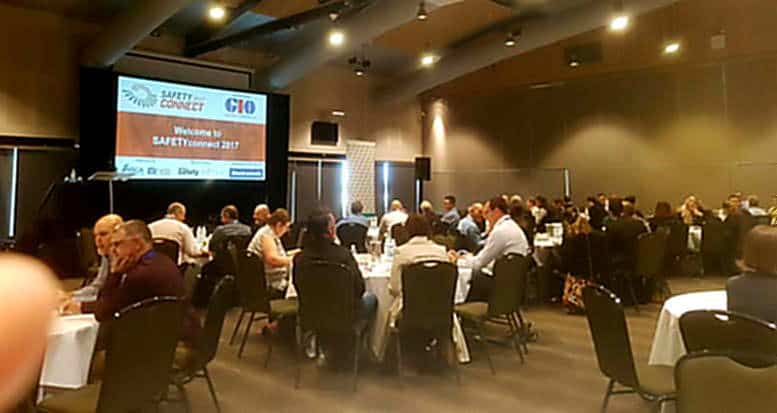
On March 24, 2017 the Safety Institute of Australia and Herbert Smith Freehills (HSF) held the annual breakfast seminar in Melbourne.  Speakers included representatives from the HSF law firm, the SIA, WorkSafe Victoria and SafeSearch.  Perhaps of most interest was HSF’s senior associate from Perth, Sam Witton (pictured), who outlined the OHS changes likely in Western Australia now the Australian Labor Party (ALP) is in power.

Subscribe to SafetyAtWorkBlog to continue reading.
Subscribe Help
Already a member? Log in here

Practicable or practical – let’s call the whole thing off

Jargon can help create a subculture.  This can be positive for those on the inside but relies on excluding others.  Occupational health and safety (OHS) is no different and one of the best illustrations of OHS jargon is “practicable”.  This was emphasised recently in a document released by WorkSafe WA where “practicable” had lost out to “practical”.

The guidance also omitted the duties of builders for the health and safety of those affected by their work.

Subscribe to SafetyAtWorkBlog to continue reading.
Subscribe Help
Already a member? Log in here

Safe Driving affected by leadership

New Australian research into work-related driving shows how organisations mishandle the risks.  The first paragraph of the research clearly shows the significance of the hazard:

“Road traffic injury is the leading cause of work-related death in Australia. It has been estimated that one-third of all work-related deaths occur while driving for work purposes.  This emerging public health issue is not unique to Australia, with work-related traffic deaths estimated to account for 22% of work fatalities in the United States and 16% in New Zealand.  Despite this, many organisations employing individuals to drive a vehicle as part of their work are unaware of the factors that may act to reduce work-related traffic injury and deaths.”

This research illustrates the need to integrate the functions of Occupational Health and Safety (OHS) professionals, Risk Managers and Fleet Managers within organisations and across government agencies to address a significant public health issues in a more effective manner.

Subscribe to SafetyAtWorkBlog to continue reading.
Subscribe Help
Already a member? Log in here

US says “nothing to see here, move along”

The United States media continues to scrutinise the Department of Labor (DoL).  On March 13 2017, The New York Times (NYT) expressed concerns about the lack of official media releases from the department, comparing the actions under a Trump administration against the Obama occupational health and safety (OHS) strategy.  Some are claiming this to be a deliberate strategy but, until the Labor Secretary is confirmed, it may simply be caution.  Such an apparently simple action can have broader effects on OHS management, as Australia learnt. Continue reading “US says “nothing to see here, move along””

Legal Professional Privilege – the snake in safety

Part of good corporate governance is transparency.  A core element of occupational health and safety (OHS) is effective consultation.  These two business practices seem compatible in that they address what is good for business and what is good for the workers.  But there is a snake in this garden of safety – Legal Professional Privilege (LPP).

Subscribe to SafetyAtWorkBlog to continue reading.
Subscribe Help
Already a member? Log in here

Evidence says don’t rely on manual handling training as it doesn’t work

Everyone knows the safe lifting techniques – keep your back straight, keep the load close to your body and bend your knees – because they have done the proper  training.  Well scrap that training!  According to new guidance from Workplace Health and Safety Queensland (WHSQ):

“The research evidence shows that providing lifting technique training is not effective in minimising the risk of injury from manual tasks.”

Subscribe to SafetyAtWorkBlog to continue reading.
Subscribe Help
Already a member? Log in here

USA joins the red tape review rollercoaster

Melania Trump plagiarised a Michelle Obama speech.  Following the signing of an Executive Order to reform regulations, perhaps President Trump could echo these words from a similarly-themed Executive Order of President Bill Clinton in 1993:

“The American people deserve a regulatory system that works for them, not against them: a regulatory system that protects and improves their health, safety, environment, and well-being and improves the performance of the economy without imposing unacceptable or unreasonable costs on society: – regulatory policies that recognize that the private sector and private markets are the best engine for economic growth: regulatory approaches that respect the role of State, local, and tribal governments; and regulations that are effective, consistent, sensible, and understandable. We do not have such a regulatory system today”

President Trump has set the United States bureaucracy a task that has already been undertaken by the

Subscribe to SafetyAtWorkBlog to continue reading.
Subscribe Help
Already a member? Log in here
Concatenate Web Development
© Designed and developed by Concatenate Aust Pty Ltd