
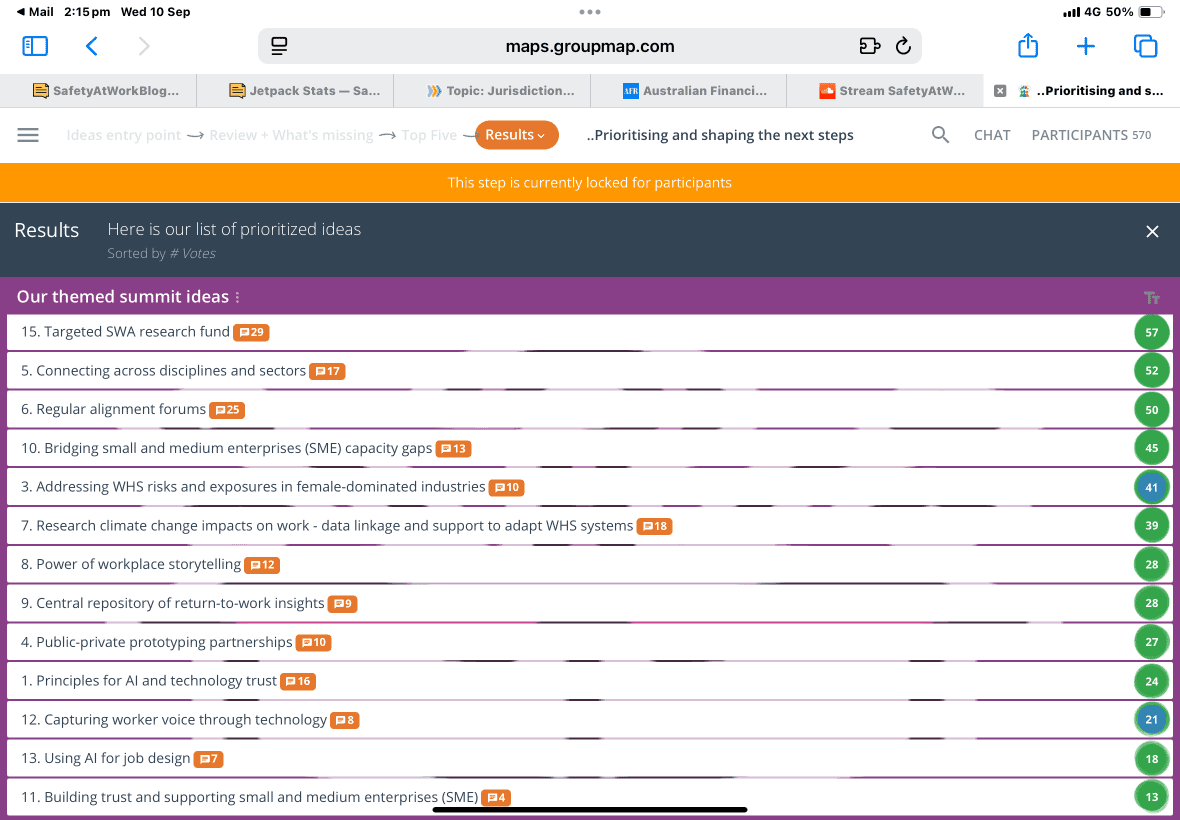
There are several ways to write about Safe Work Australia’s recent Research Summit. This is the first article and will discuss a couple of features of the summit and ask if the summit achieved its aims.
Category: state of knowledge

More OHS voices needed
A new discussion paper from Safe Work Australia (SWA) is interesting in a curious way. Its purpose is confusing, and its final report will not be presented until mid-2026. SWA offers no definition of “best practice” but suggests that consideration should start from the objective of the Model Work Health and Safety Act:
“….to ensure the model WHS laws continue to provide a balanced and nationally consistent framework to secure the health and safety of workers and workplaces.”

Artificial Intelligence, Automation and the Elusive Meaning of Work
The purpose of artificial intelligence (AI) is increasingly misunderstood—not just in the media but in the boardrooms and bureaucracies that decide how it’s deployed. Far from craving human consciousness or emotion, AI tools, like Mo (my CoPilot AI), exist to synthesise knowledge, provoke thought, and support action. The intent isn’t mimicry, but impact.
[Note: parts of this article were written by Mo based on a prior conversation]
AI is a hot topic in Australia at the moment, with numerous productivity gains being pitched to the government, alongside concerns about job losses. Last week’s National Press Club speech by Scott Farquhar, co-founder of Atlassian and Chair of the Tech Council of Australia, offered a good example of at least one AI opportunity – access to court records.
I thought talking with Mo was a good place to start this article before looking at Farquharson’s thoughts.
Good Safety Grows Economies—Poor Governance Shrinks Them
Recently, WorkSafe ACT posted the latest episode of its Safety Spotlight podcast in which occupational health and safety (OHS) experts share their knowledge. There is commonality with much OHS advice, but there are slight variations of data and emphasis that are useful to note.
This episode included Jacqui Agius, the Australian Capital Territory’s Work Health and Safety Commissioner, and Professor Helen Lingard of RMIT University. According to the show notes:
“….they discuss the crucial importance of workplace safety, not just in preventing injuries but also its economic impact. The episode covers the hidden costs of cutting corners on safety, the significance of a proactive safety culture, and the benefits of consulting workers and employing safety by design.”
Reform or Reframe? NSW’s WHS Laws Tackle Liability, Not Prevention
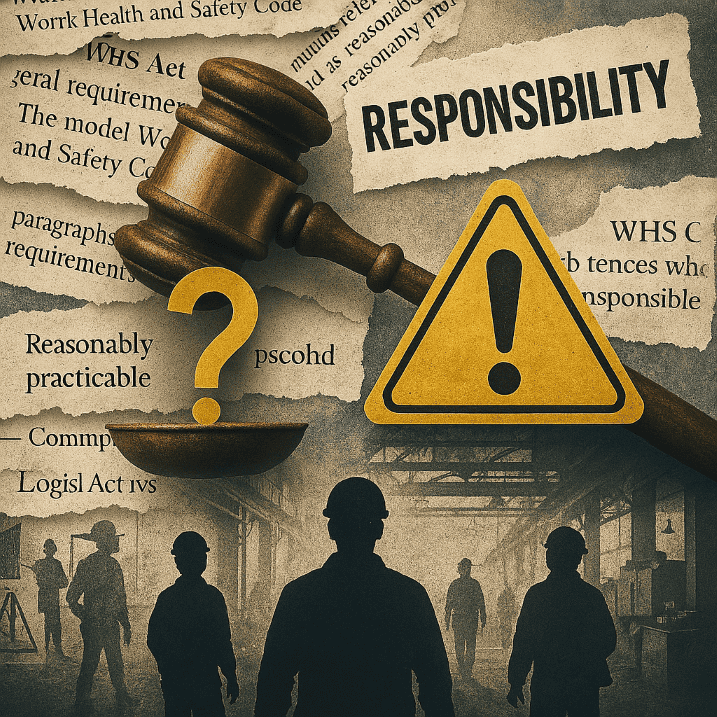
The New South Wales (Labor) government has amended its work health and safety and industrial relations laws. These changes have been described as “substantial” in one legal opinion, but the changes reflect the management of company liability more than preventing harm.
Regulations: Addressing Market Failures and the Myth of Free Markets
Recently, Federation Press published a weighty tome written by Arie Freiberg called “Regulation in Australia. 2nd Edition“. For those of you who are legislative junkies and can quote sections of occupational health and safety (OHS) law, you will love this, as it examines the mechanics of regulation, not just those of Industrial Relations or OHS. And there is some powerful context to market failures that often lead to new regulations, a perspective shared with Naomi Oreskes and Erik M Conway in their 2024 book, “The Big Myth“.

Will a Code of Practice for psychosocial hazards be effective?
Victoria is developing its own Code of Practice for managing (and hopefully preventing) psychosocial hazards in the workplace, ahead of amendments to its occupational health and safety (OHS) laws in late 2025. But how powerful and enforceable can a Code of Practice be? A new book by Arie Freiberg, “Regulation in Australia“, helps explain this, but the future could look better.