
HSE and Lord Young test the waters of reform

The head of the UK’s Health & Safety Executive, Judith Hackitt has released part of a letter that she sent to Lord Young of Graffham on the announcement of his OHS review.  According to Hackitt’s media statement she advised

“The terms of reference of your review extend beyond HSE’s remit, which is concerned with addressing real risks and preventing death, injury and ill health to those at work and those affected by work related activities.

“However, we in HSE have been saying for some time that health and safety is being used by too many as a convenient excuse to hide behind.”

Hackitt welcomed the review and has released Lord Young’s response in which he says:

“Thank you for your letter of 14 June confirming your commitment to the review commissioned by the Prime Minister into Health and Safety and the growth of the compensation culture.   Continue reading “HSE and Lord Young test the waters of reform”

A glimpse behind the CEO veneer

The Australian Financial Review published a brief profile of the 53-year-old CEO of the ANZ Banking Group, Mike Smith, on 22 April 2010 (page 23, not available online).  The article ostensibly reported on an ambush and shooting that Smith experienced in South America in 2007 but it also revealed some of his attitudes to leadership and OHS.

Mike Smith stated that as a CEO of a large organisation

“…you really can’t have work-life balance”.

This is not to say that his staff cannot have such a benefit but it sends a message to all those would-be CEOs that personal safety, health and one’s family will be sacrificed if you reach the top.  The implication is that work-life balance needs to be sacrificed on the way to the top although Smith may be describing his own pathway. Continue reading “A glimpse behind the CEO veneer”

Lord Young = old approach to OHS

Reviews of OHS legislation by governments are usually keenly anticipated as they mostly occur once a system is broken.  But there seems to be considerable trepidation with the plan announced on 14 June 2010, by the Prime Minister, David Cameron.

Cameron has appointed Lord Young to undertake an extensive review of OHS.  According to the Prime minister’s media statement:

“The rise of the compensation culture over the last ten years is a real concern, as is the way health and safety rules are sometimes applied.

We need a sensible new approach that makes clear these laws are intended to protect people, not overwhelm businesses with red tape.”

Lord Young has a lot of work to do in building bridges after his disastrous appearance at the 2010 conference of the Institute of Occupational Safety & Health (IOSH) in April 2010.  It’s not quite like putting Lord John Browne in charge of a petrol station but…. Continue reading “Lord Young = old approach to OHS”

Yesmanship – the biggest threat to safety culture

The recent release of a new book on Operation Mincemeat has again raised the term “yesmanship” in  the media.  Online definitions explain the term as

“An atmosphere in which people claim to agree with leadership for political reasons, even when they don’t actually agree with leadership” .

The significance of the term in relation to the current trend of “safety culture” should not be underestimated.  Below are some definitions of safety culture that illustrate the similarities to or risk from yesmanship.

“The product of individual and group values, attitudes, perceptions, competencies, and patterns of behaviour that determine the commitment to, and the style and proficiency of, an organization’s health and safety management” Continue reading “Yesmanship – the biggest threat to safety culture”

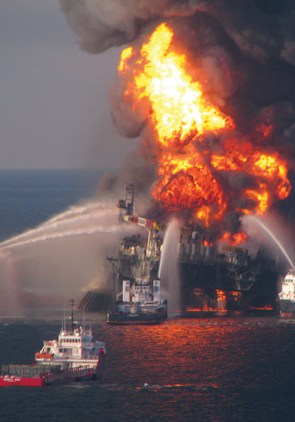
Independent safety investigation into BP’s Gulf disaster requested by Congress

On 8 July 2010 the United States government asked its Chemical Safety Board (CSB) to consider investigating the Gulf of Mexico oil spill.  It would be good news for safety and the environment for the CSB to take on this role.

Primarily, CSB is well placed to consider any issues concerning the safety management structure and culture of BP that may have contributed to the environmental disaster and the deaths of 11 workers on the rig.  As the CSB media statement outlines

“The CSB thoroughly investigated the BP Texas City refinery explosion of 2005 and issued a lengthy report and hour-long CSB Safety Video following our investigation, and as the letter from the committee chairmen states, we would be in a unique position to address numerous questions about BP’s safety culture and practices, and to answer the questions outlined in the House committee letter today.”

The letter from the chairman of the US Congress’ Committee on Energy and Commerce, Henry Waxman, has asked the CSB to consider the following questions

Does corporate leadership equate to political leadership?

Can a country be run in a similar way to running a business?  Does corporate leadership equate to political leadership?  It would be possible to find examples in support of both these questions and as much evidence to counter them but the contextual difference is important to note when considering leadership in general.

A crucial difference in the two sectors is that the corporate executive or CEO must operate to the satisfaction of the shareholders, regardless of the humanistic and social veneer applied.  A politician or a Prime Minister must serve for the benefit of the people, regardless of the political views held as this social obligation originates with the public office.  Politicians have wriggle room not afforded to CEOs because not all the citizens subscribe to the same values.  In the corporate world there is a clearly visible commitment to capitalism, a clarity not possible in the political world.

At the moment in England, it seems that the newly elected coalition government is starting to prepare for a social capitalism – capitalism with a human edge.  The path to economic restabilisation will be difficult and, according to the newspapers on 8 June 2010, the government is set to call on the services of the former CEO of BP, Lord John Browne.

Browne has graced the pages of the SafetyAtWorkBlog twice previously and not in flattering terms.  One writer said Browne:

“…. was admired by his peers but not as much as he was by himself….” [who] “…As CEO … surrounded himself with sycophants and yes-men enshrouded in a cloud of corporate hubris.”

Continue reading “Does corporate leadership equate to political leadership?”

The “Triffid defence” applied to asbestos

At the end of The Day of The Triffids, John Wyndham, had mankind living on the Isle of Wight, making sure that Triffids did not infest the island.  Tasmania has a similar mindset as can be seen by its diligence on keeping the land free of foxes but that is keeping out a hazard.  The greater challenge is renewing the land and removing a hazard that was allowed to grow and establish itself like triffids or, more realistically, asbestos.

SafetyAtWorkBlog has written elsewhere about the Australian Workers Union push to make Tasmania free of asbestos by 2020.  The signs are increasingly positive as the Tasmanian government issued a media release on 6 June 2010 that provides substantial impetus and legitimacy to the campaign.

The Minister for Workplace Relations, David O’Byrne, said today that the government will work with industry to develop legislative frameworks that provide a pathway for the prioritised removal of asbestos from Tasmania. Continue reading “The “Triffid defence” applied to asbestos”

Concatenate Web Development
© Designed and developed by Concatenate Aust Pty Ltd