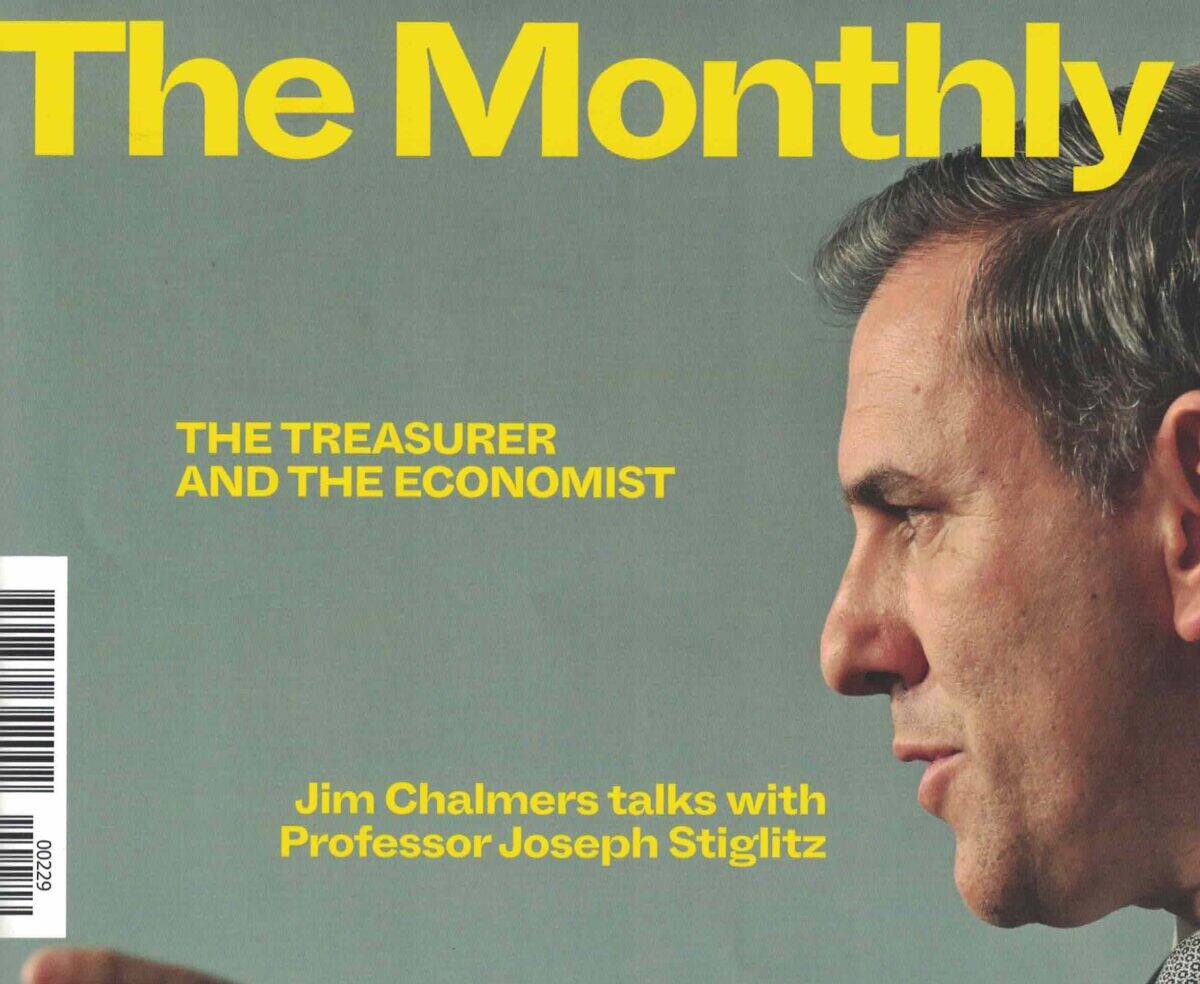
To truly understand occupational health and safety (OHS) issues, it is necessary to examine OHS concerns beyond one’s own industry. Recently, this blog has reported on some parliamentary debates on OHS in the horse racing industry. The November edition of The Monthly includes an exposé of the OHS of Australia’s horse racing industry by freelance writer, Madison Griffiths, with lessons for all of us on morality, Godliness, accountability and leadership. The article is paywalled but well worth the purchase.
Category: Leadership
Decent Work is so 2015
Australia’s Prime Minister, Anthony Albanese, has talked about occupational health and safety (OHS)….. a bit. On November 4, 2025, the PM addressed the IndustriALL Global Union 4th Congress. According to the congress’ website it:
‘…will bring together trade union representatives from around the world to discuss the future of work and reinforce their collective commitment to fundamental rights and social justice.”
So, it would be odd if OHS were not mentioned or discussed. (The Congress does maintain an OHS page)
What We Lose When NDAs Win
Non-disclosure agreements (NDAs) are a contentious device used by lawyers, often as part of the settlement of a legal dispute. These came to the fore in the context of sexual harassment several years ago. The Victorian government has proposed a bill to Parliament that, according to the Australian Financial Review (AFR), will increase transparency. This should assist in determining changes to work processes that are as low as is reasonably practicable.
NDAs have been an insidious tool, especially in relation to sexual harassment at work.
Why Known Hazards Still Kill – Falls from Heights
Recently WorkSafe Victoria revealed that in 2025:
“In the first half of this year, 174 Workcover claims have been lodged from the construction industry, from falls alone. A further 34 businesses have been charged and another 28 duty holders faced legal action, accumulating more than 2.54 million in fines, undertakings and costs. That already tops the entire 2024 figure of $1.65 million from 33 charged or prosecuted entities.”
I had the opportunity to ask WorkSafe’s Chief Health and Safety Officer, Sam Jenkin (pictured above), why such a well-known workplace hazard persists.
Why do we need a “positive duty” to prevent harm?
In 2023, a Royal Commission into Violence, Abuse, Neglect and Exploitation of People with Disability recommended that the Commonwealth Disability Discrimination Act 1992 be amended to introduce a positive duty on all duty-holders to eliminate disability discrimination, harassment and victimisation. This echoes the imposition in 2022 of a positive duty to prevent sexual harassment. Occupational health and safety (OHS) legislation has had its positive duty to prevent work-related harm since 1985. So why this current push for positive duties?
OHS Lessons from the Antoinette Lattouf Case
Just before Christmas in 2023, Antoinette Lattouf was taken off-air by the Australian Broadcasting Corporation halfway through her five-day contract as a radio fill-in. It sparked an acrimonious unfair dismissal dispute. Last week the Australian Labour Law Association held a webinar on the case which touched on the occupational health and safety (OHS) perspective.
Governments should set the OHS bar much higher
It should be clear to readers by now that I am not a lawyer. My interest is in the practical application and compliance with occupational health and safety (OHS) laws. Those laws often encouraged employers to look for the source of workplace harms and hazards, with government agencies advising that addressing these causes is the most effective and cost-effective way to manage OHS. In this context, it seems to me that clients can significantly influence OHS, as they may be a major source of work-related harms and risks. But their role is often downplayed.