Some good presenters, some great, but OHS conferences need more work

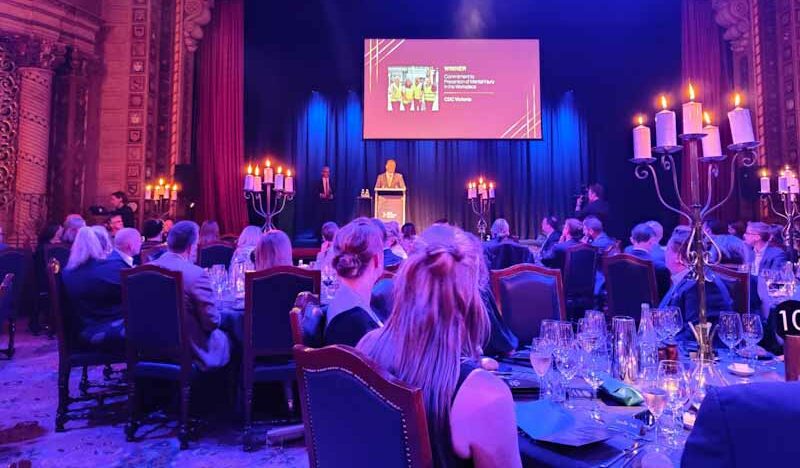
What was missing most from the recent conference of the Asia Pacific Occupational Safety and Health Organisation was a strong Asia-Pacific voice. Certainly, there were presentations by Asian OHS professionals and some westerners working in Asia, but the keynote speakers were almost from Anglo-European cultures. This made it hard to understand if the conference was designed for Asian safety and health professionals to learn from us or for Australians to learn from them. Perhaps it was just for all of us to learn as a profession.

Some of the keynote speakers offered universal suggestions for improving the management of workplace health and safety, but perhaps these were so universal as to be generic or safe. For instance, one of the greatest challenges for the Asian region, in particular, is ensuring the safety of migrant workers. There was one mention of the deaths of the World Cup construction workers, and that was in passing.

Below is a summary of the conference and some of the occupational health and safety issues (OHS) raised.

Subscribe to SafetyAtWorkBlog to continue reading.
Subscribe Help
Already a member? Log in here

Will WorkSafe need to become a VicSafe to address climate change?

Occupational health and safety (OHS) professionals are largely aware of the latest international standard for OHS management systems, ISO45001. This is the core standard for businesses to assess their safe systems of work. Others will be aware of the supplementary guidance to ISO45001, like ISO45003 -guidelines for managing psychosocial risks at work.

Recently Phillipe KL Lai Choo spoke about some of the other OHS guidances due for release or development. One of those relates to climate change which could create unexpected changes to how OHS is regulated and enforced.

Subscribe to SafetyAtWorkBlog to continue reading.
Subscribe Help
Already a member? Log in here

Old working hours concepts persist as subtext in new debates

One of the most contentious occupational health and safety (OHS) elements of industrial relations negotiations is the issue of working hours. And one of the most effective ways to prevent physical and psychological harm is by talking about working hours. The evidence for harm from excessive and often unpaid hours is clear, but some assumptions crop up in the debate every so often.

Two recent books, one by David Graeber & David Wengrow and another by Daniel Susskind, offer reminders of these issues and are useful adjuncts to the Australian research on precarious work by Michael Quinlan, Phillip Bohle and others. ( A Guardian review of Graeber & Wengrow is available here with one from The Atlantic here, Susskind here and here)

Subscribe to SafetyAtWorkBlog to continue reading.
Subscribe Help
Already a member? Log in here

You don’t have to talk about OHS to talk about OHS

On November 16 2022, Tony Burke, Minister for Employment and Workplace Relations, spoke at the National Press Club in Canberra. Although his portfolio has occupational health and safety (OHS), workplace health and safety was mentioned only once in passing. In this instance, that’s okay because he is trying to pass a major piece of industrial relations (IR) law. But some of his speech raised issues related to work or how businesses are managed, which do have important OHS contexts.

Subscribe to SafetyAtWorkBlog to continue reading.
Subscribe Help
Already a member? Log in here

Dunlop on psychosocial risks in law firms

Recently Maddocks law firm partner Catherine Dunlop spoke on the Lawyers Weekly Show podcast about psychosocial risks in the workplace. Although the podcast aims at legal practices, Dunlop’s comments and advice seem to apply to many white-collar jobs and professions.

Dunlop said that the discussion about psychosocial hazards at work has matured since the sexual harassment Respect@Work report and that:

Subscribe to SafetyAtWorkBlog to continue reading.
Subscribe Help
Already a member? Log in here

Stress dressed up as burnout

One of the impediments to a discussion about mental health at work is the discussion of burnout. There is little doubt that burnout is real, but often it is used as a synonym for mental illness, which is confusing workers and employers, making the prevention of psychosocial harm seem more complex than it is.

Recently a Sydney-based fintech company called Flare released a discussion paper or guide advising on how to manage burnout. It said:

Subscribe to SafetyAtWorkBlog to continue reading.
Subscribe Help
Already a member? Log in here

Dan Andrews and “safe jobs” and People versus Profit

“Jobs” is a term regularly used in election campaigns as creating jobs can provide wealth directly to those working and less directly to their employers. But rarely are “safe jobs” mentioned.  The Victorian Premier Daniel Andrews mentioned “safe jobs” in his campaign speech for the election later this month.  Perhaps more interesting is his pledge to put people before profit.

Andrews was speaking of his success in creating 600,000 jobs since he came to power eight years ago.  He said:

“…..when we came to government, we promised we’d get Victoria back to work. Since then, we’ve created nearly 600,000 jobs. More than 300,000 since September 2020. But it’s not just jobs. We want them to be good, secure, safe jobs. It’s why we introduced Australia’s first-ever wage theft laws. And it’s why we made workplace manslaughter exactly what it is: a crime. But when it comes to making Victoria stronger, safer and fairer, our work is far from over.”

Subscribe to SafetyAtWorkBlog to continue reading.
Subscribe Help
Already a member? Log in here
Concatenate Web Development
© Designed and developed by Concatenate Aust Pty Ltd