
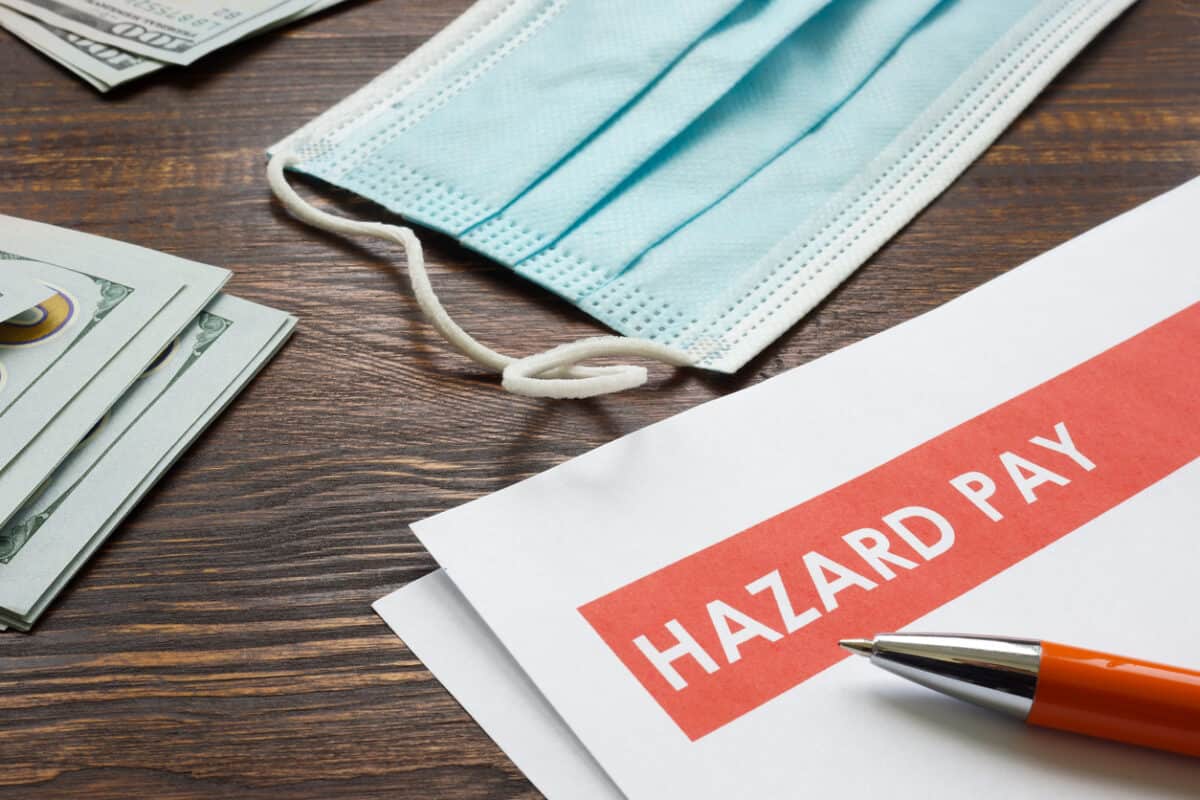
The traditional manner for employers to get unsavoury or hazardous work tasks done is to offer more money. This is referred to as Danger Money in some countries and Hazard Pay in others. There has been a resurgence in Danger Money during the COVID-19 pandemic, offered by some employers and requested by some workers and unions. This negotiation is a collaborative avoidance of both groups’ occupational health and safety (OHS) obligations and should be opposed vigorously by OHS associations and advocates.
Category: mental-health
Bad work “habits” are part of the problem
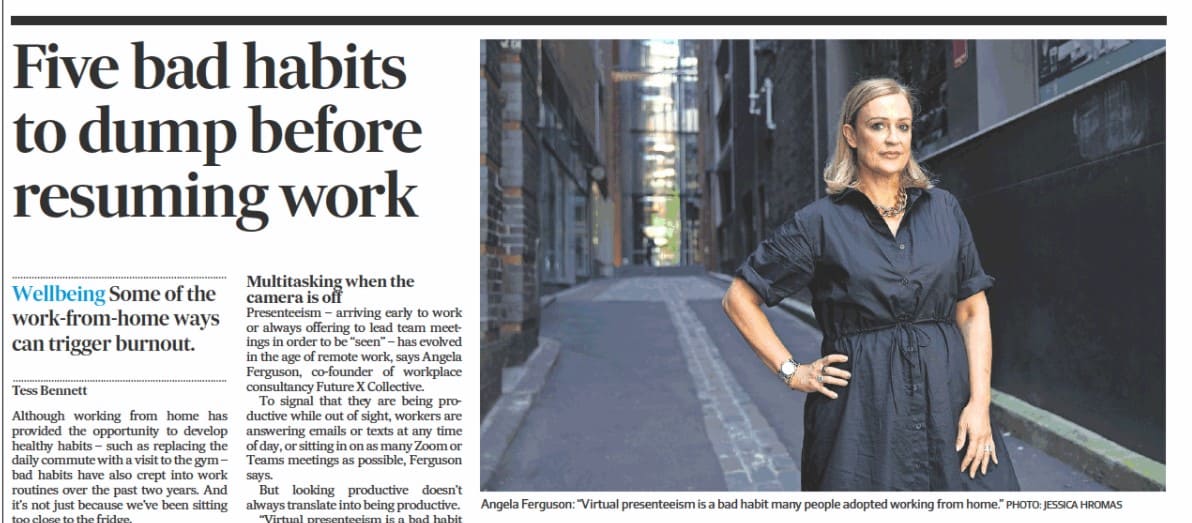
The headline immediately caught my attention:
“Five bad habits to dump before resuming work”
Australian Financial Review, January 4, 2022
Such is the power of the click-bait headline.
This article is aimed at middle managers and those working from home. It is in the Australian financial/business newspaper so articles about individual empowerment and entrepreneurship rather than structural change are expected. The article above is a classic example of the Australian Financial Review’s approach to workplace health and safety matters: a newspaper with significant influence on business leaders and executives but one that rarely quotes or approaches occupational health and safety (OHS) experts.
Good solid OHS profile on which to base a change strategy
The Australian Council of Trade Unions (ACTU) recently released its latest State of Work Health and Safety in Australia 2021 report called “Work Shouldn’t Hurt“. ACTU’s Liam O’Brien said
“The ACTU’s 2021 Work Shouldn’t Hurt Survey revealed that 80% of workers who are injured or made ill at work do not even make a workers’ compensation claim, in the case of insecure workers this jumps to 95%. This highlights that the 120,000 workers who made a claim last year is just the tip of the iceberg when it comes to measuring health and safety at work”
This is no surprise to those concerned with occupational health and safety (OHS). Sadly, the ACTU report was thin on possible solutions.
We can control workplace mental health if we want to
Some years ago, Time Management was all the rage. It was the precursor to the resurgence of the Work Smarter – Not Harder movement, but it seems to have faded from conversation recently. Part of the reason is that everyone is expected to be contactable, every day, every week, every month. And then we wonder why there seems to be a workplace mental health crisis?!
The answer is simple – turn off your phone, turn off your work computer. This will cause some readers to shake and say that they cannot do that as their bosses expect them to be available. The unfairness of this was discussed a little in the article on “work-to-rule“, but the employers’ expectations are more than unfair. They indicate a poor manager who cannot manage their time and of a workplace culture that endorses this sloppiness/laziness. A recent New Zealand article looked at some of the recent trends.
Banyan Health Group responds
Earlier this week, I paused an article on corporate burnout which used a media release from the Banyan Health Group as the catalyst. The group chose not to respond to some challenging questions but later reversed their position. Below are the responses of Ruth Limkin – CEO of The Banyans Healthcare Group to those questions. I thank Ruth and her team for their support
SAWB: The media release mentions chronic stress risk factors of “increased absenteeism, disconnected employee relationships, heavy workload and tight deadlines” and “longer hours”. The World Health Organisation has written that “Burn-out refers specifically to phenomena in the occupational context and should not be applied to describe experiences in other areas of life”. What can an executive manager do to reduce or eliminate these factors and thereby reduce the need for personal psychological interventions? Should the businesses change the way they do business and change the expectations that they place on executives?

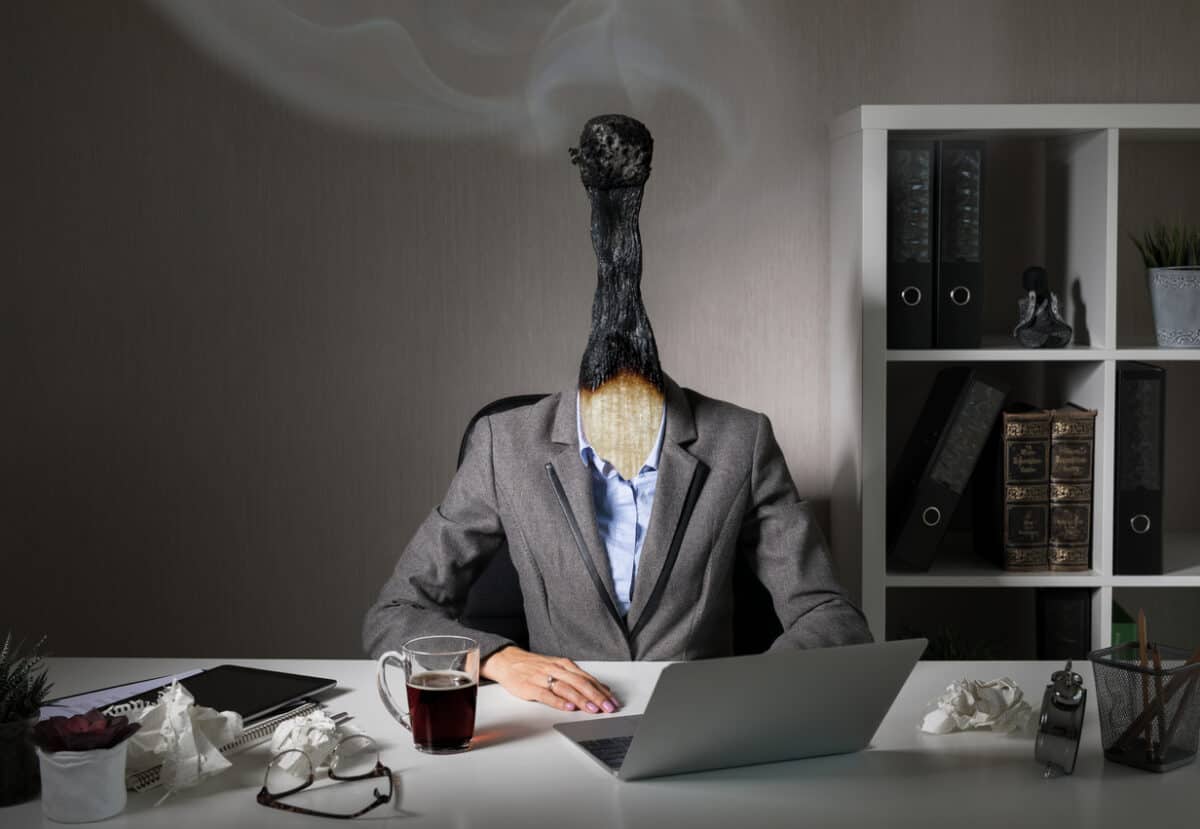
Corporate burnout and expecting too much
The Banyan Health Group issued a media release about company executives experiencing burnout in support of Psychology Week. I put some questions to the Group’s media contact from the occupational health and safety (OHS) perspective. The contact said that the Banyan Health Group members did not think they were best placed to answer the questions. [They have since chosen to respond and that supplementary article is available HERE]
That’s perhaps understandable, but we know that work-related mental health problems require a multi-disciplinary response involving personal and structural interventions as individual, social, and organisation factors contribute to poor mental health, of which burnout is part. Organisations that put themselves out there as subject matter experts and corporate workplace service providers to business should be able to respond to challenging questions. Below are statements from Banyan’s media pack and my questions.
Progressive report on construction industry culture
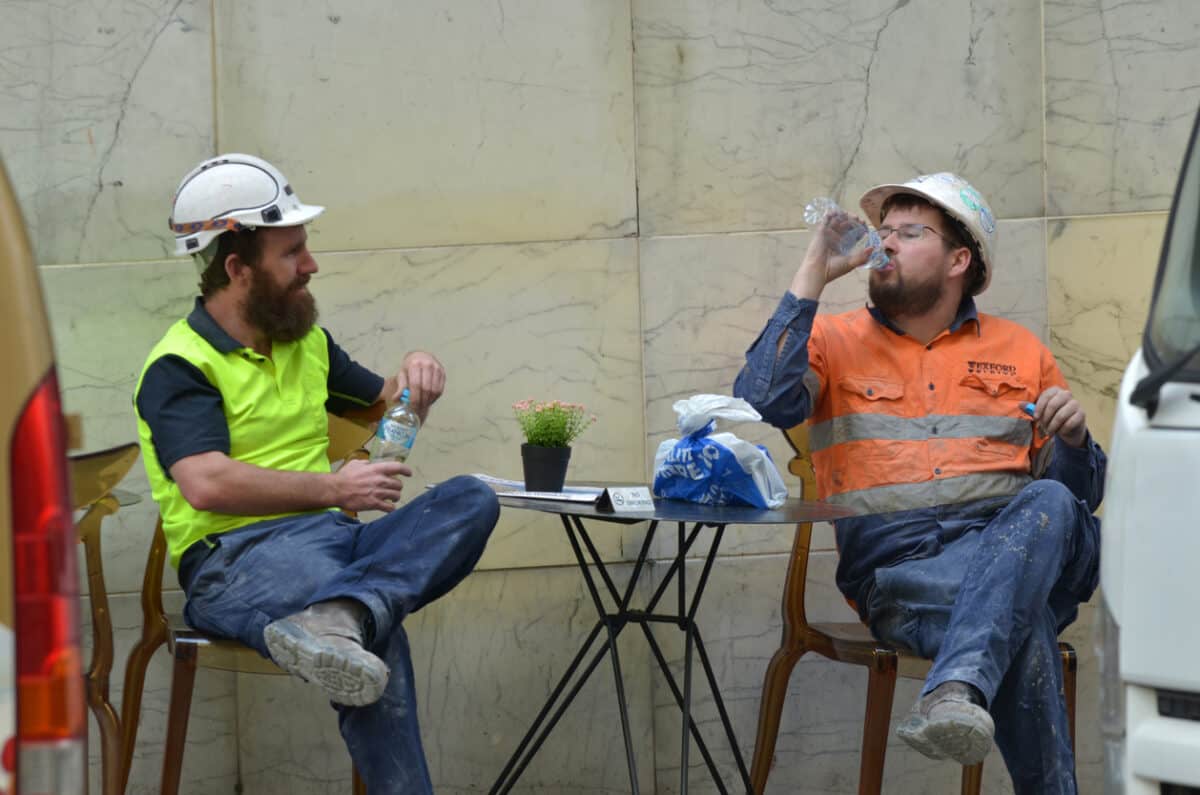
An analysis of the safety culture in Australia’s construction industry was launched in October 2021 by a coalition of construction companies under the Construction Industry Culture Taskforce rubric. The Report proposes some interesting and significant changes including capping the working hours to no more than 50 hours and no weekend work. This suggestion is of enormous significance as it challenges the statements of many construction companies of worker safety being their highest priority.