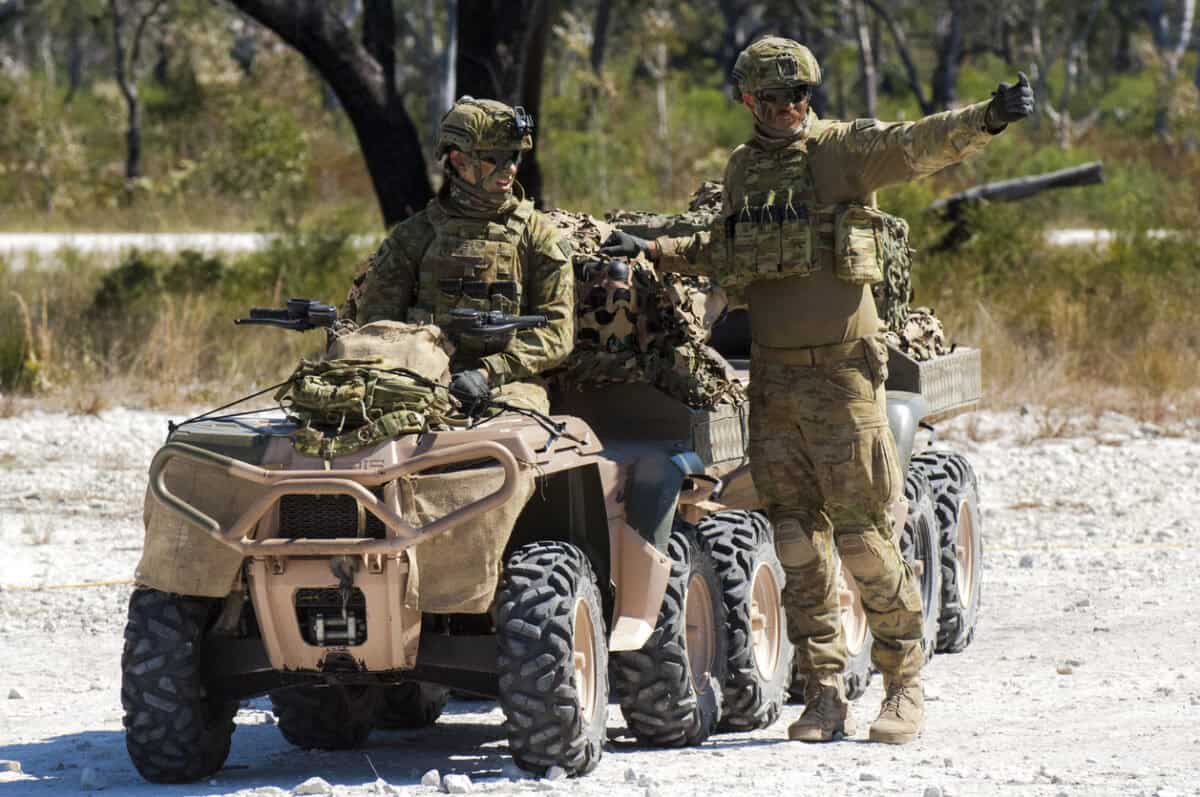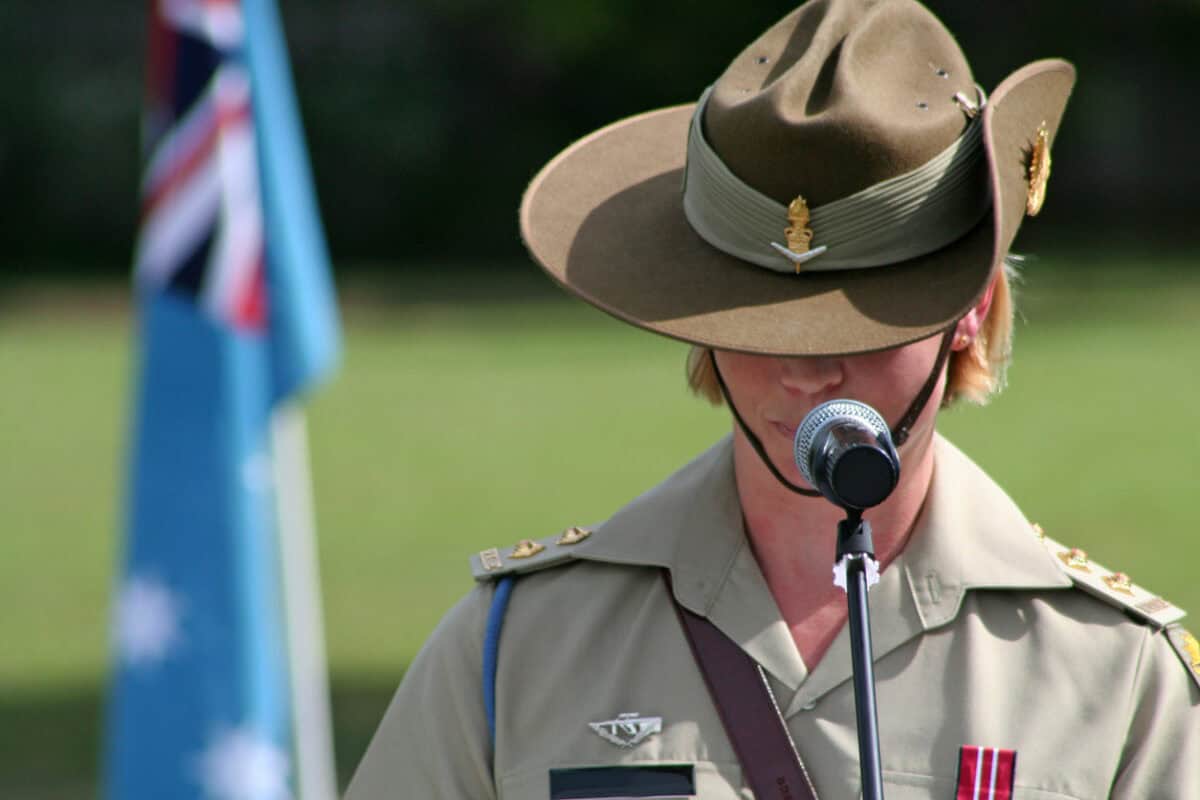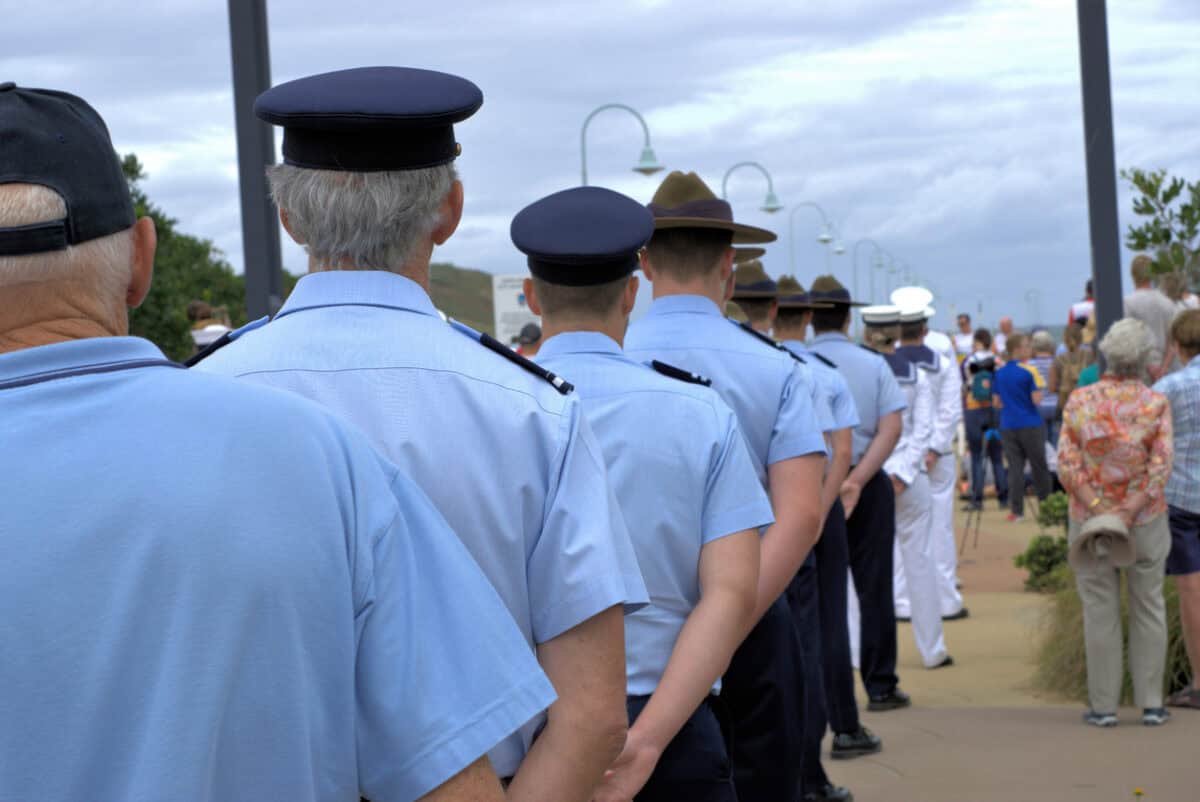
Senator Jacquie Lambie has been a staunch advocate for improving the occupational health and safety (OHS) of Australia’s defence force personnel. In 2022, she gave a confronting presentation to the Royal Commission into Defence and Veteran Suicide, and she continued her advocacy on day 1 of the 48th session of the Australian parliament by asking reasonable questions that could also be posed in non-military industries.
Category: military
Changing the Unchangeable? – Reforming Culture in the Australian Defence Forces
Many people in Australia are asking why any woman would consider a career in the military, given the considerable risk of sexual harassment, abuse and assaults. Occupational health and safety (OHS) and risk management disciplines often draw on many of the risk assessment processes and principles from the defence forces; however, there appear to be significant and intransigent risks in that sector.
Note: This article mentions suicide
If it cannot be done safely, it should not be done at all
“If it cannot be done safely, it should not be done at all.” I have heard this phrase repeatedly over the last 12 months in particular. It is a truth, but it also avoids all of the flexibility our occupational health and safety (OHS) laws, institutions and interpretations have allowed for decades. Perhaps our tolerance of this flexibility is fading.
I was reminded of the quote above when reading an article (paywalled) in The Times on October 17, 2024, written by Will Humphries titled “Army sexual harassment: ‘People wouldn’t join if they knew the truth’”.
Veterans, Suicide, Culture and Crompvoets
For many years, occupational health and safety (OHS) has been fixated on “Culture” as an encompassing term for what management activity does not work and what does. The focus has faded slightly since the COVID-19 pandemic. Still, Culture made an important reappearance this week with the delivery of the final report of Australia’s Royal Commission into Defence and Veteran Suicide. However, some of the most telling analyses of the safety culture in the Australian Defence Forces occurred in 2021 with the work of Samantha Crompvoets.
NOTE: this article discusses suicides
Non-military safety lessons from the latest Royal Commission (open access)
The Australian Broadcasting Corporation broadcast an episode of The Signal on April 21, 2021, which discussed the complexity of the culture of Australia’s military, and I strongly recommend you listen to it. It does make some points about culture worth contemplating in the context of one’s own workplace and profession.
The most useful point was that an established institution cannot have a uniform culture that meets the expectations of all relevant stakeholders. Generations take their culture with them. So those who started in the military in the 1980s and 1990s (and later) will bring the values and lessons of that time into their maturity and when they move into senior and leadership positions – positions that are intended to both preserve and progress the organisation’s culture. This will result in conflict between the expectations of new recruits and the realities of the established military executives. Not open revolt, but a dissatisfaction that may or may not result in leaving the organisation.
The topic used by The Signal to illustrate the extremes of the defence force members and stakeholders was mental health.
Continue reading “Non-military safety lessons from the latest Royal Commission (open access)”Real men and work-related suicide
Recently Huffington Post Australia posted a video about male suicides called “Men are killing themselves to be real men”. Many of the speakers talked about their experiences at work or with work. The video is highly recommended.
SafetyAtWorkBlog had the opportunity to talk with the Associate Video Editor, Emily Verdouw. Below is an edited transcript.
Firefighters’ mental health
More details are appearing of the findings of an independent inquiry into mental health and suicides in the Melbourne Metropolitan Fire Brigade (MFB), a report whose release has been stalled by the United Firefighters’ Union (UFU).
According to the inquiry’s chair, in an article in the ABC news website, Dr Peter Cotton,
“…the MFB has a mono-culture with few women or members from diverse backgrounds, making it difficult to assess the level of bullying and harassment.”
“… the MFB does not screen for alcohol or drug use, and has a lack of policies and procedures to address drug and alcohol issues.”
“Management’s handling of complaints were found to be ad hoc and inconsistent with a “lack of will to follow up” and “give them a wide berth” thought pattern.”
“the mental health of firefighters was comparable with Victoria Police and Ambulance Victoria,…”
The latter point is useful to remember as a similar report into the Victoria Police was released earlier this year. The most recent inquiry into Ambulance Victoria was undertaken by the Victorian Auditor-General in 2016. Continue reading “Firefighters’ mental health”