
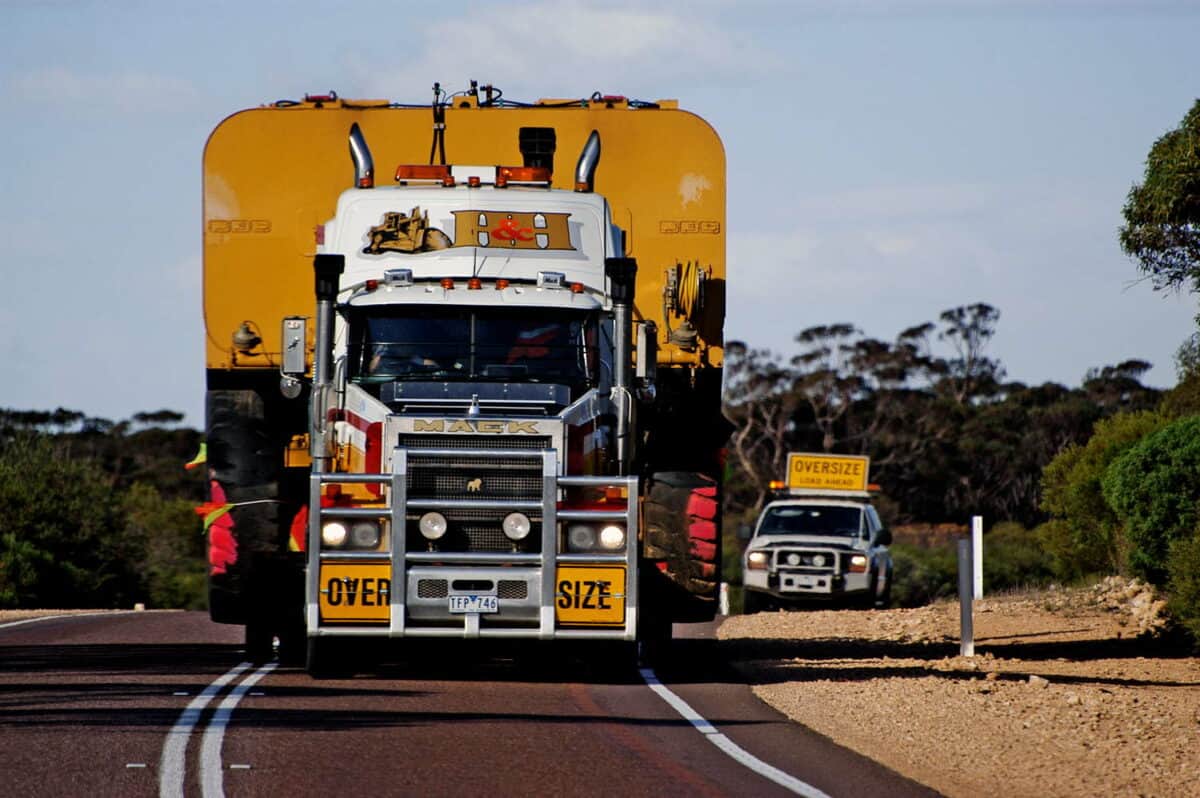
Australia’s heavy vehicle transport industry has been involved in arguing about workplace health and safety for decades. It is also one of those issues that have been largely dominated by anecdotal evidence, as shown by the recent Australian Senate Committee hearings into the “Importance of a viable, safe, sustainable and efficient road transport industry“, much to the detriment of the occupational health and safety (OHS) of the drivers, the public safety of other road users and the families of those who die in road incidents.
Category: OHS
Business continuity planning by another name
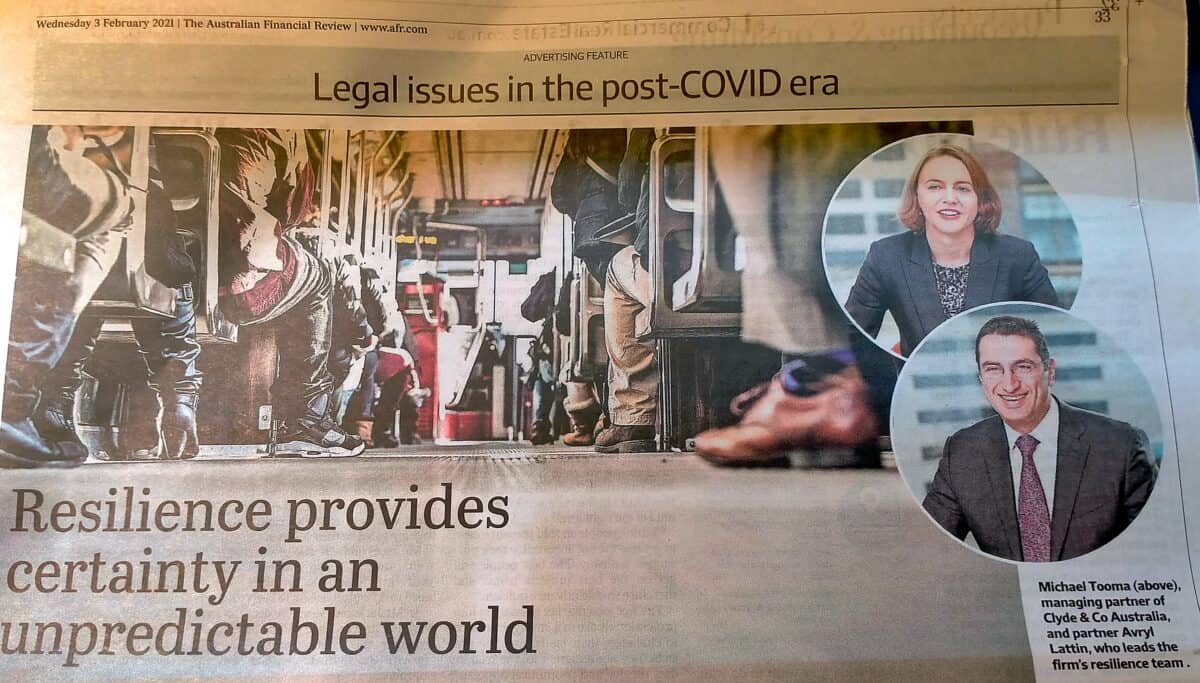
Occupational health and safety (OHS) gets a mention in a full-page advertorial in the Australian Financial Review (AFR) (February 3 2021, page 33) revolving around the legal and business services of Clyde & Co. The advertorial contains a good example of the contemporary business jargon such as “organisational resilience” – a concept that has come to the fore during the COVID-19 pandemic.
“Organisational resilience” has several definitions but here is one used by the British Standards Institution:
“….the ability of an organization to anticipate, prepare for, respond and adapt to incremental change and sudden disruptions in order to survive and prosper.”
This has very strong similarities to the much longer-established concepts of “business continuity” or sustainability within which OHS has dabbled for decades.
Odd sexual harassment guidance
Safe Work Australia has released an important national occupational health and safety (OHS) guidance called “Preventing workplace sexual harassment.” The advice included is very good, but the presentation is so plain and vanilla as to be unattractive – unattractive in that there is little to encourage anyone from reading what is very important information. No images, no flowcharts, no graphics, no infographics but perhaps most importantly – no case studies.
This is not to suggest that SWA guidance needs to look like a “Dummy’s Guide”, but readability is more than grammar, understanding comes from more than just information.
Give Duty of Care and Workers’ Compensation a good shake
At the2020 Australia and New Zealand Society of Occupational Medicine (ANZSOM) annual scientific meeting, Dr David Goddard spoke about “Regulation: when expectations go unmet”. In a wide-ranging presentation Goddard spoke of Australia’s occupational health and safety (OHS) laws touching on a couple of contentious governance issues:
“…… Robens-inspired law introduced the employers’ general duty of care with responsibility for self-regulation. Indeed, self-regulation is essential. Without self-regulation, duty of care simply becomes a game of who to blame if things go wrong.”
We complicate what we know works
There is one simple way of improving occupational health and safety (OHS) in any workplace – have the senior managers and executives be more in touch with the manufacturing process or provision of services. This will improve their understanding of the risks in their businesses and, hopefully, cause them to see the importance of improving health and safety, either for increased profitability or for the quality of life of their workers. Often the executives are too busy to take the time to visit, learn and listen and Industrial Manslaughter laws are intended to cut through this business attitude.
Recently SAI Global issued a media release about Industrial Manslaughter laws which has more to do with its certification services than the improvement of worker safety or prevention of harm. Stripping away the marketing, the media release quotes Kiran Bhagat saying:
“Industrial manslaughter laws legislated in Victoria, Queensland, Western Australia, the Northern Territory, and the ACT place legal liability squarely at the feet of the C-suite and company directors for industrial manslaughter. Organisations must ensure their compliance to OHS laws is over and above current standards and, besides, aim to meet and exceed international standards as a safeguard. The highest-ranking leaders in an organisation must be proactively involved in these processes.”
There are few OHS professionals who would disagree with this.
The content that lets this media release down and puts it into the marketing folder rather than the OHS folder is the prominent promotion of its certification services, that should be able to stand on their own content such as this in the final paragraph:
Ask not what WorkSafe can do for you, but what you can do to improve safety
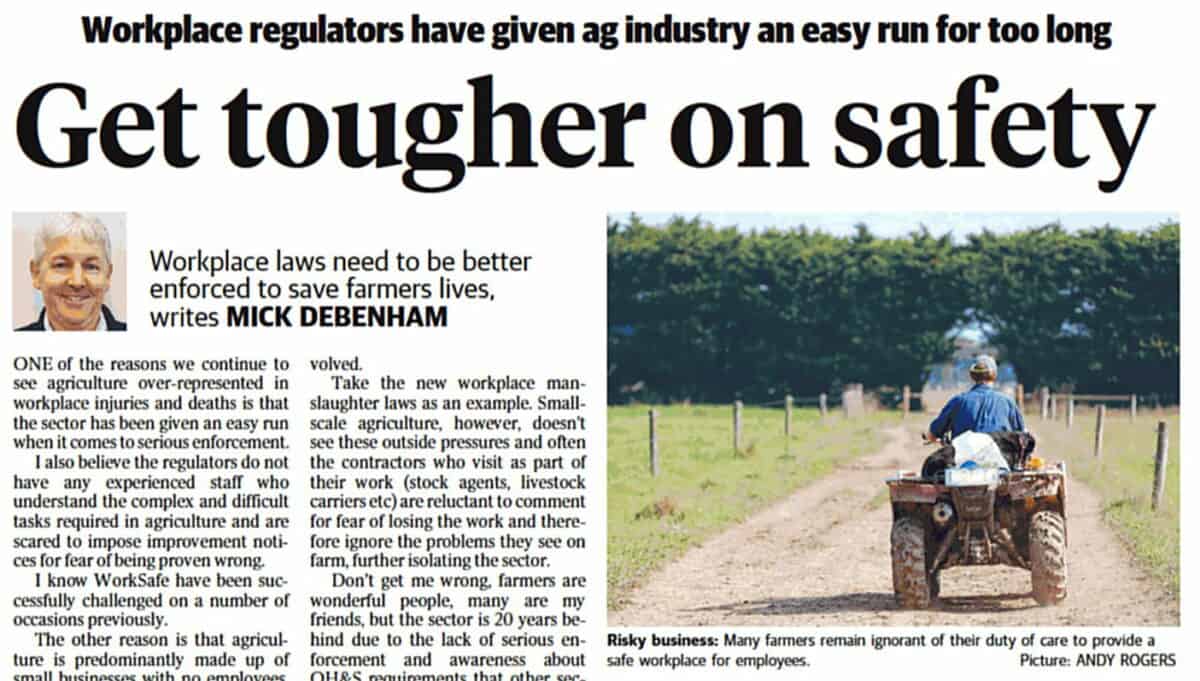
One of the most difficult industries in which to achieve occupational health and safety (OHS) improvements is farming, especially in areas where farming continues to be done by small family units. The safety culture of farming is unique as the workplace is embedded in community and rural culture. Some people believe that OHS regulators have given the agricultural industry an easy run for too long, as stated by Mick Debenham in a recent opinion piece in The Weekly Times (paywalled), but farmers should perhaps ask themselves why people continue to die on their farms and what they can do to change this.

Biden reverses Trump’s position on workplace safety
It is fair to say that the term of office for President Trump was not supportive of occupational health and safety (OHS). Former President Trump did not seem to see the need for OHS regulations and his attitude to the COVID-19 pandemic meant that it would never be considered as an occupational disease. Reports over the last week in the United States media, and the issuing of an Executive Order, indicate that new President Biden values workplace health and safety.
The New York Times (paywalled) is reporting that
“President Biden directed the Occupational Safety and Health Administration [OSHA] on Thursday to release new guidance to employers on protecting workers from Covid-19.
In one of 10 executive orders that he signed Thursday, the president asked the agency to step up enforcement of existing rules to help stop the spread of the coronavirus in the workplace and to explore issuing a new rule requiring employers to take additional precautions.”