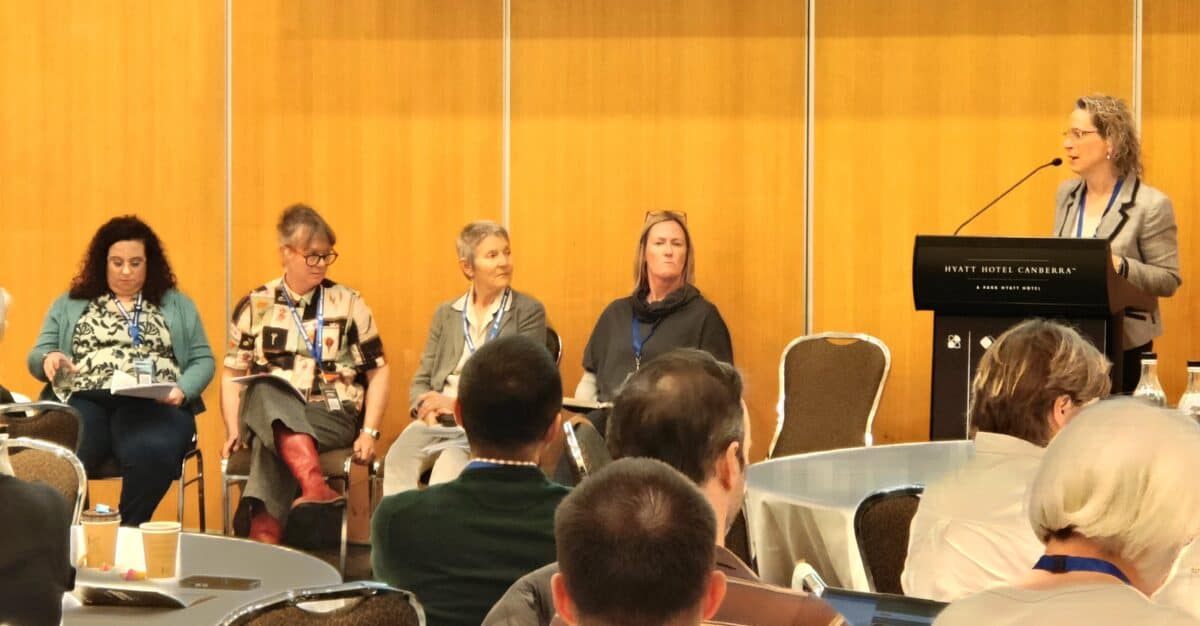
Safe Work Australia’s recent Research Summit conducted several workshops. Time allowed delegates to only attend two of the eight – a morning and an afternoon. The standout seminar I attended was for “Work as a determinant of our psychological health”.
Category: shiftwork
A refresh of the Code of Practice for Working Hours could be of great benefit
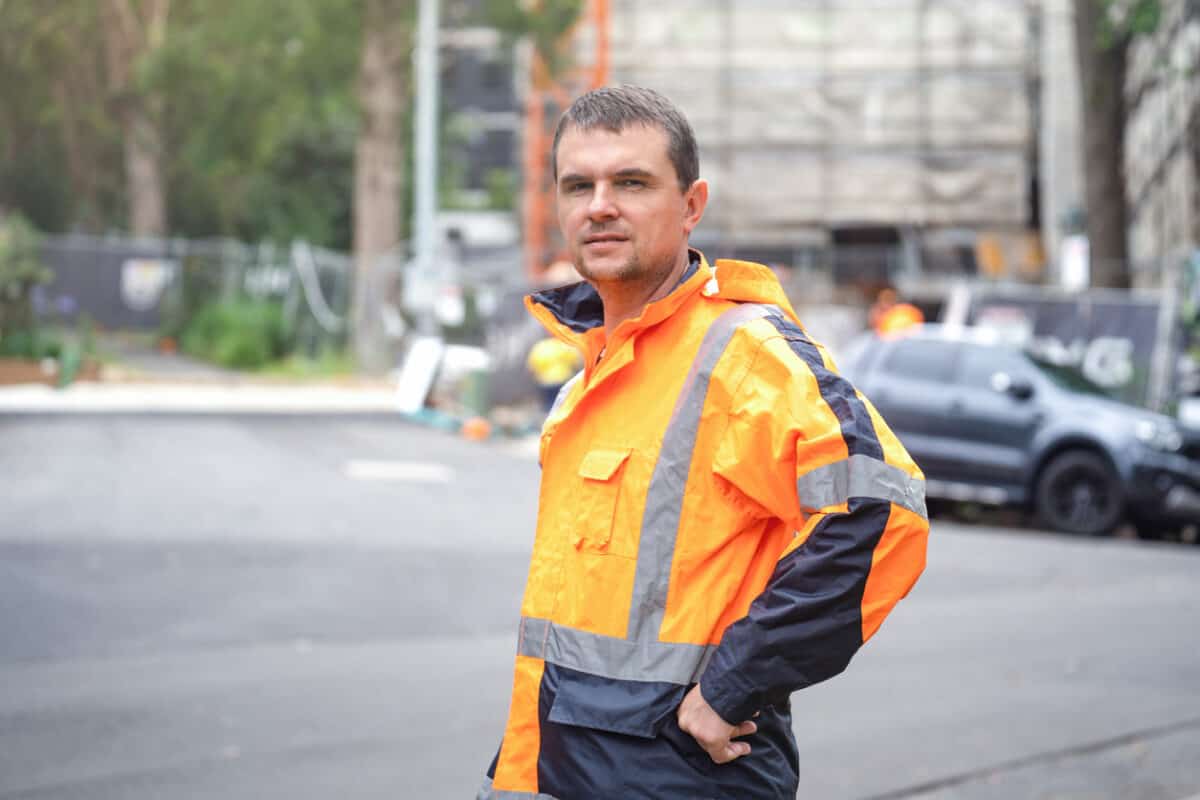
Many workers have a working week that includes more hours than they were contracted for. This is often described as “unpaid overtime”, which is a misnomer as “overtime” traditionally involves being paid a higher rate of income to compensate for making one available beyond or “over” regular business hours. Unpaid overtime can also be considered employer- and employee-endorsed exploitation and lead to industrial disputes, as junior doctors recently showed in Victoria.
Since 2006, the West Australian government has had a Code of Practice for Working Hours, with supporting documents such as risk management guidelines. This level of prescription could be applicable in supporting and clarifying newly-emphasised occupational health and safety (OHS) duties for psychosocially healthy work.
Downplaying “the source”
Recently on LinkedIn Audrey McGibbon wrote this about an online article discussing working hours in Europe:
“Working excessively long hours is par for the course in many sectors. The reasons for it are complex. The culture created by the collective leadership shadow makes its presence felt in many ways.”
I am not sure that the reasons are complex but the cultural change may be hard.
I think that the challenge is that there are so many reasons, many that are simple. Some are reasons that are beyond the control of employers but most are not, or at least, those that can have the most effective and positive benefit on the mental health of workers, are not.
“..what it means to act like a man and what it means to work safely..”
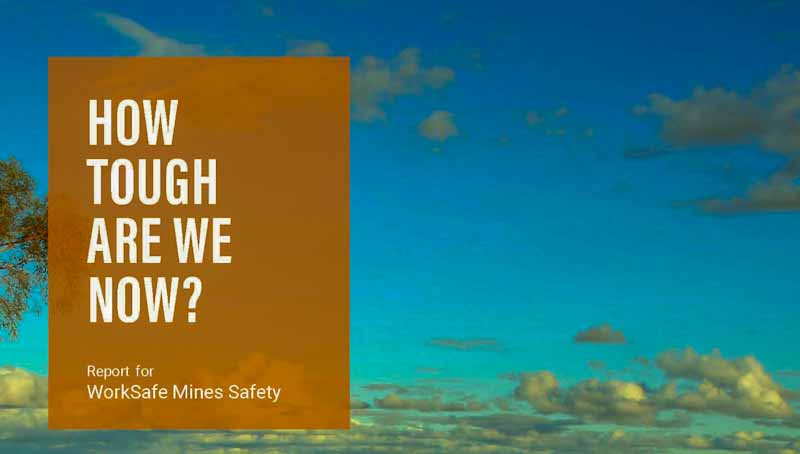
Ten years ago, I was enlightened by a presentation on masculinity and occupational health and safety (OHS) by Dean Laplonge at a safety conference in Canberra. He has continued researching that interconnection, and visiting WA and recently released his latest report written for WorkSafe WA after a series of “roadshows”.
After years of scandals in what has been described as the epitome of toxic masculinity, the West Australian mining industry claims to have changed its culture and created a psychologically safer work environment. Culture-As-Usual was not an option after multiple exposures of work-related suicides, sexual assaults, and harassment uncovered by independent and parliamentary inquiries. Laplonge revisited Western Australia and reported on the progress.
“occupational health is distinct from safety”
Professors Helen Lingard and Michelle Turner have just published a book that was long in development called “Work, Health and Wellbeing in the Construction Industry“. The best advice for reading this book is, for most readers, to ignore the construction context. This book is extremely topical for all industries in Australia as it considers gender, well-being, psychosocial hazards, working hours, resilience and more, but most importantly health.
A Neverending Story – Supply chain safety dispute
Several weeks ago, Scott’s Refrigerated Logistics, a prominent Australia trucking company, entered receivership. It seems the Transport Workers’ Union (TWU), as part of a long campaign, chose to take another potshot at one of Australia’s few supermarkets, Aldi, accusing it of “pressuring supply chains” when the average profit margin in this sector has been described as an average profit margin of only 2.5 per cent. Occupational Health and Safety (OHS) in Australia’s transport industry has always been an important issue and is regularly a political football.
The union’s claims are being echoed by Senator Tony Sheldon, a former national secretary of the TWU, in Parliament.
Plain psychosocial health guide has great potential
Recently the European Agency for Safety and Health at Work released an “e-guide” on managing stress and psychosocial risks at work. It offers a radical contrast to some of the information on risks and burnout that originate from the United States.
The e-guide is really a PDF file that uses the software’s features to establish links between the table of contents and relevant pages of information. This is a little “old school” but the Agency often does this, I think, to allow for wide distribution and easy application.