Union numbers continue to fall but OHS influence should not

Statistics released in Australia this week show a continuing decline in trade union membership.  This has generated some reaction from the union movement but also some suggestions for the future.  Trade unions are an integral element of occupational health and safety (OHS) policy setting.

Whether the union movement should continue to be part of the tripartite consultative structure on OHS is debatable given it can no longer claim to represent Australian workers based on the recent numbers.  However it can continue to claim it represents the OHS interests of workers even though the majority of workers seem uninterested. Continue reading “Union numbers continue to fall but OHS influence should not”
Full time at union OHS representatives conference

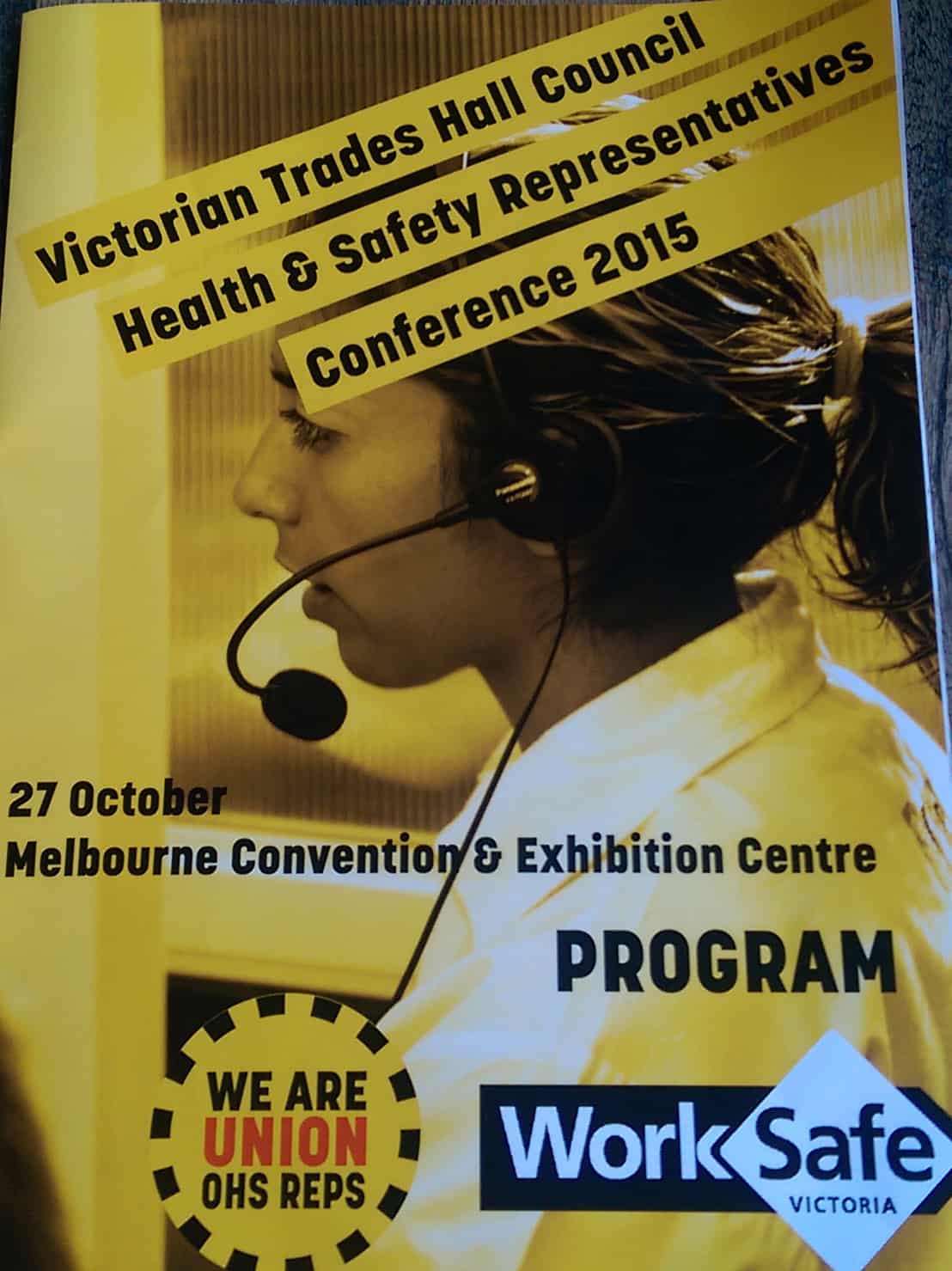
2015-10-27 HSR Conference brochureThe Health and Safety Representatives’ Conference, organised by the Victorian Trades Hall Council as part of Victoria’s WorkSafe Week, was notable for the lack of politics. Previous conferences have often focussed on political campaigns such as Your Rights At Work but this was largely absent from the presentations.  There were some political questions from the floor but that was expected.

The conference had some particular highlights relevant to the broader Occupational Health and Safety (OHS) profession.

Subscribe to SafetyAtWorkBlog to continue reading.
Subscribe Help
Already a member? Log in here

Insecure work inquiries should embrace and expand the safe system of work

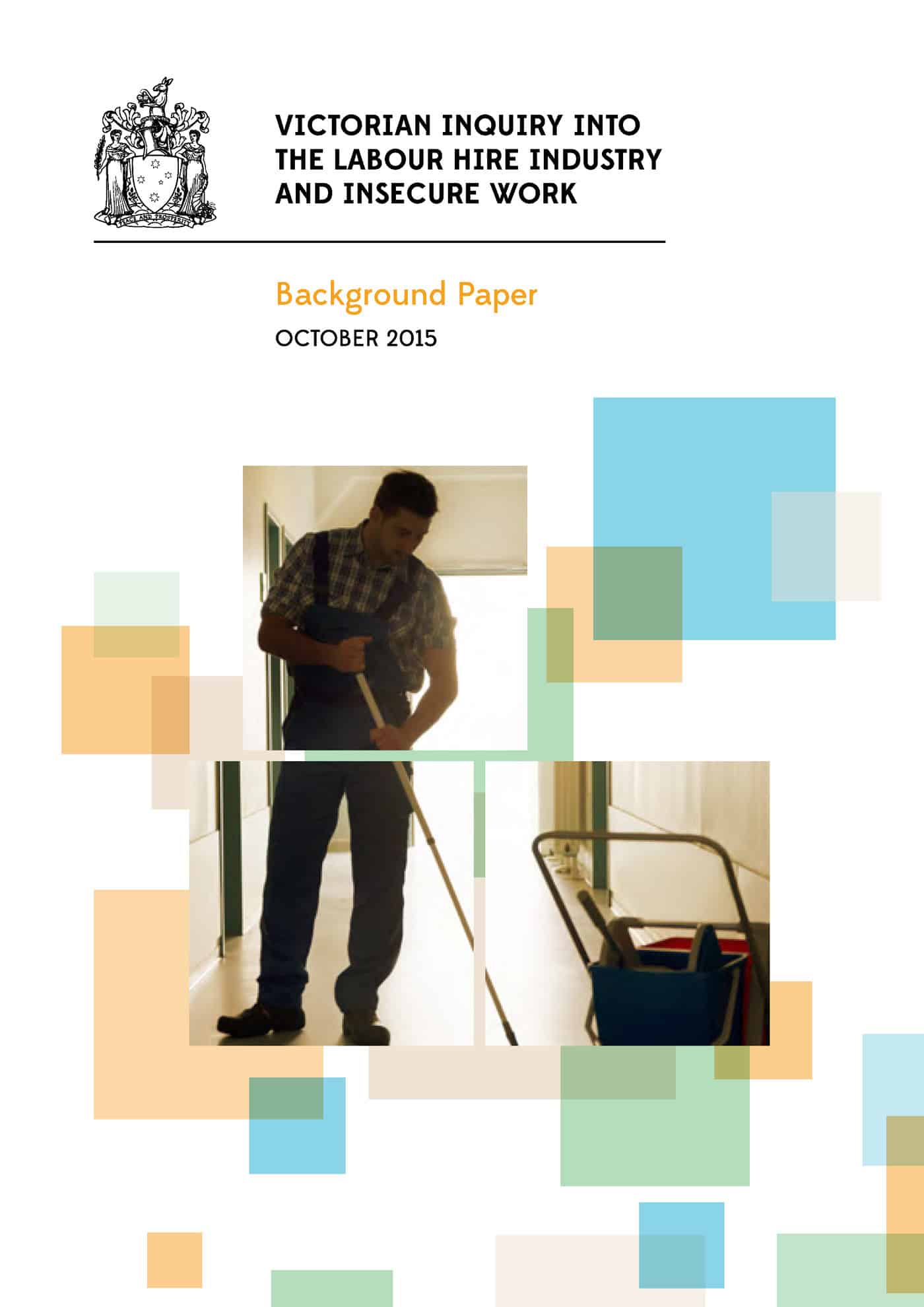
Cover of Labour Hire Discussion paper

The Victorian Government has just released its first discussion paper into labour hire practices and insecure work. As has been discussed when the Inquiry was announced, occupational health and safety (OHS) is part of this inquiry but OHS will only gain the attention it deserves if someone advocates on behalf of worker safety exclusively and thinks about safety in this sector, differently.

Continue reading “Insecure work inquiries should embrace and expand the safe system of work”

A possible change in approach on quad bike safety

The Federal Chamber of Automotive Industries (FCAI) is an integral stakeholder in the improvement in the safety performance of quad bikes. However, some of its past strategies have been belligerent, divisive and have limited the safety debate.  There are hints that the FCAI’s communication strategy has changed and this can only be for the better.

On October 1, 2015, FCAI issued a media release that was a gentle questioning of the Star Safety Rating program recently advocated by quad bike safety advocates and researchers.  The FCAI says that the research on which the rating system is based

“…does not correlate with real world performance is premature and needs to be further explored.”

Continue reading “A possible change in approach on quad bike safety”

Drug and alcohol testing does not improve workplace safety, so why have it?

cover of EN455_NCETA_2011-2 Testing for drug and alcohol effects in workplaces sounds sensible but what do you do when there is no evidence that it improves worker safety or reduces risk? Apparently ignore the evidence, create industrial tension and impose unnecessary costs on industry.

The Australian national government and the Victorian (State) government have both pledged to introduce drug and alcohol testing for the construction sector.  The Victorian Government also promised to introduce drug and alcohol testing for parliamentarians but everyone expects a backdown on that election pledge.

Recently two researchers in Adelaide, Ken Pidd and Anne Roche published a research paper in Accident Analysis & Prevention asking “how effective is drug testing as a workplace safety strategy?“.  The abstract states:

“…the evidence base for the effectiveness of testing in improving workplace safety is at best tenuous.”

Subscribe to SafetyAtWorkBlog to continue reading.
Subscribe Help
Already a member? Log in here

Building a better future but maybe not a safer one

Cover of ACTU Blueprint 2015The Australian Council of Trade Unions (ACTU) has a strong commitment to safe and healthy workplaces in Australia and would likely assert that nothing is more important than the safety of workers. However the latest submission to government on economic and social reform, “Building a Better Future – a Strong Economy for All” (not yet available online), has missed the chance to bring occupational health and safety (OHS) into the current policy debate on economic and productivity reforms. Continue reading “Building a better future but maybe not a safer one”

Muddled talk is not helping OHS

A short discussion* in Tasmania’s Parliament on 16 September 2015 is illustrative of the use of language to answer a question, just not necessarily the question asked.  This type of political language has existed for centuries and will continue to do so but it contributes to people’s confusion about occupational health and safety (OHS) and the regulators’ role in enforcing OHS laws and should be called to account.

The question was asked by Independent Kerry Finch to Attorney-General Dr Vanessa Goodwin.

“Is the Government concerned about the rundown in staff for the WorkSafe program? Is the Government aware that there are only a reported 19 field inspectors, when it requires between 27 and 30 for the program to work efficiently? Does the Government plan to recruit more field inspectors for WorkSafe?”

Subscribe to SafetyAtWorkBlog to continue reading.
Subscribe Help
Already a member? Log in here
Concatenate Web Development
© Designed and developed by Concatenate Aust Pty Ltd