

All occupational health and safety (OHS) advocates should be reading the work of Jordan Barab. His latest article on “blaming the workers” for their own incidents is a great example of his writing. The article also illustrates one of the things about OHS that really gets up the noses of employers – if we don’t blame the workers, we have to blame the employers. An Australian answer to the situation would be Yeah, Nah.
Category: politics

Revisiting the sociology of work
I am always surprised how few people who talk about workplace and safety cultures seem not to have read the great sociologists of culture. Raymond Williams was important when I studied sociology and literature at university in the 1980s. I was reminded of his importance by this article in Catalyst.
As neoliberalism experiences a decline in influence on governments and corporations, it is useful to look at the sociology of culture from the pre-neoliberalism days, even if only dipping into my bookshelves. The Catalyst article opens with this:
“Raymond Williams hasn’t survived the cultural turn intact. Even though he was instrumental in foregrounding the significance of culture in human affairs, his materialist methodology and commitment to socialism jarred against the textualism and cultural relativism of the last three decades. The rise of neoliberalism had an effect as well. It undercut the values of cooperation and solidarity that were key to postwar radical intellectuals like Williams. But a Williams revival is finally underway.”

Zombies, Ghosts and OHS
This holiday season, in between new Val McDermid and Michael Connelly detective novels, I have dipped into a small book called “Zombie Ideas – Why Failed Policy Ideas Persist” in my quest to understand why occupational health and safety (OHS) is not as influential on companies and public policies as I think it should be.
The book is less than 60 pages but dense with ideas that I need a discussion group to fully understand, but there are some useful concepts that may help clarify the policy role, settings and effects of OHS and workers’ compensation.
Serious questions about WorkSafe Victoria’s financial sustainability
Shortly after Christmas 2022, the Australian Associated Press (AAP) released an article about the financial status of the Victorian Workcover Authority. The article was about a 2020 review of the financial sustainability of the workers’ compensation scheme by insurance and actuarial firm, Finity. This was built upon in a couple of mainstream newspapers.
Worker’s compensation explained in new social welfare book
Occupational health and safety (OHS) is an integral element of social welfare, even though the practitioners of the discipline self-silo. A new Australian book about Australia’s social services uses workers’ compensation and OHS as a case study for a change.
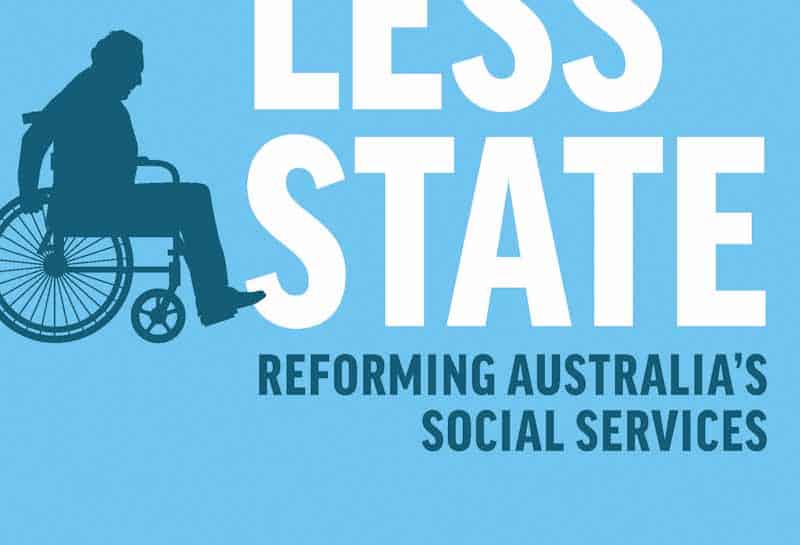
“The Careless State – Reforming Australia’s Social Services” by Mark Considine illustrates the Venn Diagram overlap of public health services, the National Disability Insurance Scheme (NDIS), aged care services, workplace safety and compensation and more. The book is very timely, as many of the social services essential for social harmony and justice have been neglected over the last decade under various State and Federal conservative governments.
Unread books on safety and work
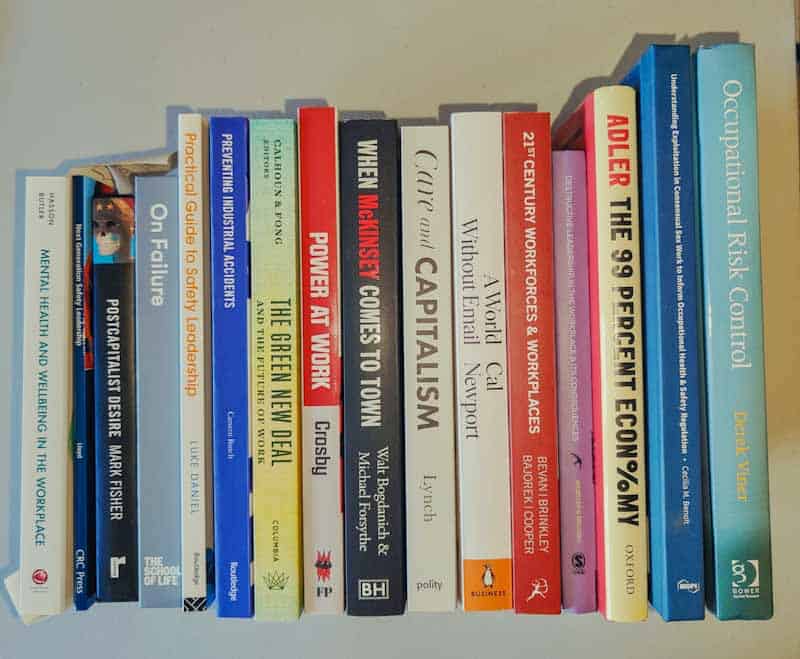
I always separate the books I have yet to read from those I have read, or else I lose track and can miss important books. Below is a list of those books in the hope that subscribers could tell me which they found to be useful and important if they have read any of them.
I have provided links to the books, usually publishers’ pages or reviews if you are interested, and check for special offers. Not all the books are new but new to me.

Other OHS politics you might have missed
November 2022 was a very busy month of politics (and a football World Cup) which distracted many of us from our usual monitoring of OHS announcements. Below is a summary of some of those from the last couple of weeks.
The South Australian Parliament has sent its Work Health and Safety (Crystalline Silica Dust) Amendment Bill to the Parliamentary Committee on Occupational Safety, Rehabilitation and Compensation for inquiry and report.