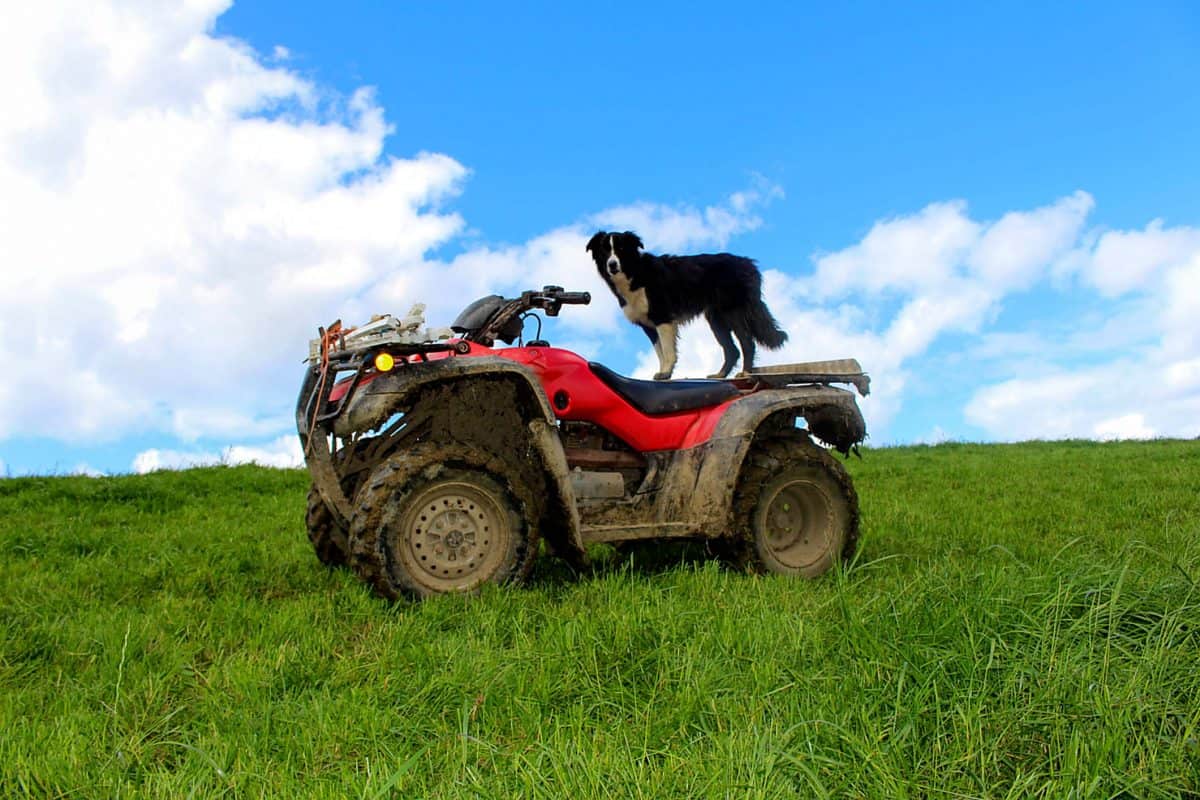
“This is how silly OH&S has become” Not really

Truck driving is one of the most contentious areas of occupational health and safety (OHS) in Australia. The transport industry has refined a reasonably practicable level of OHS to a high degree where levels of fatigue that would not be tolerated in other occupations are the norm. There also seems to be a negative attitude to OHS as an impediment to getting the job done rather than an investment in the health of drivers and the longevity of their careers.

These attitudes were on display recently in an inquiry into the “Importance of a viable, safe, sustainable and efficient road transport industry” undertaken by the Rural and Regional Affairs and Transport References Committee of the Australian Senate.

Subscribe to SafetyAtWorkBlog to continue reading.
Subscribe Help
Already a member? Log in here

“the point is not science, but safety”

Early last year Professor Andrew Hopkins wrote the following about making important safety decisions:

“If you are a CEO in charge of a large company operating hazardous technologies, you cannot afford to wait for conclusive evidence. You must act on the basis of whatever imperfect knowledge you currently have.”

page 110

This seems relevant to those who have had to make decisions about COVID19 this year. In response to the Hopkins quote, I wrote:

“This applies equally to directors and managers of companies of all sizes. It is hard, it is uncomfortable, but it is part of running a business. It is the application of the “precautionary principle” which, if the precaution proves valid, you are a hero, a visionary and a leader; if it does not happen, you are seen as a doomsayer – a reputational potential that few are willing to risk. However, in terms of OHS and the safety of people, the precautionary principle should be given prominence over reputation for many reasons, for if there is a disaster and fatalities the precautionary principle will be analysed through hindsight and may be influential in arguing reasonable practicability.”

The continuing COVID19 pandemic is a disaster with an horrendous fatality rate and the Precautionary Principle has started to be discussed in academic research about COVID19 and face masks.

Continue reading ““the point is not science, but safety””

Actions speak louder than words

A short debate in South Australia’s Parliament about the upcoming World Suicide Prevention Day was illustrative of some of the politics and barriers to reducing suicide.

Independent politician, Geoff Brock moved the following in support of World Suicide Prevention Day.

That this house –
(a) acknowledges that 9 September 2020 is World Suicide Prevention Day;
(b) acknowledges that world prevention day started in 2003;
(c) acknowledges that in excess of 3,000 people die from suicide every year;
(d) acknowledges that suicide is one of the largest causes of death each year;
(e) encourages people of all ages to openly discuss and acknowledge deaths by suicide;
(f) encourages people of all ages to openly discuss their mental health and wellbeing issues with family and friends;
(g) acknowledges the everlasting impact and effect of any death on family members and others; and
(h) encourages the state government to provide sufficient support, both financial and other support, as necessary.

Subscribe to SafetyAtWorkBlog to continue reading.
Subscribe Help
Already a member? Log in here

Is it time for a Department of Safety?

The COVID19 pandemic is a public health challenge but what happens when workplaces are integral to the control and spread of the virus? This overlap between public health and occupational health is complicated and unlikely to be resolved in the short term, however, it can fixed in the longer term. The crisis in the Australian State of Victoria (where this author lives) offers an example of this complexity, but also an opportunity for positive change, perhaps even, a Department of Safety.

Subscribe to SafetyAtWorkBlog to continue reading.
Subscribe Help
Already a member? Log in here

“Soldier On” should be “F### Off”

Many workers continue to work when sick. This is called presenteeism and in a time of infection pandemic, is a major problem. Many countries have addressed the COVID19 risks of presenteeism by requiring people to work from home if they can. In Australia, the message is not totally working with people ignoring the rules for various reasons.

However, presenteeism also has a deeper cultural and institutional origin that has been exploited by some and downplayed or ignored by others.

Continue reading ““Soldier On” should be “F### Off””

A sliver of hope on the farm safety horizon

Australian farm safety received several boosts last week. FarmSafe Australia released new report on agricultural injury and fatality trends. The Victorian Government gave the Victorian Farmers Federation more money to fund farm safety inspectors, again. And the Agriculture Minister established a Farm Safety Council of the usual agricultural groups. It is hard not to take many of these farm safety activities as indications of insanity by doing the same thing but expecting different results.


Subscribe to SafetyAtWorkBlog to continue reading.
Subscribe Help
Already a member? Log in here

Important gig economy report unlikely to affect change

Then current coronavirus pandemic has disrupted workplaces around the world with those most effected being low socioeconomic sectors, including those working on a casual basis or in precarious, gig occupations. Last week the Victorian Government received the final report from its Inquiry into the Victorian On-Demand Workforce. This report is likely to be crucial in assisting the government to develop a safe and healthy strategy for the post-pandemic world of work.


Subscribe to SafetyAtWorkBlog to continue reading.
Subscribe Help
Already a member? Log in here
Concatenate Web Development
© Designed and developed by Concatenate Aust Pty Ltd