Communicating about OHS in New Zealand

Safety conferences rarely generate media interest unless the relevant occupational health and safety (OHS) Minister is speaking or there has been a recent workplace death or safety scandal. At the recent SafetyConnect conference held by the NSCA Foundation in Melbourne, SafetyAtWorkBlog was able to chat with the Editor of New Zealand’s SafeGuard magazine, Peter Bateman. Peter has been editing the magazine and writing about workplace health and safety for a long time and, as an outsider to the OHS profession, he has some useful perspectives on how to communicate about safe and healthy workplaces.
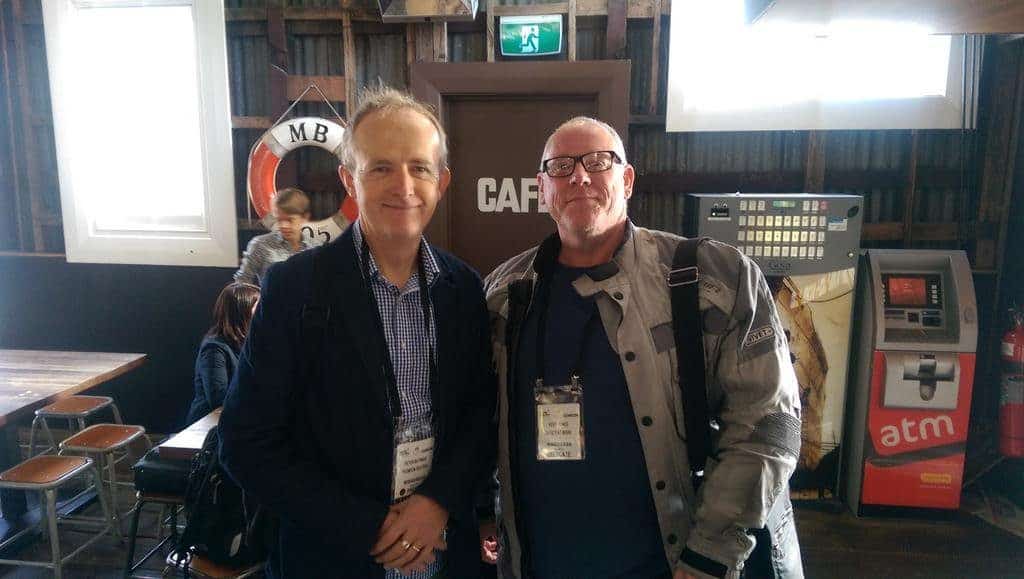
Peter Bateman and Kevin Jones in 2015

SAWB: Peter, great to see you at the Safety Connect conference in Melbourne, hosted by the National Safety Council of Australia Foundation.  So, day one, thanks for coming over from New Zealand.  You’ve been coming to safety conferences for a long time.  How important are safety conferences to your magazine given that Safeguard runs its own conferences as well?

PB: We’ve had the opportunity, through growing the credibility of the Safeguard brand through the magazine, that’s given us I think the trust and the credibility with readers so that when we launched the awards actually, the first event we launched way back in 2005 and then the main conference a couple of years later.  And they were small, but they were successful in their own way and we’ve just been fortunate to grow them year on year, so New Zealand Workplace Health and Safety Awards have been going for 15 years and the main Safeguard National Health and Safety Conference for almost as long.  Then from that we’ve managed to create some more specialist one-day conferences as well.

SAWB: I think I’ve seen a LegalSafe one.

PB: LegalSafe, which is more on the compliance side for those people who want more compliance side even though that’s not my particular area of interest.  But I recognise that a lot of people are very focused on compliance and fair enough.  Then more recently we’ve developed HealthyWork which started off as a way of bringing together traditional occupational health interests with the emerging wellbeing side but has really gone more into the wellbeing and psychosocial stuff as we’ve progressed. And in the last couple of years we’ve launched SafeSkills for H&S reps.
Subscribe to SafetyAtWorkBlog to continue reading.
Subscribe Help
Already a member? Log in here

Oral biffo over safety in Queensland Parliament

Before Christmas, the Victorian Government will be presenting a Bill for Industrial Manslaughter laws to the Parliament. The core elements of accountability and penalty are expected to be little different to the Bill that failed to pass Parliament earlier this Century by a bee’s whatsit. The debate is likely to be on the same benefits and costs, so one can reread Victoria’s Hansard from 2002 or look at the debate in Queensland Parliament last week where that Government’s “Safety Reset” has generated arguments about which party is more committed to occupational health and safety (OHS).

Subscribe to SafetyAtWorkBlog to continue reading.
Subscribe Help
Already a member? Log in here

Keep talking and making submissions – what to ask about dust

Government attention on the risks of silicosis, especially those related to engineered stone, continues to increase. Australia has established a National Dust Disease Taskforce to investigate the risks and to make recommendations to the government at the end of 2020. A national investigation is warranted but occupational health and safety (OHS) is regulated at State level so it could be many years until safety improves on this matter, if the States wait for the Taskforce’s final report.

Luckily, the debate on silicosis risks continue in various Parliaments and the Taskforce is seeking submissions.

Subscribe to SafetyAtWorkBlog to continue reading.
Subscribe Help
Already a member? Log in here

“no one wants to call out the real issue” says Tooma

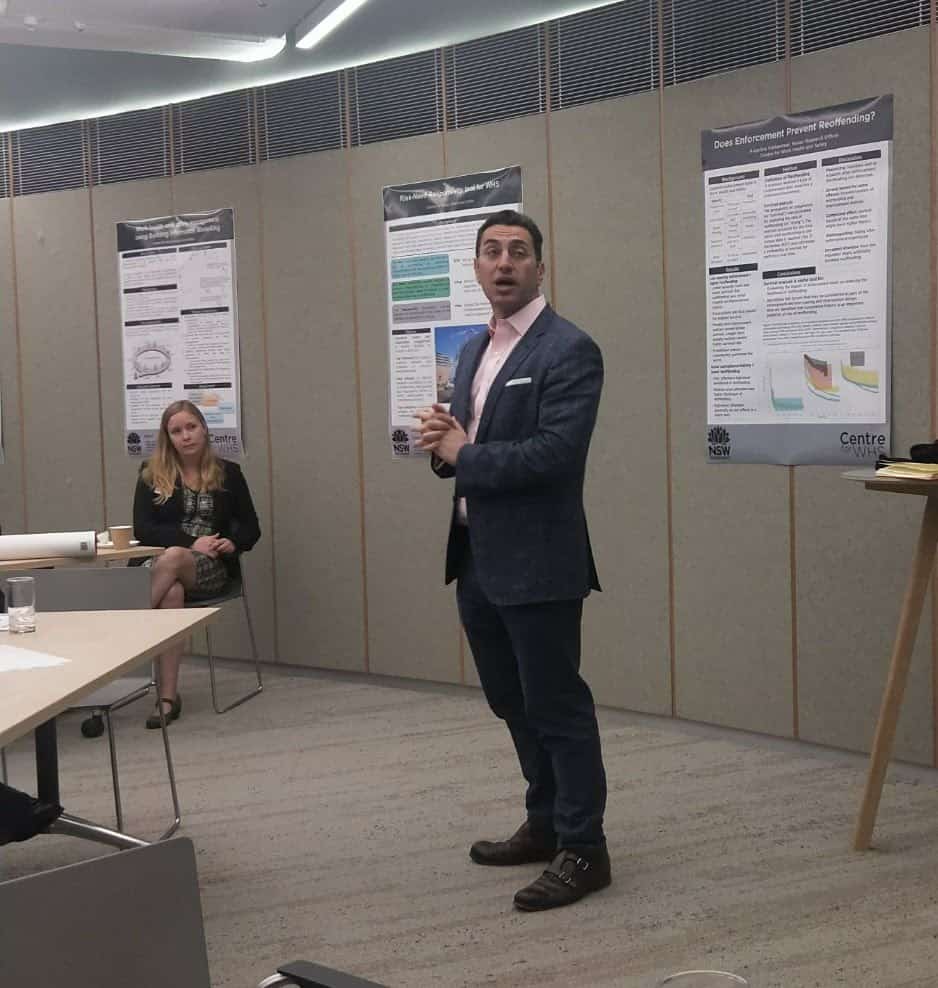
In August 2019, lawyer and author Michael Tooma (pictured right) was the keynote speaker at the 2019 National Work Health and Safety Colloquium ostensibly talking about his May 2019 presentation to the United Nations Industrial Development Organization (UNIDO). It was an important presentation of the paper he wrote is important. However, it was in the questions afterwards, on Industrial Manslaughter laws and accountability, where Tooma was most passionate and personal.

Subscribe to SafetyAtWorkBlog to continue reading.
Subscribe Help
Already a member? Log in here

Safety in politics this month, so far

Occupational health and safety (OHS) discussions in the various Parliaments in Australia rarely get much media attention, but the debates continue and occasionally there is an interesting suggestion. Here are some of the recent parliamentary discussions that SafetyAtWorkBlog found interesting

Quad Bikes in Tasmania

In response to a question on August 8 2019 Liberal Party politician, Leonie Hiscutt, provided an outline of the budget allocated to the rebate scheme being applied to quad bikes and their safety accessories, but of more interest is the question from Independent Ruth Forrest. She asked:

Subscribe to SafetyAtWorkBlog to continue reading.
Subscribe Help
Already a member? Log in here

Time to ban synthetic stone

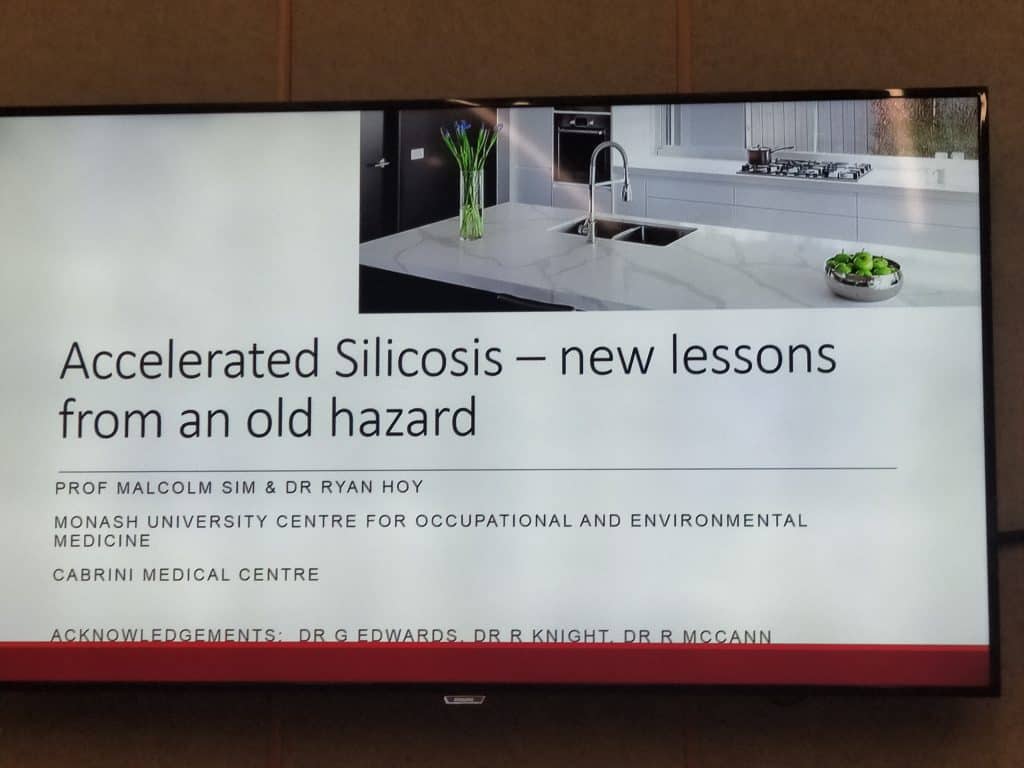
Professor Malcolm Sim of Monash University spoke at the 2019 National Work Health and Safety Colloquium on an issue that he never imagined he would be speaking of, at his age, silicosis.

As it is in several countries, the emergence of silicosis related to synthetic stone is gradually getting the attention of governments as more, and younger, workers are starting to die from this aggressive occupational disease. Professor Sim outlined the risk of handling this new type of stone by asking:

Subscribe to SafetyAtWorkBlog to continue reading.
Subscribe Help
Already a member? Log in here

The Interconnectedness Challenge

The solutions to most occupational health and safety (OHS) issues are multidisciplinary meaning that solutions are rarely simple and rarely come from a single source of information or knowledge. Recently I have been challenging my colleagues to spread their voices and experience beyond their own disciplines to illustrate how a worker’s health and safety is affected by a broad range of hazards and environments. I extend that challenge to all organisations including employer and industry groups like the Business Council of Australia (BCA) which has recently released a report on “The state of enterprise bargaining in Australia”.

Many organisations undertake research into different elements of work but rarely take an overall perspective, or one that analyses the interconnection of societal and occupational conditions and pressures. The latest BCA report is one example

Subscribe to SafetyAtWorkBlog to continue reading.
Subscribe Help
Already a member? Log in here
Concatenate Web Development
© Designed and developed by Concatenate Aust Pty Ltd