Is OHS a socialist plot?

As the dominance of neoliberalism weakens around the world, people are fearful of what comes next. In some sectors, that fear includes occupational health and safety (OHS). OHS is a business cost, in the same way as every other cost of running a business, but it is often seen as an interloper, a fun-sucker, a nuisance and/or an impediment to profitability. This misinterpretation needs to be contested.
Subscribe to SafetyAtWorkBlog to continue reading.
Subscribe Help
Already a member? Log in here

In an industry where there are no employers, who is responsible for workplace health and safety?

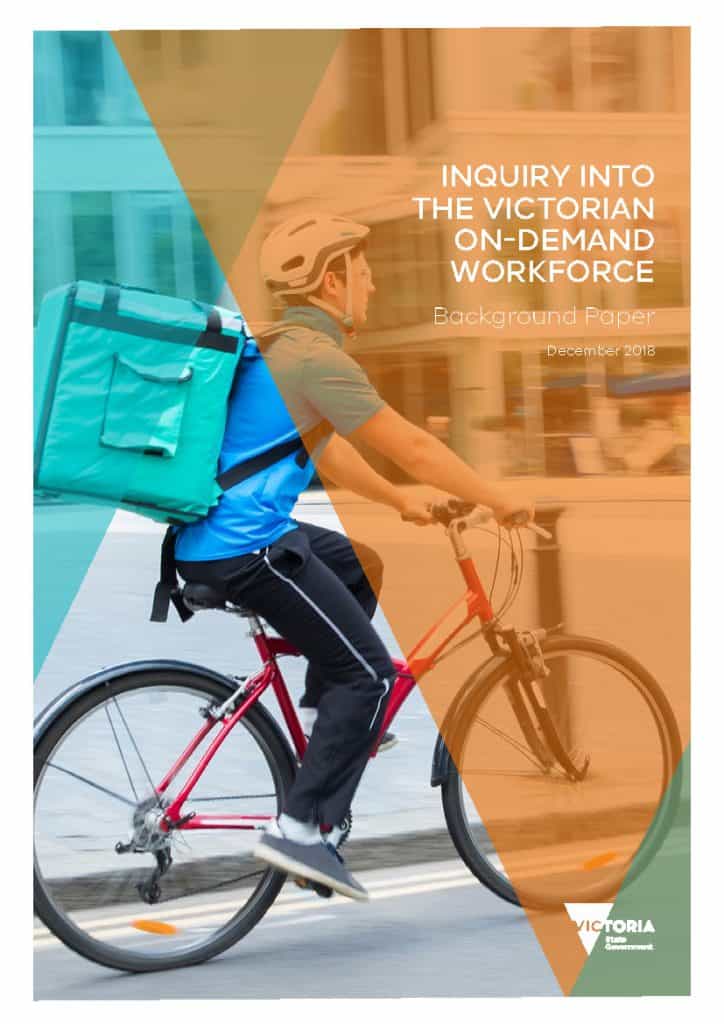
The Victorian Government has been running an inquiry for a little while on the “on-demand workforce”, a term which seems to be a synonym for the gig economy. The government recently extended the deadline for public submissions. This is often a sign that inquiries are struggling for information which is almost an inevitable consequence if you schedule an inquiry over the Christmas/New Year break.

This inquiry has direct relevance to occupational health and safety (OHS) and vice versa.

Subscribe to SafetyAtWorkBlog to continue reading.
Subscribe Help
Already a member? Log in here

Mining policy platform released

The Minerals Council of Australia has released its 2019 policy platform called “The Next Frontier: Australian Mining Policy Priorities”. The mainstream media will focus on taxation and jobs data given that Australia will face an election in the first half of 2019 but there is a specific chapter on occupational health and safety (OHS).

Subscribe to SafetyAtWorkBlog to continue reading.
Subscribe Help
Already a member? Log in here

Would Reckless Endangerment improve safety and health more than would Industrial Manslaughter laws?

The reckless endangerment provision of Victoria’s Occupational Health and Safety Act 2004 is likely to be crucial to this year’s discussions on Industrial Manslaughter laws and the management of workplace health and safety more generally, particularly as Victoria’s Minister for Workplace Safety, Jill Hennessy, has announced an implementation taskforce that includes a Workplace Fatalities and Serious Incidents Reference Group.

Section 32 says:

“A person who, without lawful excuse, recklessly engages in conduct that places or may place another person who is at a workplace in danger of serious injury is guilty of an indictable offence and liable to—
(a) in the case of a natural person, a term of imprisonment not exceeding 5 years, or a fine not exceeding 1800 penalty units, or
both; and
(b) in the case of a body corporate, a fine not exceeding 20, 000 penalty units.”

Subscribe to SafetyAtWorkBlog to continue reading.
Subscribe Help
Already a member? Log in here

Banking Royal Commission and corporate culture

Occupational health and safety (OHS) has come late to seeing its operations as part of the organisational culture of Australian businesses. Its realisation started with an assertion of a “safety culture” that operated in parallel with regular business imperatives but often resulted in conflict and usually on the losing side. OHS has matured and become less timid by stating that OHS is an integral part of the operational and policy decision-making.

Some of that business leadership that was admired by OHS and many other professions existed in the banking and finance sector which has received a hammering over the last two years in a Royal Commission. That investigation’s final report was released publicly on 4 February 2019. The report reveals misconduct, disdain, poor regulatory enforcement and a toxic culture, amongst other problems. The OHS profession can learn much from an examination of the report and some of the analysis of that industry sector over the last few years.

Subscribe to SafetyAtWorkBlog to continue reading.
Subscribe Help
Already a member? Log in here

What can we practically do to improve the OHS culture of Australia’s business sector?

This afternoon the Australian Government releases the findings of the Royal Commission into Misconduct in the Banking, Superannuation and Financial Services Industry. This has little to do with occupational health and safety (OHS) directly but it has a lot to do with:

  • organisational culture,
  • business ethics,
  • the social licence to operate,
  • the morality of capitalism, and
  • Trust

OHS needs to operate within all these elements of business operations and all Australian businesses will be watching how the Government and other political parties react to these findings.

Continue reading “What can we practically do to improve the OHS culture of Australia’s business sector?”

More than warm lettuce needed on Industrial Manslaughter laws

Applying the most effective way to have companies comply with their occupational health and safety (OHS) obligations has been debated in Australia and elsewhere for years.  The issue will arise again in 2019 and in relation Industrial Manslaughter laws as Australian States have elections, or the political climate suits.

There are several elements to the argument put by those in favour of Industrial Manslaughter laws. Workers are still being killed so the deterrence of existing OHS laws has seen to have failed.  Deterrence has been based on financial penalties and workers are still being killed so financial penalties have failed. Jail time is the only option left.

This is a simplistic depiction of the argument, but it is not dissimilar to some of the public arguments. The reality is that deterrence is achieved in two ways – telling the person of the consequences of an action and enforcing those consequences.

Subscribe to SafetyAtWorkBlog to continue reading.
Subscribe Help
Already a member? Log in here
Concatenate Web Development
© Designed and developed by Concatenate Aust Pty Ltd