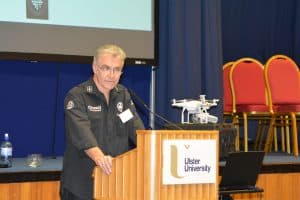
Interview with Dr Gerry Ayers

This weekend is the International Workers Memorial Day.  In Victoria, in particular and in Australia more generally, it is highly likely that the issue of Industrial Manslaughter laws will be raised as part of a trade union campaign.

Dr Gerry Ayers, the OHS&E Manager of one of the branches of the CFMEU, features in an online petition about these laws and it seemed the right time to interview Dr Ayers about these laws but also about workplace health and safety enforcement and practices more generally.

Subscribe to SafetyAtWorkBlog to continue reading.
Subscribe Help
Already a member? Log in here

Duty of care needs a moral analysis

In my readings on Industrial Manslaughter, a reader recommended a book to help me understand how the world works.  I haven’t found the time to read it through because I get angry and/or depressed, but I wanted to share a suggestion that may help clarify our occupational health and safety (OHS) obligations and provide a reconsideration of the employer’s duty of care.

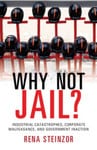
In “Why Not Jail? – Industrial Catastrophes, Corporate Malfeasance, and Government Inaction“, Rena Steinzor summarised some work by David Luban and others in a research paper called “Moral Responsibility in the Age of Bureaucracy“. Steinzor outlines five managerial duties:

Subscribe to SafetyAtWorkBlog to continue reading.
Subscribe Help
Already a member? Log in here

Flogging the banks could help safety

Australia’s Royal Commission into banking and financial services is a few months in and the evidence provided of wrongdoing is so substantial that those who were critical of the need for such an investigation are admitting they were wrong.
SafetyAtWorkBlog is applying the logic that occupational health and safety (OHS) succeeds best when it is part of the organisational culture.  Australia has often held its banking and financial services as “world-class” and many of that industry sector’s leaders have been prominent in speaking about the importance of leadership and corporate morality.

The financial and banking industry’s credibility and authority in Australia is gone and the OHS profession can learn much from this failure, even when the failure is in its early stages of exposure.

Subscribe to SafetyAtWorkBlog to continue reading.
Subscribe Help
Already a member? Log in here

Early WHS submissions are a mixed bag

The first lot of anonymous submissions to Australia’s Independent Review of Work Health and Safety Laws is an interesting mix.
One seems written by a regional paramedic calling for increased prescription of workplace first aid requirements. There are complaints about the contents of first aid kits which should have been addressed by the occupational health and safety (OHS) option of providing equipment to meet the results of a first aid needs analysis about which the submitter says:

“The recommendation to add additional items based on an appropriate risk assessment is almost, to my knowledge, never completed.”

Subscribe to SafetyAtWorkBlog to continue reading.
Subscribe Help
Already a member? Log in here

Danger Money has been internalised

Late last century I worked in the Victorian Department of Labour as an administrative officer, at a time when award restructuring and “structural efficiency principles” were in full swing.  The existing awards often included a swathe of special allowances for activities like working at heights or picking up roadkill.  These allowances were commonly called “dirt money” or “danger money” and were largely eliminated or incorporated in the base rates of pay through the restructuring of awards.

The concept of “danger money” has disappeared from the formal industrial relations (IR) processes in Australia but is an important one to remember in the context of occupational health and safety (OHS), particularly as there are renewed calls for IR reforms in Australia.

Workers continue to accept high risk activities in response to higher rates of remuneration, as was recently discussed in another SafetyAtWorkBlog article.  Below is one take on “danger money”and the OHS attitudes of trade unions

Subscribe to SafetyAtWorkBlog to continue reading.
Subscribe Help
Already a member? Log in here

“We cannot buy the health of people with money”

Source: Melody Kemp

By Melody Kemp

Walking my dog along the Mekong in Vientiane, new piles of building rubble litter the river bank. The capital has long had a problem with plastic waste, but as unbridled wealth spreads and humble buildings are replaced by garish McMansions, building rubble is turning up in the general detritus. Among the bricks was what looked like the residue of shattered Asbestos Cement sheets; but without necessary skill and a microscope how could anyone tell?

A Vietnamese trader arrives. He rifles through the remains, takes a few of the bigger bits, tosses them in the trailer behind his bike and leaves with a nod.  Later, in the main street outside a hardware shop, a large box of mixed waste lies waiting for collection.  Laos do not separate their waste at source and while there may be provisions for hazardous waste, procedures are not observed. Out of date drugs, toxic chemicals, poohy nappies are tossed into or along the river; are burned or go into general land fill sites. Or are scavenged.

Those few minutes epitomised some of the social/behavioural difficulties of controlling hazardous materials in any of the Mekong nations.  Things are changing thanks to the efforts of ex-ILO Technical Adviser Phillip HazeltonContinue reading ““We cannot buy the health of people with money””

A new Senate inquiry into industrial deaths

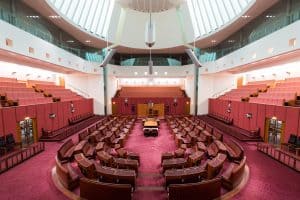
Canberra, Australia – October 14, 2017: A view inside Senate chamber in Parliament House

Another Australian Government inquiry into workplace health and safety (WHS) was announced on March 26 2018.  According to the Senate Hansard, the Senate’s Education and Employment References Committee will report on a range of occupational health and safety (OHS) matters by the end of September 2018.

Subscribe to SafetyAtWorkBlog to continue reading.
Subscribe Help
Already a member? Log in here
Concatenate Web Development
© Designed and developed by Concatenate Aust Pty Ltd