
 Trust is an essential element of effective business management, as relevant to consultation over occupational health and safety (OHS) matters as it between a business and its clients. Increasingly there is discussion about a “social licence” or a “social licence to operate” in relation to OHS. In many ways this is a response to the perceived heartlessness of neoliberal economics and social interactions, a response that the OHS profession needs to seriously examine.
In November 2017, New Zealand company
 It is a common tactic for procrastinators to acknowledge a problem and then point to an ill-defined, fluffy concept as the problem because that fluffiness makes it almost impossible to change, some use the phrase “wicked problem” similarly. The fluffy concept may be too difficult for most to understand, or the benefits will not be quick enough or not fit into an unrealistic preconceived schedule. “Safety Culture”, or the currently preferred term “organisational culture that includes safety”, is often used to justify this procrastination.
 Recently Australian media was entranced with an
  In late July 2018, the
 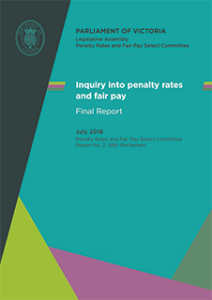 Australia currently has a lot of official inquiries into workplace issues that affect the occupational health and safety (OHS) of workers. It is almost impossible to keep up with them and, as a result, some important voices are being missed, but even if they spoke, there is a strong chance they will not be listened to. The Victorian Government has released the final report of the Inquiry into Penalty Rates and Fair Pay. There are two overt mentions of OHS that don’t seem to go anywhere.
 Last time we looked at the Australian Senate Inquiry into “