New inquiry into sexual harassment – an OHS opportunity and challenge

On June 20 2018, the Australian government announced a National Inquiry into Sexual Harassment in the Workplace, claiming it to be a world-first. Sexual harassment is not an occupational health and safety (OHS) hazard in many ways BUT the psychological harm it can create is. The job of an OHS person is to encourage employers to reduce work-related harm through prevention, so we need to prevent sexual harassment, just as we do for all the work activities that contribute to poor psychological health and safety.

The macroeconomic costs of sexual harassment in the workplace may be of interest to politicians and business lobbyists but this can be a significant distraction from identifying ways to prevent psychological harm, which should be the most important legacy of this type of inquiry.

Addressing the OHS impacts of
Subscribe to SafetyAtWorkBlog to continue reading.
Subscribe Help
Already a member? Log in here

Old school OHS – eliminating workplace risks at the source

Safe Work Australia’s work-related psychological health and safety guidance focusses on the elimination risks and hazards, as required under Australia’s workplace health and safety laws.  But a slight technical change in the legislation when it moved from occupational health and safety (OHS) to work health and safety (WHS) impedes its successful acceptance.

Australia’s Work Health and Safety laws dropped a reference in the Act’s Objects that would have provided considerable support to work-related mental health and this guidance. 

Subscribe to SafetyAtWorkBlog to continue reading.
Subscribe Help
Already a member? Log in here

A strong attack on work-related psychological health and safety

The guidance on workplace psychological health and safety forecast by Safe Work Australia’s Peta Miller was released on June 14 2018.  There is potential for this guidance to change how mental health is managed and, most importantly, prevented in Australian workplaces.

It is important to note that “Work-related psychological health and safety – a systematic approach to meeting your duties” has been developed with the involvement and approval of all of Australia’s occupational health and safety (OHS) or work health and safety (WHS) regulatory bodies.  Workplace mental health promoters and resilience peddlers are unlikely to find much support in this document as the prevention of harm is the benchmark.

The guidance is also intended to operate in support

Subscribe to SafetyAtWorkBlog to continue reading.
Subscribe Help
Already a member? Log in here

Duty of Care to the safety and health of “others”.

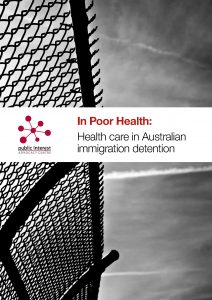
The Public Interest Advocacy Centre (PIAC) has released a very good report about Australia’s immigration detention centres which includes a long discussion on duty of care to detainees under Common Law. The report, “In Poor Health: Health care in Australian immigration detention” does not include any discussion on the duty of care under work health and safety (WHS) legislation however it can be argued that the Australian Government, through its supply chain, chain of responsibility and contract management, also has a duty of care to detainees under health and safety laws.

Several recent legal actions and workplace safety guidance indicates that clarification about the duty of care on physical and psychological risks to “others” is overdue.

Subscribe to SafetyAtWorkBlog to continue reading.
Subscribe Help
Already a member? Log in here

The data for workplace mental health exists, if we demand it

Data about occupational health and safety (OHS) and work-related psychosocial injuries has often been described as being hard to find.  In some ways it is not necessarily hard to find but difficult to access.  An untapped source of data is the records of illness and leave taken that is usually held by the Human Resources (HR) departments, often named “People and Culture”or some variant.  This type of data could be invaluable in determining a workplace psychological profile, if the HR departments would trust OHS professionals more, or release this data in a format that would allow OHS professionals to assess risks while maintaining employees’ privacy.

Beware, Generalisations Ahead

In Australia, employees are usually entitled to ten days’ sick leave, five of which require a medical certificate.  This means that one of the forty-eight expected working weeks may be taken off by workers with no reason provided to the employer other than a call or a text saying “I’m not coming into work today because I am not feeling well.”  Australian slang describes this as “chucking a sickie”.  

Subscribe to SafetyAtWorkBlog to continue reading.
Subscribe Help
Already a member? Log in here

It’s on the books but we don’t read much

Victoria’s Trades Hall has criticised the Master Builders Association of Victoria (MBAV) over its opposition to Industrial Manslaughter laws.  The MBAV’s opposition is described as “tired” by Trades Hall in a small article in the OHS Reps SafetyNet Journal which illustrates how the gap is unbreachable.

This is what the OHS Unit of Trades Hall said about the

Subscribe to SafetyAtWorkBlog to continue reading.
Subscribe Help
Already a member? Log in here

ACCC slaps down the FCAI on quad bike safety

On June 5 2018, Sharon O’Keeffe of the North Queensland Register newspaper aired the response of the Deputy Commissioner of the Australian Competition and Consumer Commission (ACCC) Mick Keogh to claims from the Federated Chamber of Automotive Industries (FCAI) on the safety of quad bikes and crush protection devices (CPDs). O’Keeffe says “the gloves are off”.

In March 2018, the ACCC announced its intention for a mandatory safety standard for quad bikes, or All Terrain Vehicles (ATV,) that included CPDs. 

Subscribe to SafetyAtWorkBlog to continue reading.
Subscribe Help
Already a member? Log in here
Concatenate Web Development
© Designed and developed by Concatenate Aust Pty Ltd