
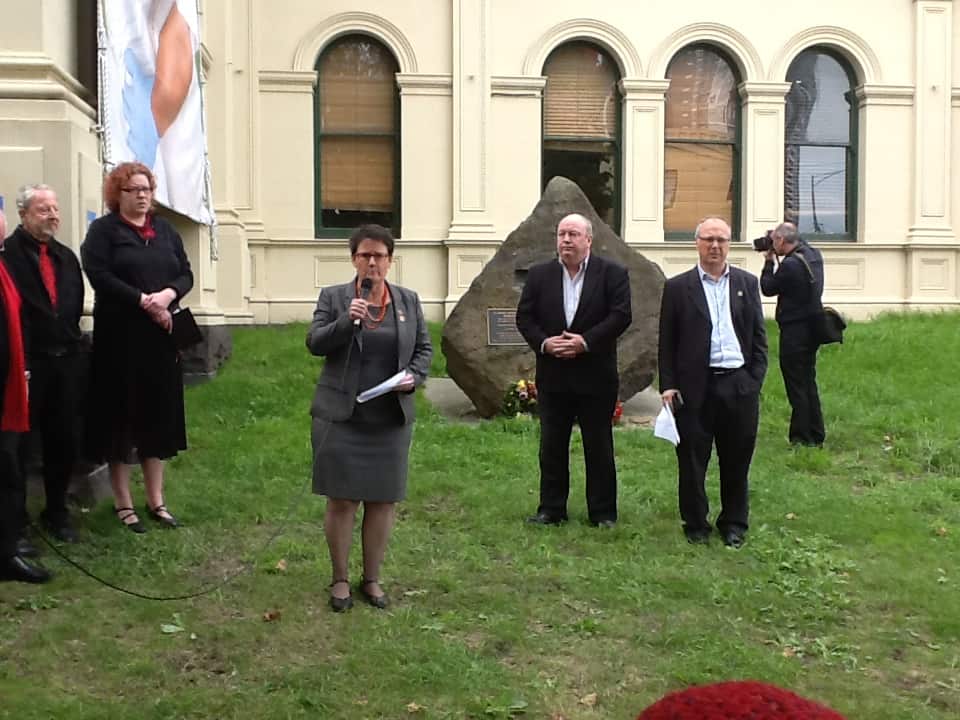
 A short time ago the International Workers Memorial Day commemoration in Melbourne, Victoria, concluded. The ceremony was less sombre than in previous years with, it seemed, fewer families and relatives of deceased workers. Certainly there was no speech from a family member, nothing from workplace safety advocates other than the three trade union speakers, Meredith Peace, Brian Boyd and Michael Borowick (all pictured right), however there were tears for some in the crowd and wreaths were laid prior to a minute silence.
The politics was reduced this year as there were no noisy protests from the back of a tray truck and no march on Parliament afterward, however politics is never far from the surface of this type of event. Michael Borowick, Assistant Secretary of the Australian Council of Trade Unions was the more effective of today’s three speakers. Continue reading “Red tape (again) and Obama’s support – Melbourne’s Workers’ Memorial Day 2014”
 Productivity
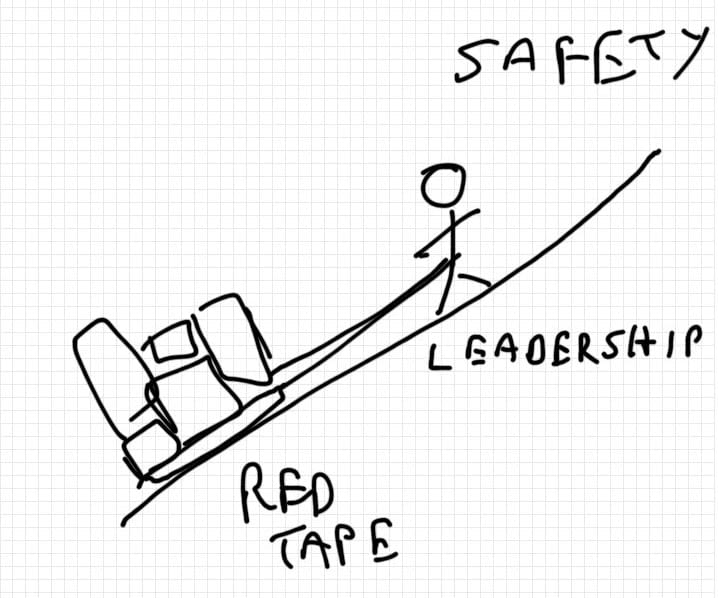 During a recent seminar I produced the doodle on the right, which depicts what I think the speaker was talking about. Safety is a goal that can be best achieved through improving a company’s leadership qualities. However all companies seem to be restricted by red tape, however one defines that. Can this journey be improved?