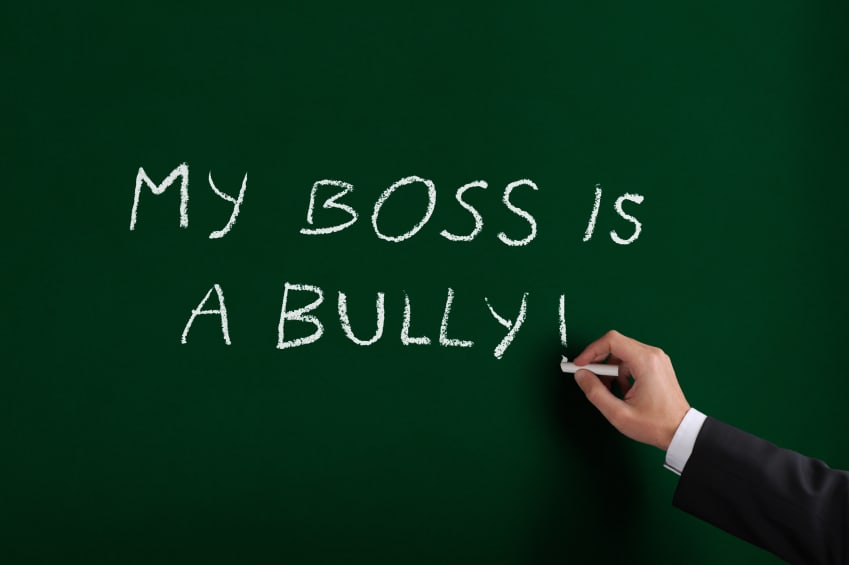
CSIRO bullying case shows the complexity of the issue for all of us

For some time the Commonwealth Science and Industrial Research Organisation (CSIRO) has been plagued with accusations of bullying and harassment.   A researcher began court action in 2011.  An anonymous website “Victims of CSIRO” was established in 2012 and provides a timeline of disgruntlement for back as far as 2002.  In May 2012, Liberal politician Sophie Mirabella, raised the issue of bullying in criticism of the then Prime Minister, Julia Gillard.  In July 2012, Comcare issued an Improvement Notice to CSIRO following an investigation

”thoroughly reviewing the workplace systems relating to the prevention and management of bullying behaviour at CSIRO”.

In September 2012, CSIRO whistleblowers spoke of bullying. The CSIRO Staff Association reported anecdotal evidence of increased bullying and harassment in late 2012.

In August 2013 HWL Ebsworth released the independent report  (the Pearce report) which, according to the CSIRO, found

“no major or widespread issues with unreasonable behaviour or bullying in CSIRO”.

How does that work? Continue reading “CSIRO bullying case shows the complexity of the issue for all of us”

Labour productivity is “soaring” in a period of IR/OHS variability

Mental health, happiness, well being, safety, red tape …. each of these have been linked to productivity recently in Australian discourses but, as has been mentioned previously, productivity has a flexible definition depending on one’s politics and political agenda. There is multi-factor productivity and labour productivity.  Each measure provides different results.  So where does OHS sit?

An article in The Weekend Australian on 27 July 2013 illustrates the flexible definitions and includes a rare acknowledgement on labour productivity.

“On the measure of labour productivity, which captures the output of each worker, productivity growth is in fact soaring, hitting 3.4 per cent in 2011-12. [emphasis added]

But on the broader measure, which includes the use business makes of capital equipment, growth is still a negligible 0.1 per cent and has declined on average 0.7 per cent a year ever since Labor was elected.”

The labour productivity figure is important to remember when one hears about excessive workloads, excessive hours of work and other potential causes for psychosocial hazards.   Continue reading “Labour productivity is “soaring” in a period of IR/OHS variability”

IR to HR to OHS to WHS to Mental Health in one lunchbreak

Every so often, legal seminars on industrial relations and occupational health and safety identify possible solutions instead of spruiking a lawyer’s latest publication or showing off legal expertise and OHS ignorance.  In a lunchtime seminar in July 2013, Melbourne law firm Maddocks provided 30 minutes of clarity on flexible working arrangements and another 30 on workplace bullying, providing a useful and refreshing bridge between human resources, industrial relations and OHS.

Continue reading “IR to HR to OHS to WHS to Mental Health in one lunchbreak”

Very useful workplace mental health guidelines released

The Institute for Safety, Compensation and Recovery Research (ISCRR) has released a set of guidelines for the prevention of mental health problems at work. Such guidelines have been sorely required in Australia where workplace mental health problems have become an increasing problem for workers and organisations and workplace bullying dominates the policy landscape. It recommends the development of a mental health and wellbeing strategy that includes the following elements:

  • “the development of a positive work environment that supports and encourages mental health
  • balancing job demands with job control
  • appropriately rewarding employees efforts
  • creating a fair workplace
  • provision of workplace supports
  • effective management of performance issues
  • provision of training to develop management and leadership skills
  • supportive change management processes Continue reading “Very useful workplace mental health guidelines released”

Legal changes on workplace bullying are forgetting the workers

The lower house (thanks, Rex) of the Australian Parliament has passed amendments to its industrial relations laws, the Fair Work Act, to allow for matters concerning workplace bullying to be heard in its Commission, once the laws pass the Senate.. But recent media and parliamentary discussion on this action seems to forgotten the welfare of the bullied workers.

Professor Andrew Stewart of the University of Adelaide is reported to have said that there is a risk that the Fair Work Commission will be “swamped” with bullying complaints and that a system of filtering should be applied. Such a mechanism is supported by Professor Ron McCallum who said in The Australian on 14 June 2013:

“I would agree with the Coalition that there should be some filtering mechanism because we don’t know how many complaints there are going to be,” he said. “There’s been wildly varying suggestions.

Continue reading “Legal changes on workplace bullying are forgetting the workers”

Draft bullying code and cultural measurement

cover of 2013 DRAFT-COP-Preventing-Responding-Workplace-BullyingSafe Work Australia has released its latest draft code of practice for preventing and responding to workplace bullying for public comment.  There are many useful and practical strategies in the draft code but workplace bullying is only a small element of the more sustainable strategy of developing a safe and respectful organisational culture.

The definition in the May 2013 draft code is a tidied up version of the September 2011 definition:

“…repeated and unreasonable behaviour directed towards a worker or a group of  workers that creates a risk to health and safety.”

The lack of difference in these definitions is a real positive given the complaints, primarily, from the business community since 2011.  The significance in both definitions is that there must be a direct relationship between the behaviours and health and safety risks.  This could be substantially difficult to prove, particularly if , as in  most cases, it is the recipient of the bullying who needs to prove this.

Harm Prevention

Consider, for a moment, that this code of practice is used for establishing preventative measures and not just used for disproving a court case, these definitions can help establish a benchmark for creating a safe organisational culture. Continue reading “Draft bullying code and cultural measurement”

WorkHealth raises health awareness but only so far

Last week the Institute for Safety, Compensation and Recovery Research (ISCRR) released a review of the WorkHealth program.  The results are very positive and deserve detailed analysis.  However these analyses do not seem to address all the expectations of the Victorian Government when the program was launched several years ago.

Cover of workhealth_synthesis_reportPremier John Brumby said at the launch of WorkHealth that

“Over time the program is expected to free up $60 million per year in health costs, as well as:

  • Cut the proportion of workers at risk of developing chronic disease by 10 per cent;
  • Cut workplace injuries and disease by 5 per cent, putting downward pressure on premiums;
  • Cut absenteeism by 10 per cent; and
  • Boost productivity by $44 million a year.”

One of the key findings of the research seems to meet two of the program’s aims:

“Modelling of outcome forecast goals for a 10% reduction in absenteeism and a 5% reduction in compensable injury rates are likely to be met, especially as health promotion program uptake increases.” (page 5)

It is reasonable to expect from a 4-5 year study of hundreds of thousands of work health checks that hard data be obtained but as the quote above reveals, the researchers needed to apply modelling and draw on research from other sources. Continue reading “WorkHealth raises health awareness but only so far”

Concatenate Web Development
© Designed and developed by Concatenate Aust Pty Ltd