The Toowong cancer cluster and risk communication

The latest edition of the Medical Journal of Australia (eMJA) has published an investigation into the possible cancer cluster at the Toowong television studios of the Australian Broadcasting Corporation (ABC) in late 2006.

Not surprisingly, given previous reports, the investigation has found that

“No statistically significant excess risk of breast cancer in ABC female employees was found across the Australian states and territories as a whole compared with their respective population incidences.  A statistically significant increased risk of breast cancer was found among ABC female employees in Queensland, consistent with the findings in an earlier report.”

The Toowong incident created considerable concern amongst staff, to such an extent that the corporation decided to close the entire facility and relocate all the broadcasting processes.  Unless this was already a corporate strategy the decision was brave, particularly when the initial investigations showed that the concern was not justified for Toowong specifically.

The ABC has an excellent timeline of media statements about the incident online.

Several issues from the latest report are worth noting.   Continue reading “The Toowong cancer cluster and risk communication”

Prisons are another world when implementing workplace safety

The new report from the Australian Institute of Health and Welfare (AIHW) into prisoner health and welfare makes no mention of workplace safety, even though most prisons in Australia have formal work programs for commercial gain.

The report “The health of Australia’s prisoners 2009” details the health and welfare status of Australian prisoners with some very confronting statistics that should be of more general concern to the community.  The media release summarises some of the report’s findings:

“The report highlights a number of significant health issues.  It shows that rates of chronic conditions, such as asthma, cardiovascular disease, diabetes, and communicable diseases such as hepatitis B and hepatitis C, are significantly higher among prisoners than among the general population.

‘Of particular concern is the number of people who enter prison with mental health issues and high levels of psychological distress,’ said Ingrid Johnston of the AIHW’s Social and Indigenous Group. Continue reading “Prisons are another world when implementing workplace safety”

Suicides in China – is this a Foxconn problem or an Apple problem?

Foxconn, a large technology manufacturer in China has a cluster of suicides.  This issue is getting more attention than normal in Western media because the company manufactures products for Apple and the Apple iPad went on sale around the world at the same time news about the suicides broke.

The question that must be asked is “is this a Foxconn problem or an Apple problem?” Continue reading “Suicides in China – is this a Foxconn problem or an Apple problem?”

US workplace bullying interview with Gary Namie

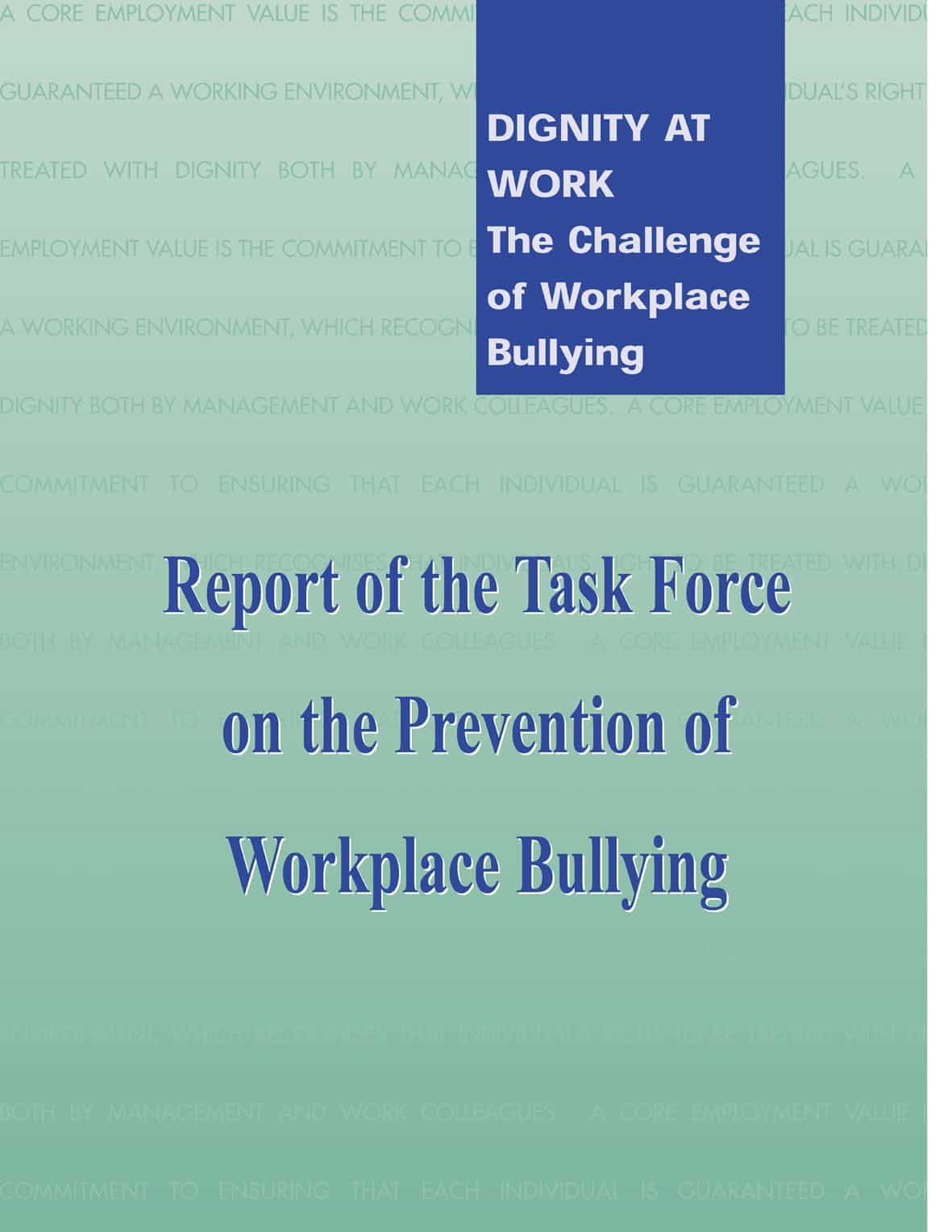
Ben Merens of Wisconsin Public Radio interviewed Gary Namie of the Bullying Institute on 26 May 2010 for 45 minutes on his At Issue radio program.  The interview is very timely as new “Healthy Workplace” legislation is being considered in the United States.

What was useful in this interview was that the discussion centred on workplace bullying and Namie summarised how this is substantially different from schoolyard bullying – a  significant difference which requires different methods of control.  Namie says that although bullying in childhood is significant, the impact on an adult of similar treatment may have longer lasting effects.

The broadcast, of course, applies to the US context principally but Namie has a long and strong international reputation in workplace bullying advice and deserves an audience.  Tellingly, Namie says that the comparison for workplace bullying is not schoolyard bullying but domestic violence.

In 2001, Namie provided me with a review copy the 2000 edition of The Bully At Work for the SafetyATWORK magazine.  The review is available HERE.

Kevin Jones

Guidance on the impacts of a workplace death

A short time after a traumatic death of a family member will cause the family to feel they are in a mental spin.  Not only are the usual funeral arrangements required but there can seem to be involvement in a personal loss from a mess of government departments and legal bodies.

It is not expected that all families have a manual to life and death but there is information for families who may have to face a workplace death.  Perhaps, more importantly, this information should be read by safety professionals so that they understand the social and familial complexities of workplace incidents.  Companies may call in the lawyers but there is also an obligation to their employees and families and guides, like the Kit for Families produced by the Workplace Tragedy Family Support Group, may help put all the processes into perspective.

Other online guidance material is available from

The Victorian Trades Hall Council

WorkCover New South Wales

SafeWork SA

One regulator’s perspective can be found at Health & Safety Executive

SafetyAtWorkBlog readers are welcome to suggest other similar online  guidelines.

Kevin Jones

Australian roundtable podcast on workplace bullying

On 21 May 2010, Boardroom Radio (BRR) released a podcast on workplace bullying that includes opinions from some worthy speakers.

Andrew Douglas, Managing Director at Douglas LPT;

Wayne Blair, Fair Work Australia Commissioner;

Gail Hubble, Barrister; and

Anna Palmer, HR Consultant, at Provenio Consulting

Some of the questions are a little peculiar such as whether current generations are more “vulnerable” to bullying.  Speakers responded that there are more opportunities for bullying now due to new technologies Continue reading “Australian roundtable podcast on workplace bullying”

Looking for the causes of workplace harm can change one’s world view

The New York Times reported on 17 May 2010 that psychologists have started considering the causes of workplace stress.  About time!

The report says that

“Employees are unhappy about the design of their jobs, the health of their organizations and the quality of their managers..”

and that unhappy workers have a high risk of heart attacks and depression.

The article is principally an interview with the author of a new personnel management book that identifies that performance reviews are a generator of unhappiness and stress.  This concept has been circulating for some time and goes part way to making workplaces safer.

Job design, mentioned above, can be broadened to include how people are managed.  Personnel management and human resources (HR) are a crucial element of any business but the NYT article indicates a growing realisation that the foundations of this management, how jobs are designed, have generated some of the hazards that HR is now tasked to control. Continue reading “Looking for the causes of workplace harm can change one’s world view”

Concatenate Web Development
© Designed and developed by Concatenate Aust Pty Ltd