
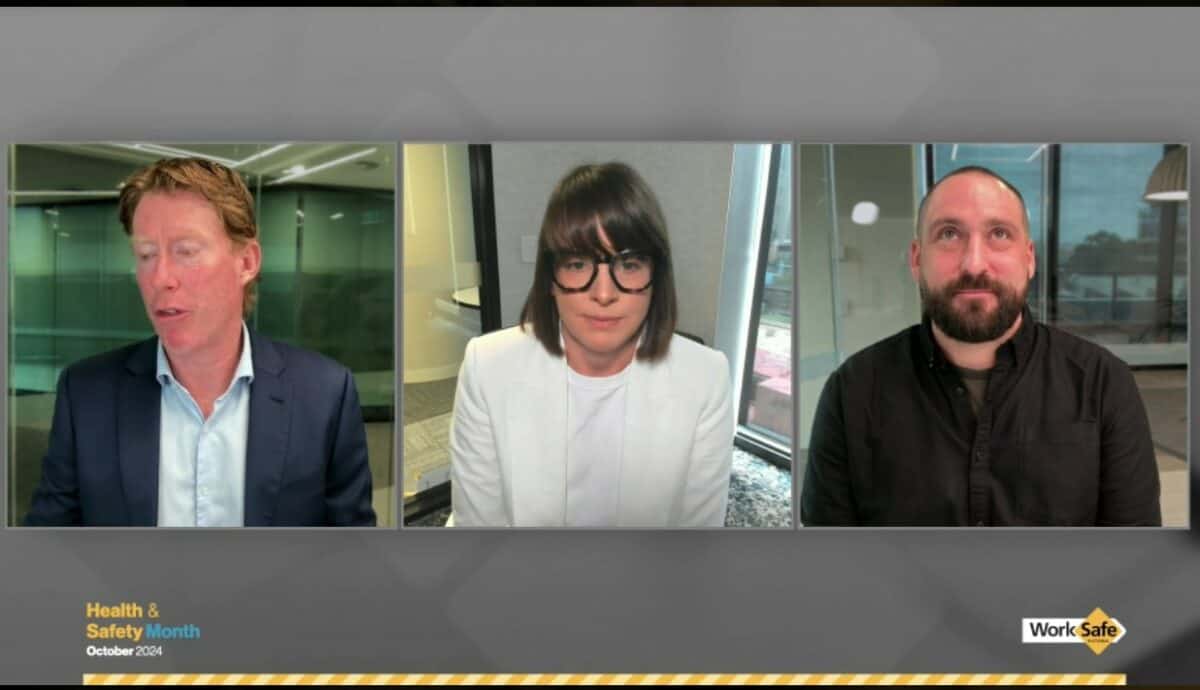
In the last week of October 2024, which is Australia’s National Safe Work Month, WorkSafe Victoria held two notable webinars: “Addressing and improving health and safety issues in the workplace” and ” Prevent and manage psychosocial hazards in the workplace.” The themes were occupational health and safety (OHS), but the webinars differed greatly in content and presentation.
Category: psychosocial
Many employers remain unaware of positive duties to prevent sexual harassment at work
A new report on sexual harassment at work by Ourwatch has been reported on by the Australian Broadcasting Corporation (ABC). The report says:
“…. found 40 per cent of workplace leaders surveyed were unaware of their new legal obligations to prevent workplace sexual harassment.”
Given that the core legislative obligation to prevent sexual harassment is over 40 years old, perhaps better questions could have been asked.

Useful but limited information on discrimination and harassment in Australia’s tech industry
A not-for-profit organisation, Grapevine, released a short annual report on workplace discrimination and harassment notifications. The report received some attention in Australian media as these workplace hazards continue to be topical. The issues blend into the occupational health and safety (OHS) discipline, but the discussions were marked for omitting the OHS and regulatory context.

Improvement notice issued after psychological trauma notification
Psychological injuries that happen at work or are caused by work may need to be notified to occupational health and safety (OHS) regulators in some Australian jurisdictions. Recently, an organisation associated with prominent Australian businessman Andrew Forrest underwent the notification experience and received an improvement notice.

Why does the Human Resources profession struggle with preventing psychological and psychosocial harm?
I am not immune to the worries and potential of using Artificial intelligence (AI) tools in my occupational health and safety (OHS) work and writings. As with millions of others, my relationship is a work in progress.
I have long used the transcription software Otter.ai to transcribe short interviews. It remains less accurate than human transcription, but it remains useful. One of its new AI tools is that it can analyse all of the conversations recorded through Otter.ai or uploaded to it for transcribing. I have years of recordings at OHS conferences, seminars, webinars, and interviews, so I asked this question:
“Why does the Human Resources profession struggle with preventing psychological and psychosocial harm?”
This was its response:
If it cannot be done safely, it should not be done at all
“If it cannot be done safely, it should not be done at all.” I have heard this phrase repeatedly over the last 12 months in particular. It is a truth, but it also avoids all of the flexibility our occupational health and safety (OHS) laws, institutions and interpretations have allowed for decades. Perhaps our tolerance of this flexibility is fading.
I was reminded of the quote above when reading an article (paywalled) in The Times on October 17, 2024, written by Will Humphries titled “Army sexual harassment: ‘People wouldn’t join if they knew the truth’”.
Plenty of what and how with a little bit of why
Psychosocial hazards are gaining attention online, but the pace of change remains sloth-like. Two recent online events provide good, basic occupational health and safety (OHS) and organisational psychology information and some insight into the slow pace.