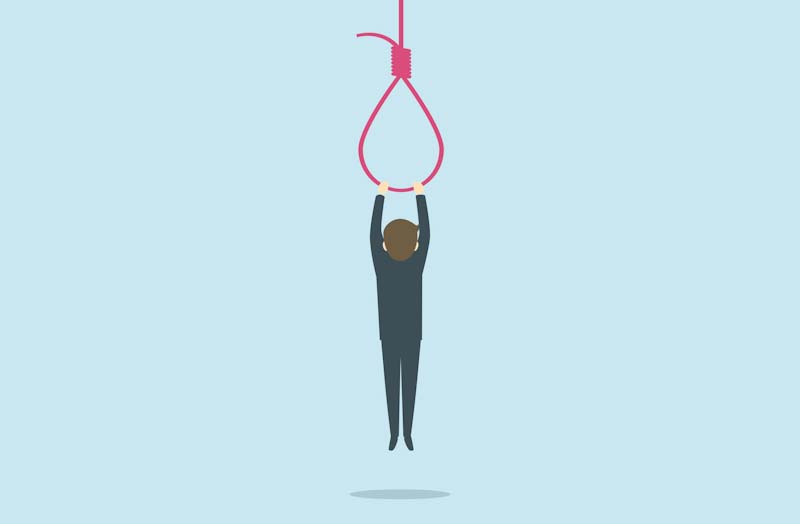
The OHS benefits of “work to rule”

In May 2020, “work to rule” was touched on in a long article about the future of work. “Work To Rule” is a phrase that is rarely heard now, as the industrial relations (IR) conversation has changed, but it is more relevant than ever.

The industrial relations context for working to the rules is illustrated in this short article. Still, work to rule can have occupational health and safety (OHS) benefits, especially psychosocial health and the current mot du jour, The Great Resignation/Rebalance.

Subscribe to SafetyAtWorkBlog to continue reading.
Subscribe Help
Already a member? Log in here

Banyan Health Group responds

Earlier this week, I paused an article on corporate burnout which used a media release from the Banyan Health Group as the catalyst. The group chose not to respond to some challenging questions but later reversed their position. Below are the responses of Ruth Limkin – CEO of The Banyans Healthcare Group to those questions. I thank Ruth and her team for their support

SAWB: The media release mentions chronic stress risk factors of “increased absenteeism, disconnected employee relationships, heavy workload and tight deadlines” and “longer hours”.  The World Health Organisation has written that “Burn-out refers specifically to phenomena in the occupational context and should not be applied to describe experiences in other areas of life”. What can an executive manager do to reduce or eliminate these factors and thereby reduce the need for personal psychological interventions? Should the businesses change the way they do business and change the expectations that they place on executives?

Subscribe to SafetyAtWorkBlog to continue reading.
Subscribe Help
Already a member? Log in here

Corporate burnout and expecting too much

The Banyan Health Group issued a media release about company executives experiencing burnout in support of Psychology Week. I put some questions to the Group’s media contact from the occupational health and safety (OHS) perspective. The contact said that the Banyan Health Group members did not think they were best placed to answer the questions. [They have since chosen to respond and that supplementary article is available HERE]

That’s perhaps understandable, but we know that work-related mental health problems require a multi-disciplinary response involving personal and structural interventions as individual, social, and organisation factors contribute to poor mental health, of which burnout is part. Organisations that put themselves out there as subject matter experts and corporate workplace service providers to business should be able to respond to challenging questions. Below are statements from Banyan’s media pack and my questions.

Subscribe to SafetyAtWorkBlog to continue reading.
Subscribe Help
Already a member? Log in here

Progressive report on construction industry culture

An analysis of the safety culture in Australia’s construction industry was launched in October 2021 by a coalition of construction companies under the Construction Industry Culture Taskforce rubric. The Report proposes some interesting and significant changes including capping the working hours to no more than 50 hours and no weekend work. This suggestion is of enormous significance as it challenges the statements of many construction companies of worker safety being their highest priority.

Subscribe to SafetyAtWorkBlog to continue reading.
Subscribe Help
Already a member? Log in here

Reluctance to address mental health notifications

Another example of the unwillingness of occupational health and safety (OHS) regulators feeling able to affect change in workplace mental health by looking outside the workplace is the United Kingdom’s Health & Safety Executive (HSE). Sadly this position contributes to unnecessarily stigmatising a legitimate workplace hazard.

On a recent episode of the Safety and Health Podcast on workplace suicides, Professor Sarah Waters said:

“Unlike other countries, unlike France, unlike the US, unlike most European systems, suicide, even where there are clear links to work is pretty much treated in the UK context as an individual mental health problem, there tends to be a denial on the part of the HSE on the part of other public agencies, that there is a link between suicide and work.”

Subscribe to SafetyAtWorkBlog to continue reading.
Subscribe Help
Already a member? Log in here

WorkSafe Victoria’s new Mental Health Strategy is good but constrained

WorkSafe Victoria has launched a “Mental Health Strategy” aimed at preventing mental health at work. It is a good strategy that is hampered by its jurisdictional constraints. There is plenty of evidence on the causes of mental ill-health at work and what is required to prevent this hazard. Many of these controls exist outside the workplace, beyond the realm of any one government organisation, so it is disappointing that the Victorian Government did not release a Statewide mental health plan, especially as it has a Minister for Mental Health in James Merlino.

Subscribe to SafetyAtWorkBlog to continue reading.
Subscribe Help
Already a member? Log in here

Economic analysis = A+. OHS analysis = C.

Research analyses of the economics of modern work methods are important evidence for government policymaking, but occupational health and safety (OHS) costs are often omitted or overlooked. The recent report by The Australian Institute and its Centre for Future Work called “Working From Home, or Living at Work?” appears to be another example.

Subscribe to SafetyAtWorkBlog to continue reading.
Subscribe Help
Already a member? Log in here
Concatenate Web Development
© Designed and developed by Concatenate Aust Pty Ltd