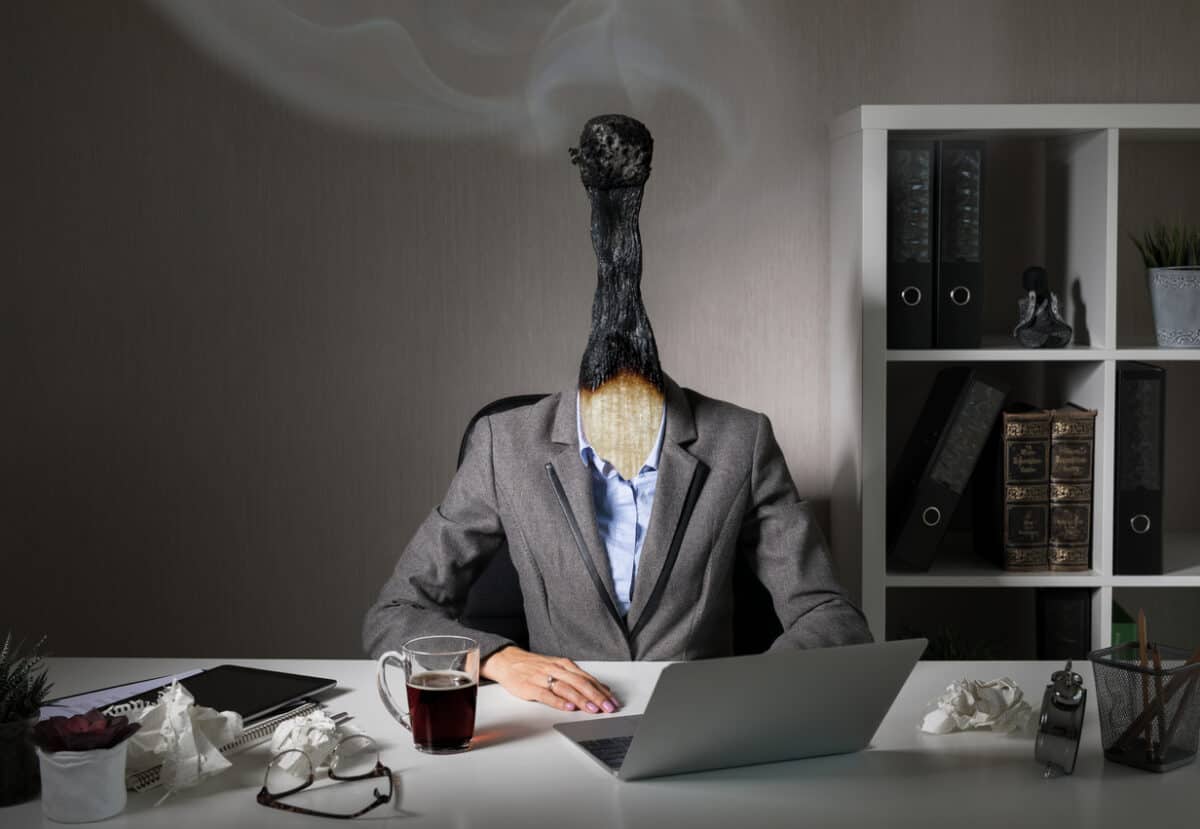
Psychological harm gets new regulations and funding access

The State of Victoria had a big week on mental health, with the Labor Government allocating billions of dollars to the improvement of the mental health of its citizens. Much of the justification for the spend (and the imposition of a mental health levy on large companies) is in response to the recent Royal Commission into Mental Health Systems. Workplace health and safety was on the agenda in that Royal Commission. Hence, it is worth looking at how, or if, this recent Budget helps employers improve the psychological health of their workers in anticipation of new regulations on this hazard promised by Victoria’s Minister for Workplace Safety, Ingrid Stitt.

Subscribe to SafetyAtWorkBlog to continue reading.
Subscribe Help
Already a member? Log in here

New workplace mental health info but no new strategy

On May 20, 2021, Australia’s Work Health and Safety (WHS) Ministers to discuss a range of occupational health and safety (OHS) matters. One matter will be the inclusion of a specific requirement on employers that, according to the Australian Council of Trade Unions (ACTU):

“…. would finally require employers to identify and address risks to mental health, in the same way, they are required to with risks to physical health.”

What the ACTU fails to make clear is why this regulatory change is required when the duty to provide a physically and psychologically safe and healthy workplace already exists in the current OHS/WHS laws in Australia.

The ACTU does, however, with the help of the Australia Institute and Centre for Future Work, provide more data on work-related mental health. The union movement is one of the few voices that acknowledge the structural elements of OHS but fails to consider any options other than regulation and, with a federal conservative government in power, it is unlikely to receive an attentive audience.

Subscribe to SafetyAtWorkBlog to continue reading.
Subscribe Help
Already a member? Log in here

Resilience = the enemy of the Duty of Care

Last year Professor Michael Quinlan and Dr Elsa Underhill wrote about how precarious work arrangements had contributed to the spread and prevalence of COVI19 in Australia and its workplaces. Soon Australia’s Treasurer, Josh Frydenburg, will announce his 2021-22 Budget strategy. It is forecast to include big government spending and in many different areas of Australian industry, but the economy and Australians’ health may be better served by addressing the precarious employment structures on which more and more businesses rely and about which the Government seems disinterested.

In the latest edition of Griffith Review (no. 72), Angela Smith looked at how embedded precarious work is in Australia’s economic rebound. She also looked at how the wellbeing and wellness industries compound the health and safety risks of this type of work in this time of COVID19.

Subscribe to SafetyAtWorkBlog to continue reading.
Subscribe Help
Already a member? Log in here

Non-military safety lessons from the latest Royal Commission (open access)

The Australian Broadcasting Corporation broadcast an episode of The Signal on April 21, 2021, which discussed the complexity of the culture of Australia’s military, and I strongly recommend you listen to it. It does make some points about culture worth contemplating in the context of one’s own workplace and profession.

The most useful point was that an established institution cannot have a uniform culture that meets the expectations of all relevant stakeholders. Generations take their culture with them. So those who started in the military in the 1980s and 1990s (and later) will bring the values and lessons of that time into their maturity and when they move into senior and leadership positions – positions that are intended to both preserve and progress the organisation’s culture. This will result in conflict between the expectations of new recruits and the realities of the established military executives. Not open revolt, but a dissatisfaction that may or may not result in leaving the organisation.

The topic used by The Signal to illustrate the extremes of the defence force members and stakeholders was mental health.

Continue reading “Non-military safety lessons from the latest Royal Commission (open access)”

International perspective on bullying and harassment

In April 2021 the International Association on Workplace Bullying and Harassment conducted its 2002 conference online. The conference was enlightening for its inclusivity.

Many Western countries categorise work-related mental health as if they have minimal overlap. Workplace bullying is often seen as its own discipline with its own guidances, analyses and supporting industries. This can be convenient and has evolved from a reactive and often shallow response from Government.

This structure was acknowledged at the conference but many of the presentations ignored it and spoke about worker health, safety and welfare in the broadest terms.

The conference also balanced detailed local research with broad global contexts. This is the first of a series of articles based on presentations at the conference

Subscribe to SafetyAtWorkBlog to continue reading.
Subscribe Help
Already a member? Log in here

Mental Health Crisis? What Crisis?

On April 16 2021, the Guardian newspaper included letters from two clinical psychologists (paywalled) that contradict each other on the reality of COVID-19-related mental health. Dr Lucy Johnstone wrote that it was essential that society builds itself to be better post-COVID-19 and that:

“The “mental health pandemic” trope simply does not fit the evidence. Yes, some people have suffered greatly, but the overall picture is of a population that is largely resilient, although understandably bored, lonely and frustrated at times.”

and

“It should surprise no one that people with more to be depressed and anxious about are feeling more depressed and anxious. Reframing understandable responses to difficult life circumstances as “mental illness” plays into professional interests and political denial.”

Continue reading “Mental Health Crisis? What Crisis?”

The hill that OHS needs to climb for respectability remains a mountain

The current Australian debate about sexual harassment at work illustrates the forces ranged against occupational health and safety (OHS) being seen as a legitimate approach to preventing psychological harm. Entrenched Industrial Relations perspectives appear to be the biggest barrier. Such barriers are not always intentional and have evolved over years and decades as cultures and ideologies do. Some of the recent media coverage on the release of the Federal Government’s response to the report of the 2020 National Inquiry into Sexual Harassment in Australian Workplaces illustrates the dominance of industrial relations thinking – part of the reason Sex Discrimination Commissioner Kate Jenkins has described elements of the government’s response as a missed opportunity.

The OHS profession must start to overtly tackle each of these dominant perspectives.

Subscribe to SafetyAtWorkBlog to continue reading.
Subscribe Help
Already a member? Log in here
Concatenate Web Development
© Designed and developed by Concatenate Aust Pty Ltd