Selling remediation as prevention is dishonest

Regular readers of, and subscribers to, this blog know that I am a strong advocate for the prevention of suicides, especially those related to work. Mental illness is not always connected to suicides but there is often a correlation between, mental stress, self-harm, suicide ideation and suicides. as such it is useful to keep an eye on suicide statistics, particularly in industries or times of great stress.

In early December 2020, Victoria’s Minister for Mental Health, James Merlino, addressed the Parliamentary Accounts and Estimates Committee (PAEC) to discuss the 2020-21 Budget Estimates. At that time, Merlino made some clear statements about the rates of suicides, which are useful to remember when evaluating suicide and mental illness prevention strategies like those mentioned in the Productivity Commission’s recent inquiry into Mental Health.

Subscribe to SafetyAtWorkBlog to continue reading.
Subscribe Help
Already a member? Log in here

The HR approach to mental health needs to be challenged

Human Resources (HR) management may seem to be a bit of a punching bag in SafetyAtWorkBlog articles. There is no doubt that HR can do better to prevent harm, especially psychological harm, but so can ever other management profession. One 2018 article was recently reposted by Human Resources Director (HRD) magazine on workplace mental health which deserves some consideration.

Firstly the article is categorised under “Corporate wellness”, instantly locking it into a specific area of HR and occupational health and safety (OHS). The article, written by lawyer Amber Chandler of Barker Henley, also has relevance to risk management, due diligence, Industrial Relations or OHS and, as mentioned in another article recently, could benefit from being posted or cross-posted in those other categories, or even under “Leadership”. The categorisation is likely to have been an editorial decision but reveals something about HR and HR media.

Subscribe to SafetyAtWorkBlog to continue reading.
Subscribe Help
Already a member? Log in here

OHS and the Four Day Week

Recently the BBC’s Business Daily had a short discussion about the introduction of the 4 Day Week. This workplace reform has knocked about for a few years now and seems to have some mental health and job satisfaction benefits. This is enough for it to interest occupational health and safety (OHS), especially as it is one of the few examples of a structural and organisational change rather than an intervention aimed at each individual worker.

The BBC discussion indicates the difference (it may be a schism) between a new way of thinking about work and the old traditional way. The opponent to the 4 Day Week emphasises the individual over the organisational and compares service industries to those that produce goods.

The episode, now a podcast, is a good introduction to the for and against of the 4 Day Week but careful listening shows the challenge ahead.

Continue reading “OHS and the Four Day Week”

Right information, wrong magazine

The OHS Professional magazine for December 2020 contains a very good article about workplace psychological risks and the occupational health and safety (OHS) strategy to prevent mental harm. The only negative is that it is not published in a Human Resources magazine, or one for company directors. The preventative techniques are well known to the OHS profession and based on independent scientific evidence, but it is other managerial disciplines that need to learn the difference between preventing psychological harm and providing symptomatic relief.

Subscribe to SafetyAtWorkBlog to continue reading.
Subscribe Help
Already a member? Log in here

‘No Bystanders Rule’​ Bullshit

Guest Post by Dr Rebecca Michalak

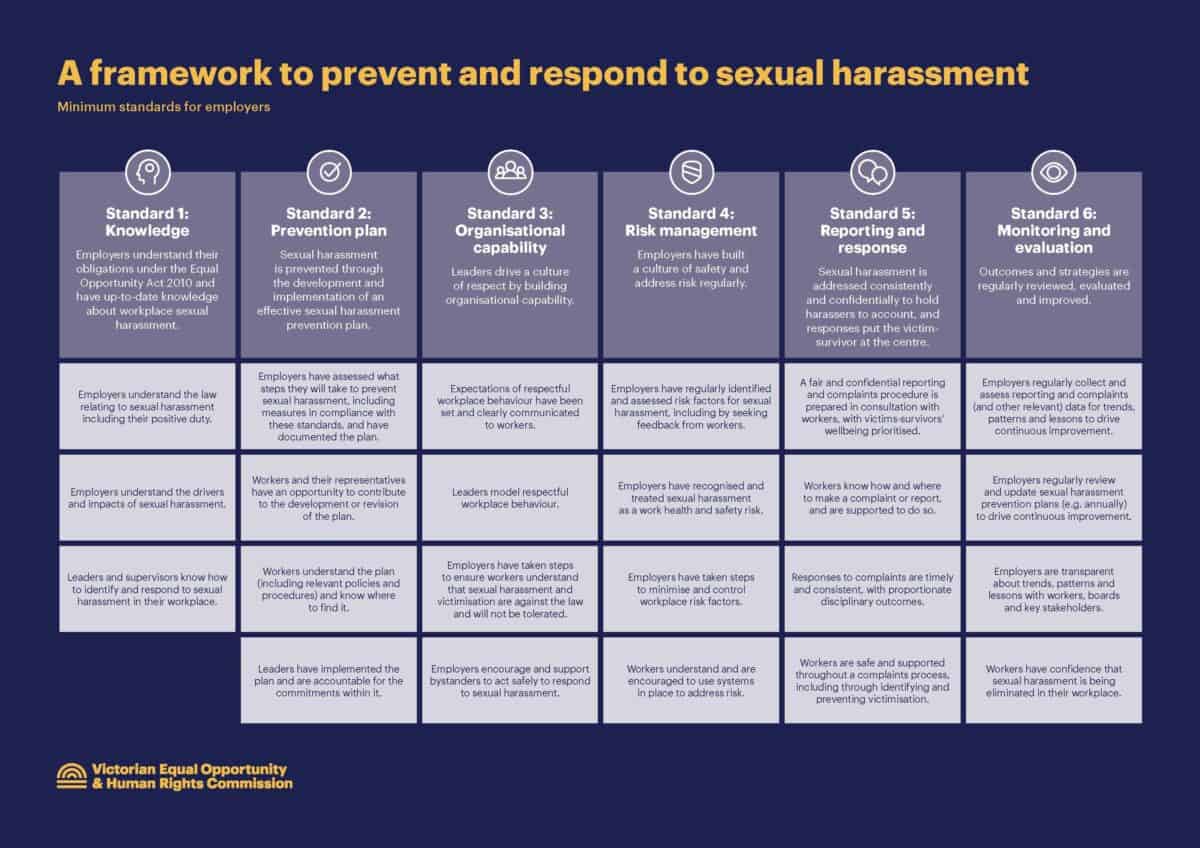
About couple of weeks ago, the Australian Financial Review (AFR) featured a piece on a law firm that had introduced a mandatory approach to reporting sexual harassment – referred to as a ‘no bystanders’ rule. 

To be clear upfront, here is my disclaimer – I am not directly commenting on the law firm in question; there isn’t enough information in the articles to make any objective judgements on that front. The references used from the two media pieces are for illustrative purposes only. Call them ‘conversation starters.’

In the AFR piece, the contractual obligation was outlined to involve: 

“…chang(ing) ‘should’ (report) to ‘must’ – so any staff member who experiences, witnesses, or becomes aware of sexual harassment must report it,” 

with the affiliated claim being,

“That shift really reinforces that there is zero tolerance – and there are no confidences to be kept; it needs to be outed – bystanders [staying silent] will no longer be tolerated.

Continue reading “‘No Bystanders Rule’​ Bullshit”

Suicide statistics could benefit from a different analysis

Regular readers of this blog would be aware that I feel that the prevention of suicide gains less attention than early intervention and that mental health has dominated suicide discussions to the point that suicides without a mental health context are largely ignored. This situation is starting to change with non-psychological pressures gaining some acknowledgement, if not examination. Mental health still dominates but the pool of contributory factors is expanding.

On 30 November 2020, the Medical Journal of Australia published the best recent example of this change, an article called “Suicide by young Australians, 2006-20415: a cross-sectional analysis of national coronial data.” The most useful statement in the research report, and the media release, is:

Subscribe to SafetyAtWorkBlog to continue reading.
Subscribe Help
Already a member? Log in here

Noisy Buggers in the Post-COVID world

Guest Post by Melody Kemp

In my more bizarre moments, I can imagine the cockpit conversation:

‘Hey Bill, there’s the blue and white house. We turn left here’
‘Bob, Copy. Over.’

Of course, it’s nonsense to think that the complexities of aircraft take-offs and landings would depend on visual cues, rather than complex technology, weather and fuel economy.  In fact, it’s the very technology that allows communities to track and identify aircraft and the noise level as they pass overhead.

But I have to admit that, particularly at night, when I see the queue of aircraft waiting to approach, their starboard and port lights blazing into our living room, it’s hard not to go out and shake an impotent fist at the crew.

As I completed this third paragraph, a Jetstar plane flew overhead. I measured the roar at 76DbA, another app told me it was slightly less than 1000 feet above my roof.  As it continues to descend, it passes over the densely populated parts of the city that follow the Brisbane River, including New Farm and Doomben, well known to race goers. What was that old saying about don’t scare the horses?

I work at home. My concentration and the paragraphs I write, come in lumps divided by the passing of planes. Some, like the Flying Doctor prop-jets, make, in objective terms, little noise (around 58dBA), but if one is sensitised to the noise in general, they become yet another psychological hazard. Evidence for aircraft noise exposure being linked to poorer well-being, lower quality of life, and psychological ill health is reflected by the responses to my questions and Facebook comments posted by concerned residents (some are included below)

Continue reading “Noisy Buggers in the Post-COVID world”
Concatenate Web Development
© Designed and developed by Concatenate Aust Pty Ltd