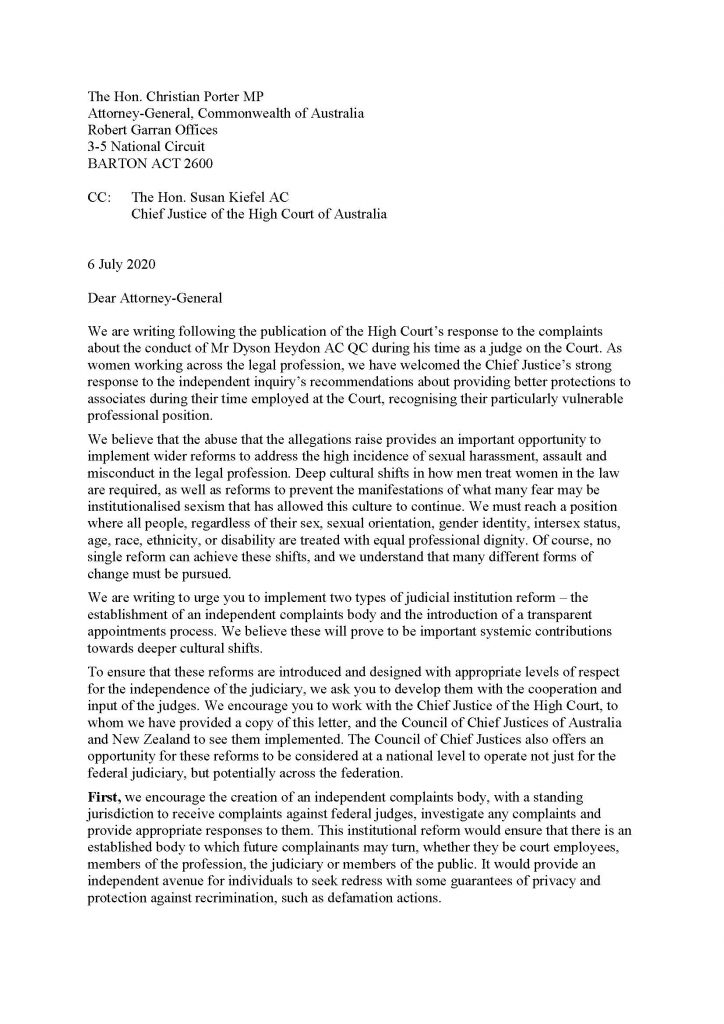
Mental health and “workplace disability”

Deutsche Welle‘s regular program “World in Progress” reported on Work in its December 18 2019 edition. It includes discussions of exploitation and trafficking of Nigerian women and South Korean workers being pressured to reluctantly attend work functions. Of particular relevance to the theme of this blog is the last report in the program when workplace psychological health is discussed.

Subscribe to SafetyAtWorkBlog to continue reading.
Subscribe Help
Already a member? Log in here

“Moral Harassment” = Workplace Bullying. France Telecom lessons

The France Telecom suicide saga has reached a conclusion with a French Court sending several of company’s former executives to jail as a result of “collective moral harassment”. This will have very little impact on the management of occupational health and safety (OHS) in Australia because of the timing and inadequate translation and context.

“Moral Harassment” is a term that is absent from the Australian OHS lexicon. One equivalent term is “mobbing” but this is also an uncommon term in Australia. Australia’s equivalent is “workplace bullying” as mentioned in research by Katherine Lippel of the University of Ottawa in 2011 (pages 1-2).

Subscribe to SafetyAtWorkBlog to continue reading.
Subscribe Help
Already a member? Log in here

OHS approach to sexual harassment gets an airing

Tracey Spicer talking with Tom Ballard in December 2017

Tracey Spicer has been a very public face of the campaign against sexual harassment in Australian workplaces. She, and her campaign, has not been without controversy but recently Spicer presented a three-part documentary on the issue. In Episode 2, the viewers heard, all too briefly, from Dr Rebecca Michalak about the occupational health and safety (OHS) context of sexual harassment.

Subscribe to SafetyAtWorkBlog to continue reading.
Subscribe Help
Already a member? Log in here

Focus on the hoops and not the holes

There is a confluence of investigations into mental health and suicides in Australia at the moment, and most of them overlap with occupational health and safety (OHS).  Each of these increases the understanding of the relationship between work and mental health but no one seems to be connecting the threads into a cohesive case.  This article doesn’t either, by itself, but hopefully the threads of the issues are identified through the themes of various SafetyAtWorkBlog articles.

Recently Tim Quilty of the Liberal Democratic Party addressed the issue of suicide in relation to his contribution to the debate on Industrial Manslaughter (IM) laws in the Victorian Parliament.  His assertions seem a little naïve:

Subscribe to SafetyAtWorkBlog to continue reading.
Subscribe Help
Already a member? Log in here

Sex Work review includes many OHS matters

The Victorian Government has announced a review of the regulations pertaining to sex work. It will include several areas related to occupational health and safety (OHS):

  • Workplace safety including health and safety issues and stigma and discrimination against sex workers
  • Regulatory requirements for operators of commercial sex work businesses
  • And the safety and wellbeing of sex workers, including the experience of violence that arises in the course of sex work and as a consequence of it, and worker advocacy for safety and wellbeing

Consumer Affairs has carriage of the Sex Work laws but the breadth of the review would have been better served if the announcement had been a joint one with the Minister for Workplace Safety and Minister for Health.

This review should offer a real challenge to Victoria’s OHS laws, the OHS profession, consultants, advocates and critics.

Continue reading “Sex Work review includes many OHS matters”

Froth and bubble replaced with sensible discussion

A recent court case over workers’ compensation gained a great deal of media attention in Australia because the case related to the employment status of a contestant on a reality television show. (Outside of workplace deaths the last media occupational health and safety (OHS) frenzy concerns a public servant being injured during sex.) Commentators left and right were both chuckling at the latest court decision and being alarmist about it setting a precedent. Finally a newspaper and online article has spoken of the case sensibly.

Nicole Prince, an OHS professional, competed in a reality program about house renovations. She and her partner were portrayed on the show as the nasty couple, a role that most reality TV shows look for and/or create. After leaving the show, Prince argued that she could be considered an employee of the broadcaster, Channel 7, and so was entitled to workers compensation for the psychological distress that resulted from her treatment by Channel 7, and especially on social media.

Subscribe to SafetyAtWorkBlog to continue reading.
Subscribe Help
Already a member? Log in here

Farm suicides and prevention

In a submission to the Australian Government’s inquiry into the future of work, the McKell Institute dips into Safe Work Australia’s latest statistical data and reveals a few occupational health and safety (OHS) and workers compensation surprises in the area of agriculture. These surprises are substantiated by other occupational health and safety (OHS) data sources.

Recently, SafetyAtWorkBlog chastised Australian government agencies, and politicians, from relying on workers compensation claims data as measurements of OHS rather than having established supplementary and robust sources of data on work-related injuries and illnesses. Such reliable sources would have helped anticipate some of the hazards from new employment structures and re-emerging occupational hazards. The McKell Institute wrote:

Subscribe to SafetyAtWorkBlog to continue reading.
Subscribe Help
Already a member? Log in here
Concatenate Web Development
© Designed and developed by Concatenate Aust Pty Ltd