Looks good but could be better

The Australian Financial Review on October 1 2019 contained an exclusive report on consulting firm (paywalled) Deloitte’s approach to mental health at work matters coinciding with National Safe Work Month. The original document is unlikely to be publicly released but Edmund Tadros‘ report provides some quotes and insights. The initiative seems very positive until you consider it in light of organisational changes recommended to control and prevent this psychological hazards from Safe Work Australia (SWA) guidance.

Tadros quotes Deloitte’s Australian CEO Richard Deutsch:

“Mr Deutsch said in the message that individual differences could mean “what I find stressful you may find motivating, and vice versa. I don’t want anyone to feel their health and wellbeing is compromised because of work”.

This broad statement fits with the employer’s duties under occupational health and safety (OHS) laws, so it’s a good start. But doubts about the strategy start to emerged when Deutsch mentions workload, a contentious issue for Deloitte’s junior staff:

Subscribe to SafetyAtWorkBlog to continue reading.
Subscribe Help
Already a member? Log in here

Bystanders, safety hazards and prevention of harm – “what you do or don’t do”

Occupational health and safety (OHS) relies on workers to “blow the whistle” on the existence of hazards to their employers, even though the process is not considered whistleblowing. The avoidance of many workplace hazards has always relied on bystanders – one’s work colleagues who may say “watch out!” In recent years, the action of notifying employers and authorities of hazards, and of drawing colleagues’ attention to0 hazards has increased in prominence and debate, especially around the issue of psychological harm and, a subset of that harm – sexual harassment.

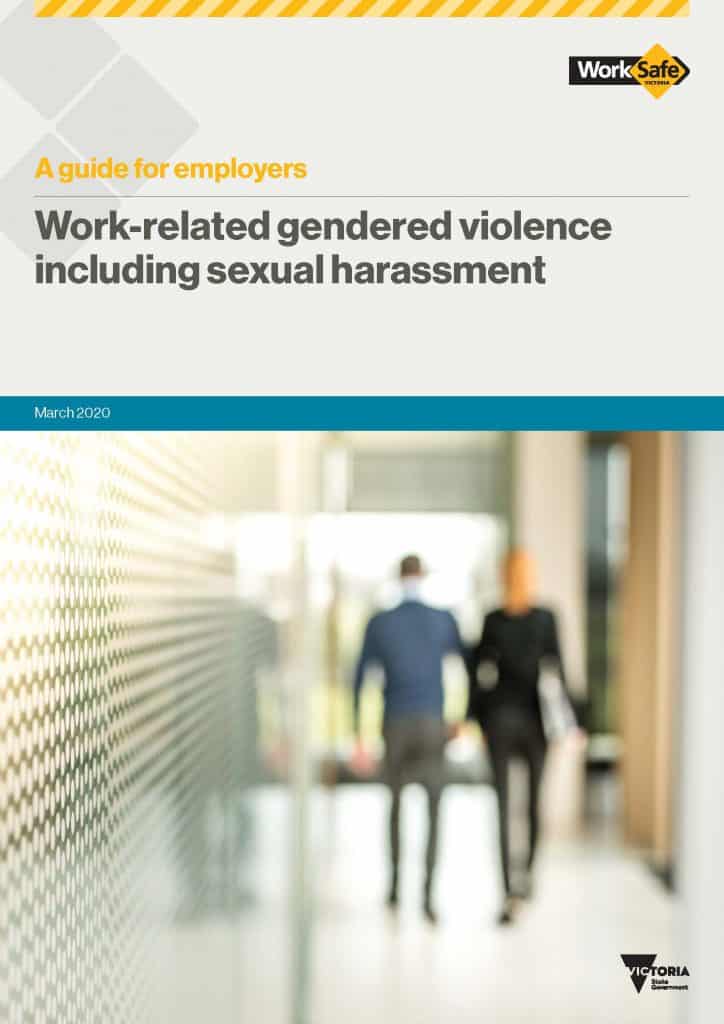
In September 2019, the Victorian Government released what it describes as a toolkit on bystander interventions in relation to sexual harassment and sexism. The full document is useful but, as with many government guidances on this issue, almost ignores the role of health and safety management in the prevention and reduction of this type of hazard.

Subscribe to SafetyAtWorkBlog to continue reading.
Subscribe Help
Already a member? Log in here

COSBOA is outraged over mental health and jail

On September 24 2019, the Council of Small Business Organisations Australia (COSBOA) called for the withdrawal of the Boland review into Australia’s work health and safety (WHS) laws.

In a media release COSBOA’s CEO, Peter Strong, states:

“The report solely focusses on workers, giving zero consideration to the mental health of employers and the self-employed….”

Continue reading “COSBOA is outraged over mental health and jail”

Important discussion of moral harm, moral repair and what can be done

Occupational health and safety (OHS) needs to talk more about failure, in a similar way that other business processes are dissected and reported. But the challenge to this, and I think the main reasons failure is not discussed, is that OHS failures result in serious injuries, life-altering conditions and deaths. OHS shares something with the medical profession which “buries its mistakes”. There appears to be something shameful in talking about these failures in public, although the OHS profession is full of chatty anecdotes in private.

One of the ways for OHS to discuss these uncomfortable experiences is to focus on Harm rather than legalities and the chase for compliance.

The first paragraph in Derek Brookes‘ new book, “Beyond Harm“, seems to speak to the OHS profession:

Subscribe to SafetyAtWorkBlog to continue reading.
Subscribe Help
Already a member? Log in here

New evidence of mental health effects on the relatives of deceased workers

Australian seems to be leading in the investigation of the (secondary) familial and social impacts of work-related death. New research from Lynda Matthews, Michael Quinlan and Philip Bohle to be publicly released soon focused on the mental health of bereaved families after a relative’s death. They found

“At a mean of 6.40 years post-death, 61 percent of participants had probable PTSD (Post Traumatic Stress Disorder), 44 percent had probable MDD (major depressive disorder), and 43 percent had probable PGD (prolonged grief disorder).”

Continue reading “New evidence of mental health effects on the relatives of deceased workers”

International healthy workplace conference

The wave of workplace wellness cannot be avoided but wellness is only part of achieving safe and healthy workplaces. At the end of October 2019 Melbourne is hosting the 7th Global Healthy Workplace Awards and Summit at Monash University.

Occupational health and safety (OHS) often accuses workplace wellness advocates of providing symptomatic relief instead of addressing issues that cause the un-wellness in the workplace. However the October summit seems to offer deeper analysis on both these perspectives and in the broader context of healthy workplaces.

Continue reading “International healthy workplace conference”

The Interconnectedness Challenge

The solutions to most occupational health and safety (OHS) issues are multidisciplinary meaning that solutions are rarely simple and rarely come from a single source of information or knowledge. Recently I have been challenging my colleagues to spread their voices and experience beyond their own disciplines to illustrate how a worker’s health and safety is affected by a broad range of hazards and environments. I extend that challenge to all organisations including employer and industry groups like the Business Council of Australia (BCA) which has recently released a report on “The state of enterprise bargaining in Australia”.

Many organisations undertake research into different elements of work but rarely take an overall perspective, or one that analyses the interconnection of societal and occupational conditions and pressures. The latest BCA report is one example

Subscribe to SafetyAtWorkBlog to continue reading.
Subscribe Help
Already a member? Log in here
Concatenate Web Development
© Designed and developed by Concatenate Aust Pty Ltd