Smart drinks may be dumb safety

Puzzle head brain mental health symbol idea conceptFatigue and impairment are two of the most difficult workplace hazards to address.  These are further complicated when they are contextualised in workplace mental health.  So it is concerning when an entrepreneur produces a product that is meant to help address mental fatigue but that may also mask occupational health and safety (OHS) actions that are required to provide truly sustainable workplace improvement.

The Australian Financial Review (AFR, $), on 12 December 2016, reported on the establishment of a “smart drinks” company called Shine+.  AFR reporter Misa Han, wrote:

“Shine+ is one of many companies who are trying to take advantage of professionals and students who take drugs in order to enhance their performance and brain functions.”
Subscribe to SafetyAtWorkBlog to continue reading.
Subscribe Help
Already a member? Log in here

Health, safety and climate change

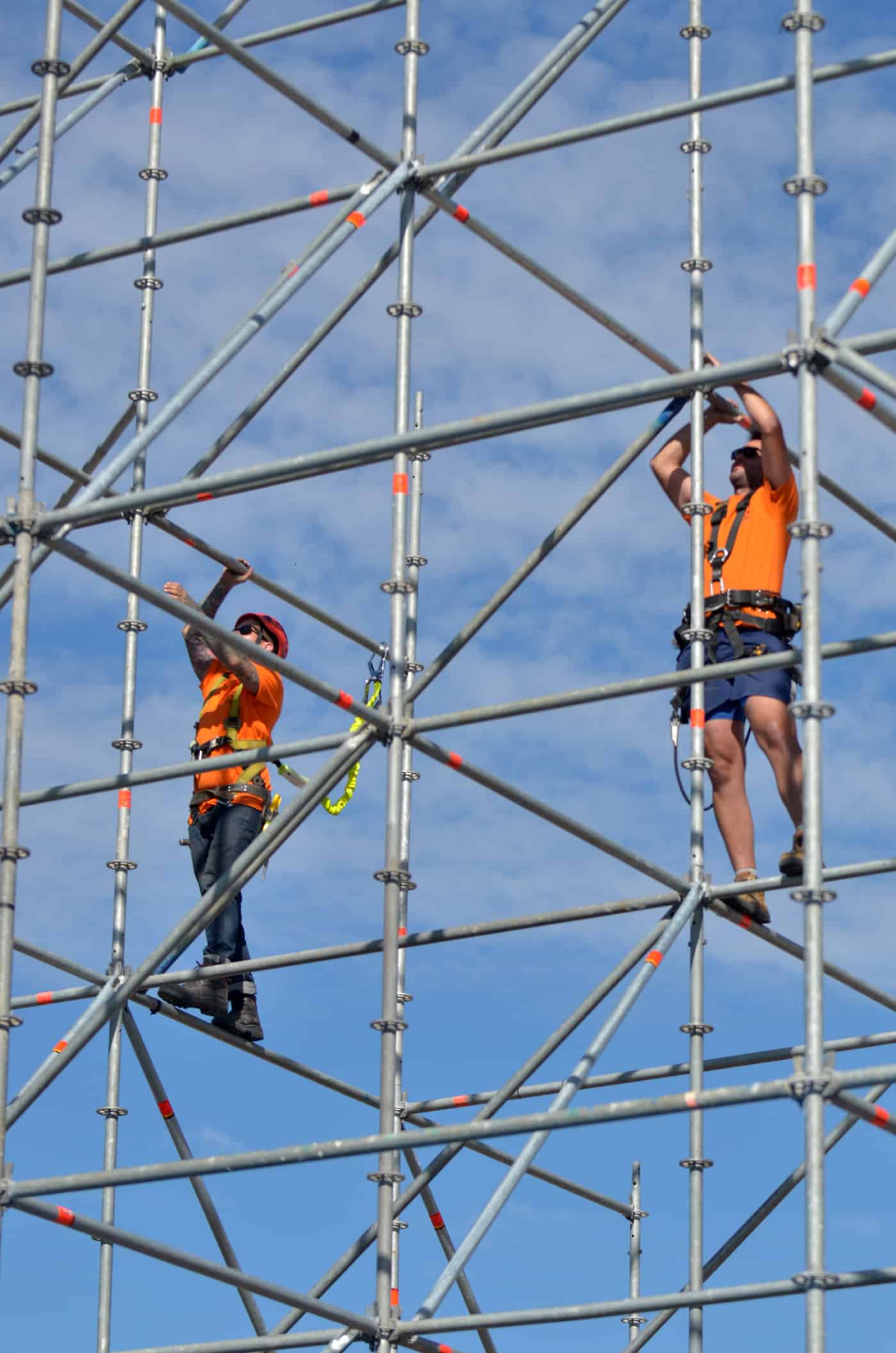
Sydney, Australia - October 19, 2016: Construction workers set up scaffolding in a construction site.
Sydney, Australia – October 19, 2016: Construction workers set up scaffolding in a construction site.

In a small article on the ABC news site, Professor Peng Bi of the University of Adelaide said occupational health and safety laws needed a review to accommodate the changing climate and

“I reckon some regulations should be set up to get employers to pay [fresh] attention to the occupational health and safety of their employees…”

Contrary to Professor Peng Bi’s request, Australian worksites have done much to accommodate the changing climate conditions and to maintain productivity, primarily, in relation to excessive heat exposure by working within the existing occupational health and safety (OHS) legislation.  This is not to say more should not be done.

The risks associated with working in heat are well established and recognised by Safe Work Australia and State safety regulators but the advice often focusses on personal changes such as ensuring there is adequate hydration or that jobs should be rotated or that long-sleeved shorts are worn.  The amplification of these conditions due to climate change is foreseeable so what should employers, companies and OHS regulators do?

Subscribe to SafetyAtWorkBlog to continue reading.
Subscribe Help
Already a member? Log in here

Research into management perceptions of safety – Yeah But…..

In August this year Safe Work Australia released “Perceived Levels of Management Safety Empowerment and Justice among Australian Employers”.  The justification for the document is to better understand leadership culture in line with the Australian Work Health and Safety Strategy 2012-2022. It is always useful to understand how business owners and employers see workplace safety as only when we understand their “way of seeing” safety, can we effectively engage in improving occupational health and safety (OHS) but this report could have been so much more.

20161116_091247The perception survey on which the Perceived Levels report was based is an application of the  Nordic Occupational Safety Climate Questionnaire (NOSACQ-50) which is “a tool for diagnosing occupational safety climate and evaluating safety climate interventions”.

The Perceived Levels report found

  • Small business operators felt they didn’t display management safety empowerment and management safety justice enough.
  • The level of activities in these area varied in different industry categories
  • Most employers felt they displayed these activities frequently.
  • Employers with apprentices and young workers felt they displayed these attitudes more.

“Management safety justice” may seem like an odd concept as it is relatively new to Australia and there is very little information available online to clarify.   What might help is the list of questions that was asked in the survey on this topic:

  1. The business collects accurate information in accident investigations.
  2. Fear of negative consequences discourages workers here from reporting near miss incidents.
  3. The business listens carefully to all who have been involved in an incident.
  4. The business looks for causes, not guilty persons, when an accident occurs.
  5. The business knows when to report incidents to the health and safety inspectorate.

The survey results are presented as positives and knowing perceptions is important but the percentages of management safety justice seem alarmingly low for OHS obligations that have existed for decades.  For instance

“Just over half (59%) of employers indicated that their business collects accurate information from incident investigations, although small businesses were much less likely to indicate that they collected this information (54%) compared to employers in medium and large businesses (95% and 94% respectively). ” (page x)

So 41% do not collect information from incident investigations!!  What’s not clear is whether investigations occur at all.

The potential for this type of survey seems good and it would be great to see it carried out more frequently or more broadly and over time so that perception changes the effectiveness of OHS initiatives can be measured.  That is unlikely to occur through Safe Work Australia (SWA), however.

SWA told SafetyAtWorkBlog that it has no plans to repeat the perceptions of work health and safety survey.

OHS people often talk about “work as perceived vs work as done”, acknowledging that planned works are often different from how the work is performed in reality. The SWA report addresses the former but there is no intention to try to verify those perceptions.  SWA advised SafetyAtWorkBlog that

“…to do so would be very challenging from a methodological point of view.”

A major element of OHS management is verifying the reality to the perception, the “work as done” to the work “as planned” through procedures, work instructions and safe work method statements, for instance. Many companies apply a rigorous system of audits, assessments and inspections to verify legal and operational compliance.  Some are beginning to undertake safety culture assessments over time. The benefit to the Australian business community of showing how compatible leadership culture on safety is to the application of safety could have been substantial.

The weight given to this perceptions report needs to be considered carefully as the limitations are identified very early in the document. For instance, the response rate to the 2012 survey was low and the data cannot be said to be representative of the Australian community. Safe Work Australia (SWA) told SafetyAtWorkBlog that

“we cannot be confident that the information is representative of the whole population”.

This Safe Work Australia report provides a glimpse into managerial perceptions but little more. Safe Work Australia does provide other more substantial reports from which there is often more to learn.  One such report, from May 2011 – “Motivation, Attitudes, Perceptions and Skills: Pathways to Safe Work” provided these findings, amongst others

“Commitment to work health and safety as a desirable characteristic of workplaces is strong among those who work in them.Commitment to work health and safety and individual efficacy does not translate into consistent adherence to safe work practice: Talk does not match action.

Talking about work health and safety is essential to impart understanding, but it needs to be accompanied by institutional structures that allow broad participation and that consistently mainstream safe practices.

A key element in talk and action is cooperation among managers, workers, work health and safety authorities, and unions. These actors are interdependent and each is needed to enable the effectiveness of the other. The inverse is also true. Each has capacity to undercut the effectiveness of the other.

Workplaces underperform on safety when management does not put safety first for its own sake (managers don’t walk the talk) and when participation and communication about safety are not consistent and institutionalised: In these circumstances individuals ‘close down’ as active learners and participants of safety.

Social demographic groups did not differ markedly in this report but two consistent trends were observed. Those who are most dismissive of authority while expressing concern about safety and reporting negatively on the safety of their workplaces comprise a disproportionately large proportion of younger respondents and respondents from smaller workplaces.”

Curiously, the Motivations & Attitudes report was not referenced in the employer perception report.

Research relies on replication to validate original research and it is very disappointing that Safe Work Australia cannot replicate this survey. But SWA does have the capacity to build on these survey results and provide a more detailed analysis of these perceptions, often from its existing resources, publications and reports, as seen from the Motivation report quoted above.

OHS benefits enormously from literature reviews that pull together similarly-theme research into an assessment of the current state of knowledge about workplace safety topics. The Perceived Levels report would have benefited greatly from placement within a literature review on managerial perceptions on workplace safety.  It would have also been useful for a more detailed discussion of the assessment themes of “management safety empowerment and management safety justice”.  These concepts are new to Australia and could have been discussed independently and to provide an Australian context.  SafetyAtWorkBlog has been critical of the importation of Scandinavian (and US) concepts to Australia in the past as the socioeconomic structures of Scandinavia are very different from the Australian.

Safe Work Australia should be congratulated for trying something new and it is hoped that someone in Australia continues this work.

Kevin Jones

Labour Hire Inquiry recommends a licencing scheme

Following, ostensibly, the Four Corners exposé of labour hire exploitation in Australia last year, the Victorian Government established an inquiry.  That Inquiry’s final report has been released with lots of recommendations, several pertaining to occupational health and safety (OHS).  The Government’s media release response is HERE. The main recommendations related to OHS are: I recommend…

Subscribe to SafetyAtWorkBlog to continue reading.
Subscribe Help
Already a member? Log in here

Wearable tech provides data, not decisions

People want information about their own health and fitness.  Many are turning to wearable technology and activity trackers for that information, but information requires decisions or actions to gain benefit. The limitations of activity tracking and decisions was reinforced recently with some US research in the area. The University of Pittsburgh School of Education’s Department…

Subscribe to SafetyAtWorkBlog to continue reading.
Subscribe Help
Already a member? Log in here

Young worker research misses the mark

On October 7 2016, Victoria’s trade union movement held a Young Worker Conference.  The major public statement from that conference was the launch of a survey report called Young Workers Health and Safety Snapshot.  The report has received some mainstream press which is not unusual for this type of trade union member survey.  Almost twenty…

Subscribe to SafetyAtWorkBlog to continue reading.
Subscribe Help
Already a member? Log in here

Does accessing government assistance need to be so hard?

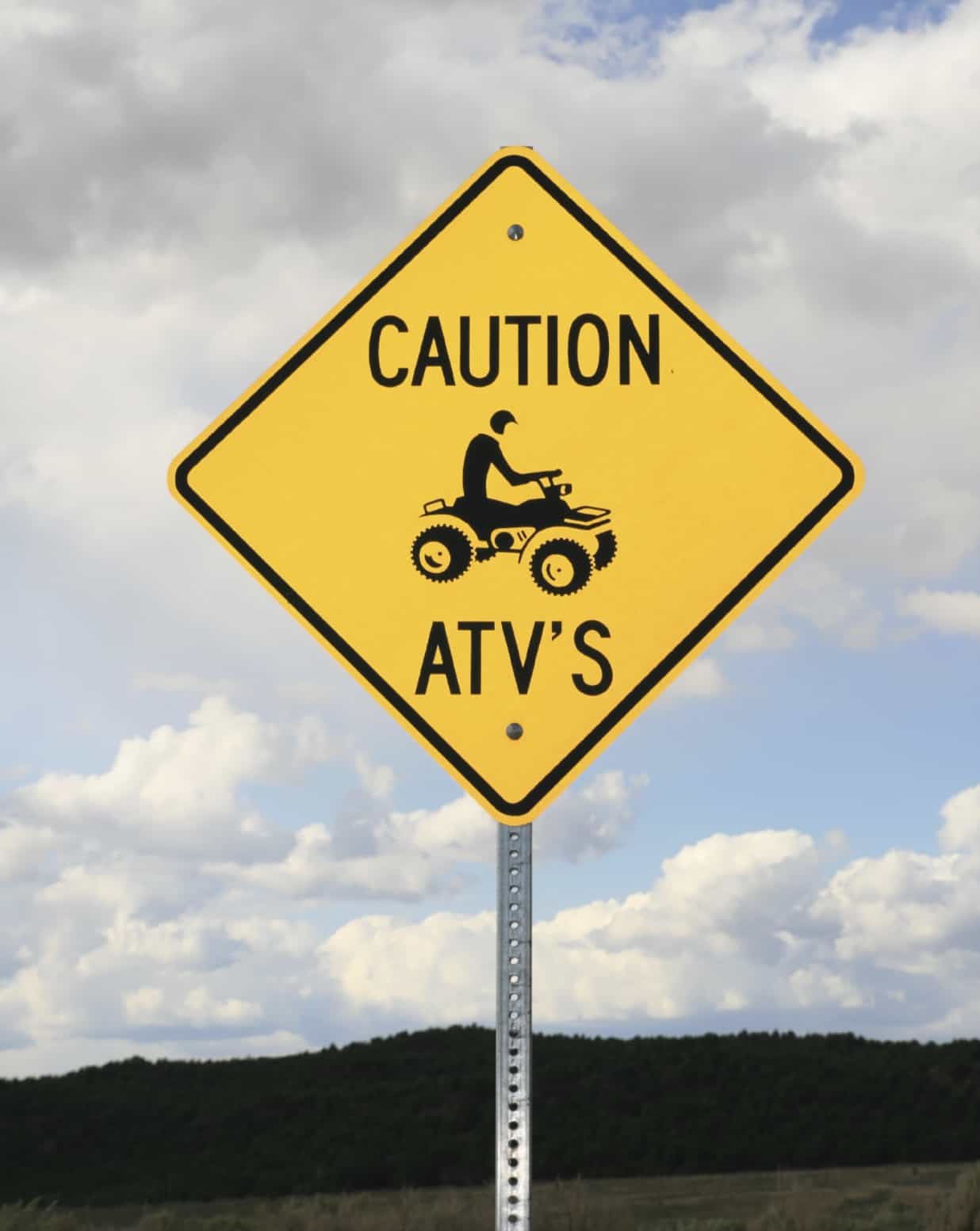
Nothing is ever easy in farming.  Several Australian States have introduced a rebate scheme to help farmers improve the safety of the quad bikes so the vehicles, also inaccurately called All Terrain Vehicles (ATV), should be made safer. The argument over safety has persisted for many years and has resulted, most recently, in rebates for safety improvements provided by the government.  However, two States – Victoria and New South Wales – have different processes to accessing these rebates and the NSW process seems to deter farmers from applying for the rebates.

caution ATV signThe Victorian Government’s rebate scheme is administered through WorkSafe who provides a Frequently Asked Questions which is simple and clear.  The dates of activity are listed and, primarily, proof of purchase is the main document for eligibility. Victorian farmers can obtain a rebate for:

“$1200 for the purchase of an alternate vehicle such as a side-by-side vehicle (SSV) or a small utility vehicle (SUV). The alternate vehicle must be designed for use in agriculture and at point of sale have rollover protection and a fitted seatbelt. Sport vehicles and small commercial vehicles, such as utes, are excluded.

Up to $600 for the purchase of up to two operator protection devices (OPD). The OPD must have been designed and manufactured in accordance with approved engineering standards and independently tested to be eligible for the rebate. There are currently two OPD devices that meet this criteria and are eligible for the rebate. They are the Quadbar™ and the ATV Lifeguard.”

The NSW process is funded by SafeWork NSW with a complex set of terms and conditions.  The purchase options seem narrower but the major difference in the two rebates schemes is New South Wales’ insistence that farmers must attend an “educative interaction”.  According to a SafeWork NSW FAQ farmers are required to:

  • “get along to a Farm Safety Day run by SafeWork NSW or one of its program partners
  • visit the SafeWork NSW stand at an Agricultural Field Days
  • request a free on-farm Workplace Advisory Visit and we will come to you
  • attend one of the 100 training events being offered by Tocal College.”

SafetyAtWorkBlog has been told that farmers find this to be condescending and are suspicious of SafeWork NSW’s intentions, particularly in relation to the “free on-farm Workplace Advisory Visit”. Such visits are likely to be SafeWork NSW’s preferred option as there are only a limited number of Field Days available every year. WorkSafe Victoria does not insist on educative interactions as part of the rebate scheme which increases NSW framers’ suspicions.

The Federal Chamber of Automotive Industries (FCAI) recently released a new video to support its claims that Operator Protection Devices (OPD) or Crush Protection Devices (CPD) “are not the answer“.  The FCAI has been out of step with the issue of quad bike safety for many years and it is difficult to sympathise with its position when governments are “endorsing” OPDs through rebate schemes.

The FCAI’s position seems to be shortsighted as the rebates are encouraging farmers to apply a Gordian Knot solution to the bickering over quad bike safety.   Both the NSW and Victorian rebate schemes encourage farmers to purchase side-by-side vehicles (SSV) which, due to the framework over the driver, have no need for the OPDs on offer.  SSVs are more expensive than quadbikes but can be seen as endorsed safer options by the regulators of safety in each of the States.

Having dug in to a contrary position of additional safety measures on quad bikes, the FCAI is getting more out of step with the regulators’ positions and the safe desires of farmers and farming families.  But perhaps criticising the FCAI is unfair, after all, it is a body representing the interests of automotive manufacturers.  Generations have grown up equating motor vehicle manufacturing with safety, ever since “Unsafe at Any Speed” was published in the 1960s, but the FCAI seems different.  It has its own definition of workplace safety that is not in step with government or safety regulators.

Farmers, like all business operators, need to decide for themselves who they trust more for their own safety – regulators or salespeople.

Kevin Jones


Concatenate Web Development
© Designed and developed by Concatenate Aust Pty Ltd