Exclusive interview with Hans-Horst Konkolewsky on Vision Zero

A major theme of the World Congress of Safety and Health 2017 is the extension and strengthening of the Vision Zero concept.  One of major advocates of this is Hans-Horst Konkolewsky, of the International Social Security Association. Konkolewsky sees Vision Zero as a “life changer”.

Any safety concept that includes the word “zero” is inflammatory to some sectors of the Australian occupational health and safety (OHS) profession as is evident by some of the tweets received by @SafetyOz over the last few hours. Late on Day One a question from the audience also expressed wariness over the use of the concept. However SafetyAtWorkBlog was able to interview Konkolewsky at the congress over a decade after our first interview, when he was head of EU-OSHA.  We outlined the Australian perspective – “Zero Harm” – and his clarification of Vision Zero is important.

Below is audio of the exclusive seven minute interview.
Subscribe to SafetyAtWorkBlog to continue reading.
Subscribe Help
Already a member? Log in here

Marnie Williams talks of farm safety, responsibility and a radical future

WorkSafe Victoria’s Executive Director, Health and Safety , Marnie Williams, has had a horrid week. Last Saturday, while being ill with a cold, she stood in for the Victorian Industrial Relations Minister at a Migrant Worker Forum, at which she was asked “what you gonna do about it?”. However she continues to make herself available, a crucial element for any leader of a regulatory agency.
Farm Safety

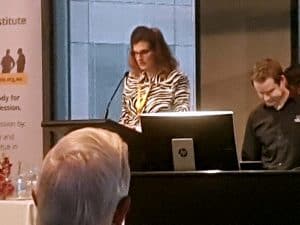
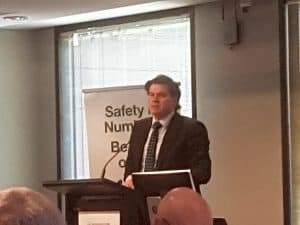
A couple of days later at a safety conference run by the Safety Institute of Australia,  SafetyAtWorkBlog accused WorkSafe of not doing enough about the safety of Victorian farmers. Williams rejected the accusation and forecast a new, and surprising, approach for agricultural safety.

Subscribe to SafetyAtWorkBlog to continue reading.
Subscribe Help
Already a member? Log in here

Big OHS data needs to digitise the past

A safety conference in Victoria Australia today heard from Innes Willox of the AIGroup about new challenges in business and occupational health and safety (OHS).  As many have mentioned recently big data is a challenge but with important benefits.  A major flaw in any of these discussions is an overestimation of data sources and usefulness. Continue reading “Big OHS data needs to digitise the past”
Tassie Coroner releases his safety findings on 7 quad bike deaths

Coincidentally, as an article about quad bike safety was being uploaded to this blog, details of the release of Tasmanian coronial findings were received.  The findings were released by Coroner Simon Cooper on August 25 2017 and were not reported widely.

The Coroner investigated seven deaths related to quad bikes but only two occurred on workplaces or as part of performing work – Heather Richardson and Roger Larner. Curiously, WorkSafe Tasmania did not investigate these work-related deaths.   Continue reading “Tassie Coroner releases his safety findings on 7 quad bike deaths”

Queensland’s report may not be “best practice” but demands attention

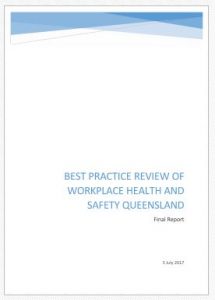
The Queensland Government has released the final report of its “Best Practice Review of Workplace Health and Safety Queensland“. Most of the media attention is given to the introduction of Industrial Manslaughter laws but there are some interesting recommendations and discussion on Enforceable Undertakings, insurance products and other matters of interest to business and safety professionals.

The Queensland Government announced the review earlier this year, particularly, in response to fatalities at Dreamworld and Eagle Farm. A Discussion Paper was released in April.

Industrial Manslaughter

Industrial Manslaughter laws have been floating around Australia’s occupational health and safety (OHS), legal union and political sectors for many years.  Only the Australian Capital Territory (ACT) introduced such a law and the Crimes (Industrial Manslaughter) Amendment Act 2003 remains in effect.

The significance in this Queensland report is that the document is entitled “Best Practice” so the panel, based on its own experience and the many submissions it received, adds considerable weight to these controversial laws.

Subscribe to SafetyAtWorkBlog to continue reading.
Subscribe Help
Already a member? Log in here

Personalised training, ladder standards and a non-gamechanger

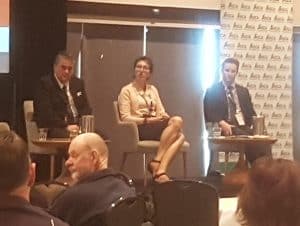
L to R: Brad Parker, Liz Tosti, Chris McKie

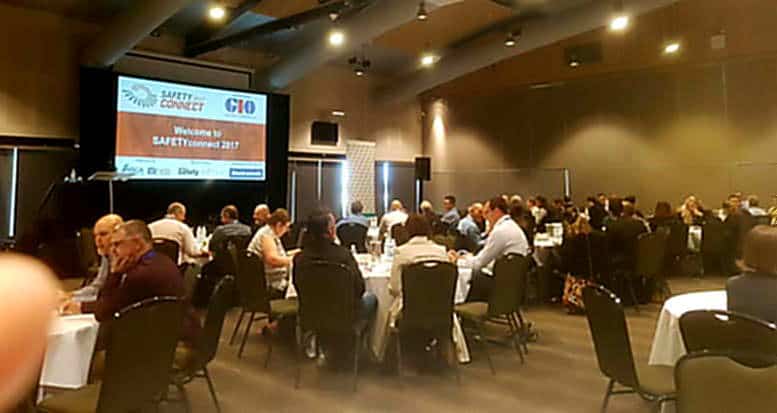
Day 2 of the SAFETYconnect conference commenced with a disrupted panel discussion comprising four representatives of Australia workplace safety regulators.  Each representative provided a 10 minute presentation about their agency and their plans.  Curiously almost all of them discussed their strategic plans which varied between three and ten years but almost all contained the same aims, targets and challenges.

Some of the most interesting content was in the more practical stream of the conference.

Subscribe to SafetyAtWorkBlog to continue reading.
Subscribe Help
Already a member? Log in here

SafetyConnect conference connects

This week’s SAFETYconnect conference hosted by the NSCA Foundation in Sydney had a very good strike rate of interesting speakers on its first day.  Only one speaker missed the safety mark – it was as if they had been handed a marketing presentation instead of safety and, regardless of the safety audience, give it anyway.

This conference was notable for the way that the ‘safety differently’/Safety II movement has moved into mainstream safety management.  The most obvious example of this was a presentation by QantasLink.

Subscribe to SafetyAtWorkBlog to continue reading.
Subscribe Help
Already a member? Log in here
Concatenate Web Development
© Designed and developed by Concatenate Aust Pty Ltd