
An article last week touched briefly on the issue of the effect of synthetic drugs in the workplace in the context of drug and alcohol testing. The Australian newspaper on 28 September 2015 contained a front page article (paywalled) about mining company concerns over synthetic drugs at work, however it is an article that deserves greater analysis before anyone considers this as part of an evidence base as it is creatively constructed and relies on statements from a toxicologist working for drug testing laboratory. Continue reading “Front page drug testing article is marketing”
Category: research
Professional sportspeople are workers, so make them safe
 There is no doubt that football fields are the workplaces of professional football players and their support staff. So they are covered by occupational health and safety (OHS) and/or work health and safety (WHS) laws but what does this mean in relation to OHS regulators, and the sportspeople’s employers? Recently Eric Windholz looked at this particular issue.
Windholz recently published “Professional Sport, Work Health and Safety Law and Reluctant Regulators” in which he states:
“The application of WHS law to professional sport is almost absent from practitioner and academic discourse. An examination of the websites of Australia’s WHS and sport regulators reveals none contains WHS guidance directed to professional sports.” (page 1, references are included in the paper)
The example he uses to show this apparent lack of interest, even by the Victorian OHS regulator, WorkSafe Victoria, is the Essendon Football Club supplements saga. Windholz writes
“Had these events occurred in the construction, manufacturing or transport industry, for example, it is difficult to imagine WHS regulators not intervening. Yet, WorkSafe Victoria initially was reluctant to investigate choosing to defer to ‘more appropriate bodies’. It only commenced an investigation when compelled by a request from a member of the public.” (page 2)
Inquiry into precarious/insecure work includes OHS
2015 has been a big year for public attention on the exploitation of workers. In May, the Four Corners program revealed the exploitation of, largely, migrant or illegal workers in the food processing and vegetable growing sectors. In the last month, 7Eleven workers have featured, also after a Four Corners investigation in conjunction with Fairfax Media. In both cases, workplace safety has been mentioned but not featured.
In September 2015, the Victorian (Labor) Government released the
Quad bike safety discussion is maturing
New research into quad bike safety by the University of New South Wales (UNSW) shows increasing maturity in the discussions on the safety of quad bikes and farms. According to a 2 September report on Australian ABC radio, more attention is now needed for quadbike rider’s actions, workplace conditions and choices.
The attention on the suitability and design of quad bikes has dominated the safety debate over the last few years. There is no doubt that the design of quadbikes could have been made safer, or that new vehicle models offer better stability or that Operator Protection Devices (OPDs) offer a safety improvement.
The focus on riders has been almost exclusively about “active riding” techniques and the use and suitability of personal protective equipment, such as helmets. Continue reading “Quad bike safety discussion is maturing”
More care needed in discussing workplace mental health and mental illness
Writing about workplace mental health is a tricky task. An article recently posted to Business News Western Australia shows how tricky it can be and how mental health can be misinterpreted as mental illness.
The headline, “Are you one of the 20% of workers that will experience a mental health issue?” clearly refers to workers but the first sentence of the article does not. “Australian adults” are not all “workers”.
Out of the total population of around 24 million Australians, Wikipedia estimates the working-age population of Australia (15 – 64 years) at round 67% (16 million, approximately). If we apply these statistics to the headline, there are 3.2 million workers who “will experience a mental health issue”. But is this annually, over one’s working life or over a lifetime? The article does not say.
Not only are the statistics messy, so is the terminology.
Old school OHS in mining
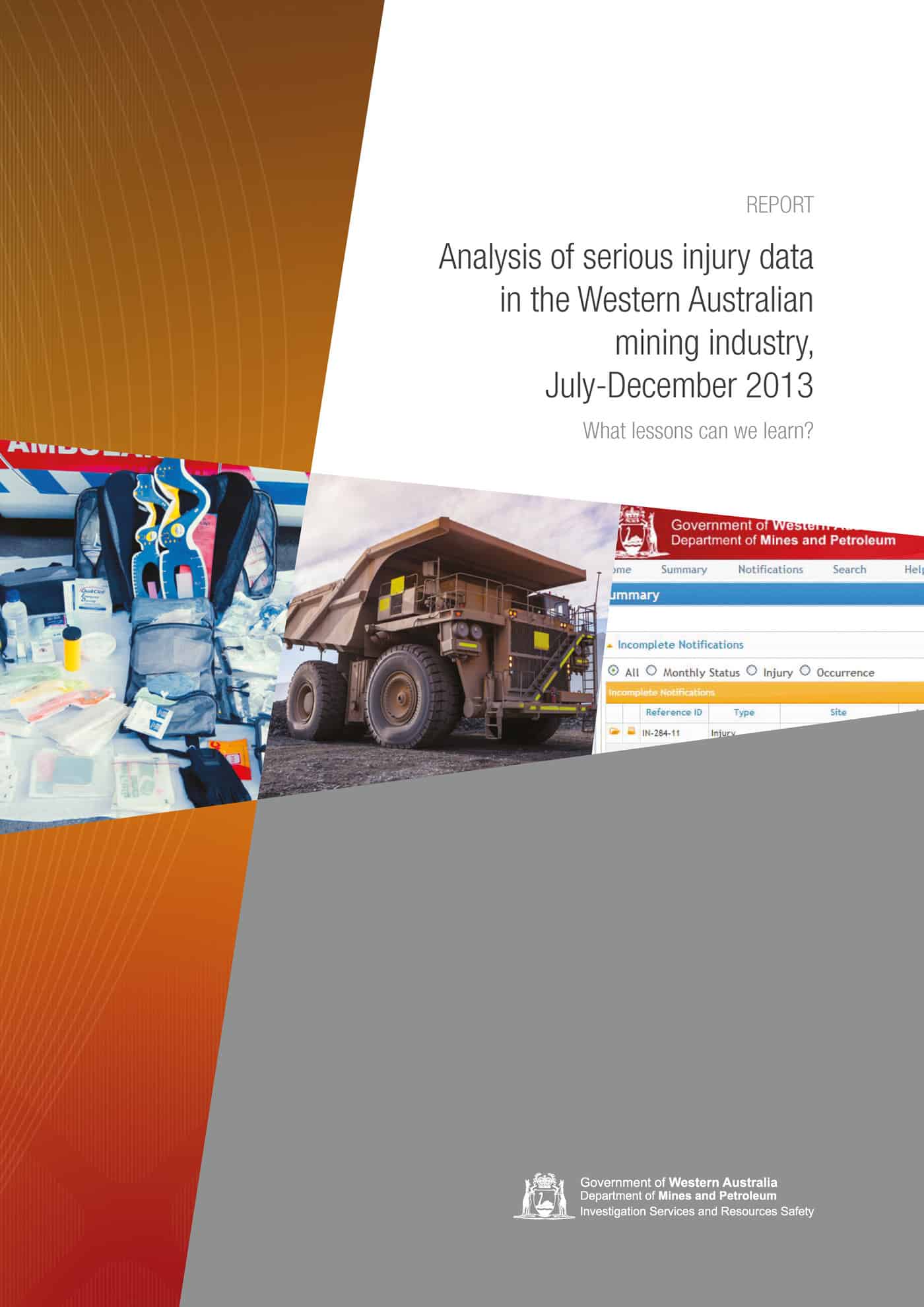 In August 2015, Western Australia’s Department of Mines & Petroleum (DMP) released a statistical analysis that seems to do little more than confirm what is already known. It is important to validate data but the mining sector often promotes itself as leading in occupational health and safety (OHS) but this report seems dull and dated. Continue reading “Old school OHS in mining”
5 experts in 60 minutes

The Institute for Safety, Compensation and Recovery Research (ISCRR) has tried a new format for its occupational health and safety (OHS) seminars. It is not a lunch with a single presenter and it is not a Three-Minute Thesis. It is five safety researchers in one hour, seven minutes per person and a single question from the floor – and it worked. Continue reading “5 experts in 60 minutes”