
The star of Australian academic Dr David Provan is on the rise. Academic, podcaster, author, local and international conference speaker and more, Provan is challenging the occupational health and safety (OHS) profession and professionals on many fronts. This month his self-published book “A Field Guide to Safety Professional Practice” went on sale. It is a unique book and is an essential addition to every OHS professional’s library and practice.
Category: research
Burnout causes are organisational. Who knew?
This blog has written frequently about “burnout” in workplaces, especially since the condition was defined by the World Health Organisation in 2019. I have seen it used many times as a shortcut, or synonym, for workplace mental health but usually only at the corporate, executive level. Workers have breakdowns, but executives seem to suffer burnout.
Recently a book was published in the United States called “The Burnout Epidemic, or The Risk of Chronic Stress and How We Can Fix It”, by journalist Jennifer Moss. What is most outstanding about this book is that the recommended fix is organisational. Usually, burnout books from the States focus on the individual worker or executive. This fresh US perspective makes the book essential reading for if the US recognises how to fix burnout and chronic stress, any country can.

HR inching its way to an OHS epiphany
A new Human Resources (HR) article shows some promise in addressing the institutional factors that lead to poor mental health in workers.
The website for Human Resources Director asks, “Should HR be concerned about employee economic insecurity?” I would ask, “how can it not be?” given that Australian research over the last twenty years and international research since early last century has identified that job insecurity is one of several major factors in poor mental health for workers and other occupational health and safety (OHS) outcomes. HR should also be anticipating a renewed duty of care from the upcoming national OHS regulations on psychologically healthy workplaces.
“can’t afford” means “don’t want to”
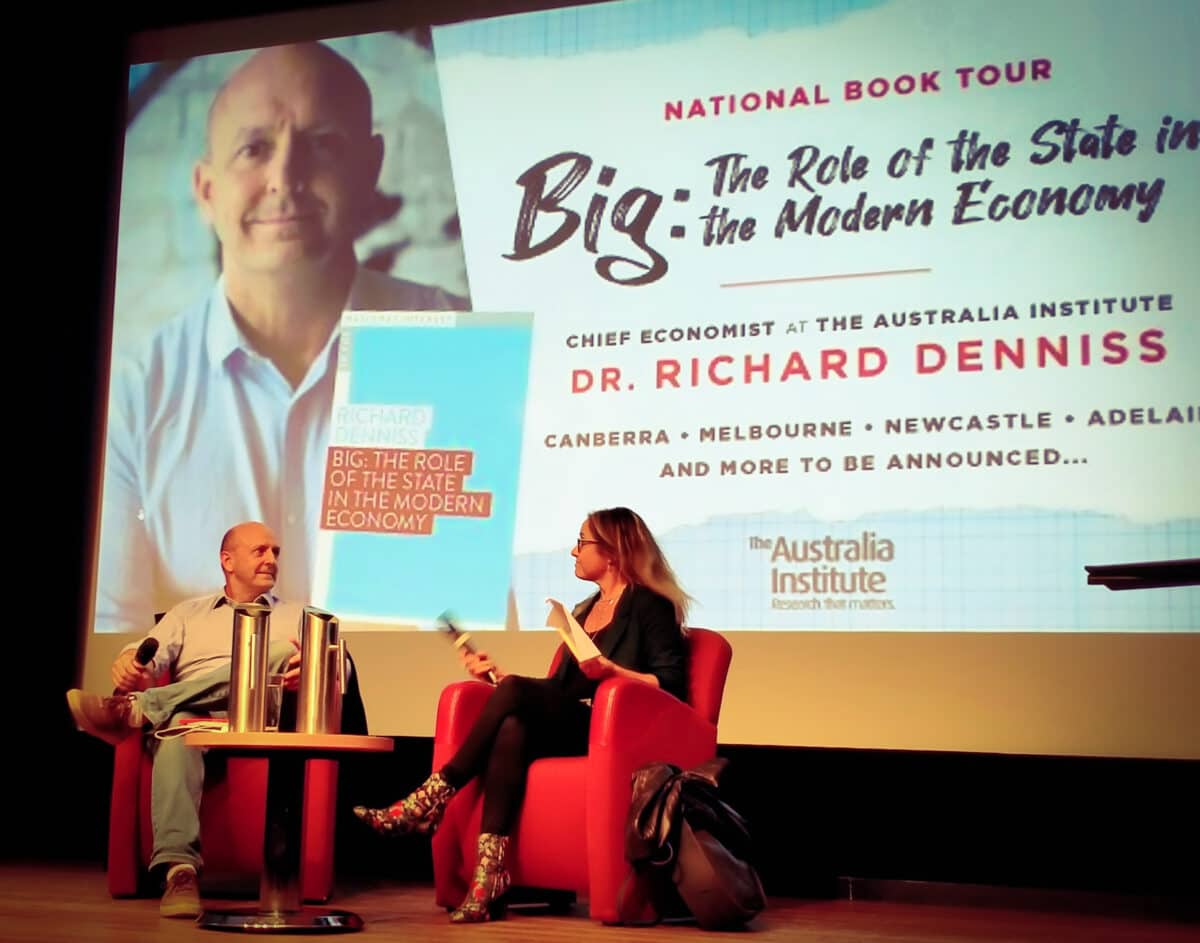
Richard Denniss, an economist with The Australia Institute, discusses economics differently from other economists. He will seldom discuss occupational health and safety (OHS). He rarely talks about industrial relations. Instead, he talks about the big picture by drawing on many sources and disciplines, which is why he is so interesting to listen to.
This week he was on a national book tour for his latest publication on the role of the State in the modern economy and some of his opinions connected with the management of workplace health and safety.

Political point-scoring misses the point
Last week the Australian Financial Review (AFR) caused a bit of a political stink by reporting that:
“….Australian Bureau of Statistics figures show the share of casual employment was 22.8 per cent in February – 1.3 percentage points lower than in February 2020, just before the pandemic hit the economy.
AFR, April 12 2022 – Albanese’s casual jobs claim is ‘wrong’, according to ABS data
The casualisation rate is 4.8 percentage points below the peak of 27.6 per cent in 2003.”
The figures seem accurate but do not tell the whole story. How are employment statistics relevant to occupational health and safety (OHS)? Job insecurity is a significant factor in work-related mental health.

Industrial Manslaughter, psychologically safe workplaces and insecure work – just another day in the Senate
Australia has entered a federal election campaign, but the mechanics of the Australian parliament continued, and various occupational health and safety (OHS) comments were voiced in Senate Estimates. These comments touched on Industrial Manslaughter, regulations on psychologically safe workplaces and insecure work.

Why don’t we act on the evidence?
Several years ago, I worked for an organisation that handed out awards for exceptional efforts and achievements. One time the award was given to a worker who had worked in the office for most of the weekend to meet a semi-important deadline. I was horrified as that worker had sacrificed important “downtime” with family friends and his own welfare with no time in lieu. But he was lauded by the boss.
Rewarding those who sacrifice their own health and safety for the apparent good of the company must change as there is increasing evidence that working long hours increases serious health risks. An extensive research project for the World Health Organisation has found: