

Research analyses of the economics of modern work methods are important evidence for government policymaking, but occupational health and safety (OHS) costs are often omitted or overlooked. The recent report by The Australian Institute and its Centre for Future Work called “Working From Home, or Living at Work?” appears to be another example.
Category: research
Suicides and historic data
Recently Safe Work Australia (SWA) released an excellent batch of occupational health and safety (OHSA) information in its annual “Key WHS Statistics – Australia 2021″. The decline in fatalities is significant, but there remains an odd omission that is worrying the longer it is not addressed – work-related suicides.
Limiting the statistical period also has implications for how OHS is understood and for the rate of change.

Diagnosis is the key
Part 2 of 2
Safe Work Australia (SWA) has reported on “mental health conditions” in its latest report on workers compensation claims and that these conditions represent 9% of claims for the 2018-2019 period (page 20). Claims have also increased in this category from 6,615 in 2000-2001 to over 10,000 in the latest data period. Mental health conditions are described elsewhere by SWA as affecting non-physical bodily locations (page 38).
As with many other reports, “mental health conditions” are not defined, but SWA states that this phrase is an alternative to “psychological injuries”. It also gives a numerical and dollar value to these conditions:

Are “mental health conditions” good or bad?
Part 1 of 2
Many organisations provide support for those experiencing mental health conditions, in workplaces particularly. These are important services; some have filled the gap left by the occupational health and safety (OHS) profession and regulators who neglected psychological health to prioritise traumatic physical injuries. But what is meant by “mental health conditions”? SafetyAtWorkBlog went on a short desktop journey to find out.
On 14 October 2021, the Australian Chamber of Commerce and Industry released a report called “Small Business, Mental Health; navigating the complex landscape“. Part of that complexity stems from the confusing terminology about “psychosocial health” and “workplace mental health”. The ACCI says:

Be careful of the Precautionary Principle
The Precautionary Principle has appeared regularly in SafetyAtWorkBlog articles. There is a new publication from the American Industrial Hygiene Association (AIHA) in which this principle is succinctly explained in relation to COVID-19 but equally applicable to decisions on occupational health and safety (OHS).
The new publication “The Role of the Industrial Hygienist in a Pandemic, 2nd edition” includes a chapter on the Precautionary Principle. It is the first section of that chapter that is most relevant. It says:
“how-to-lift training does not work”
In 2017, this blog reported on an article from WorkSafe Queensland that said that manual handling training in “correct manual handling” or “safe lifting” did not prevent musculoskeletal injuries. WorkSafe supported this by extensive research, but training courses continue today, perpetuating an over-reliance on manual handling as a suitable risk control measure, which does not meet the compliance requirements of the occupational health and safety laws.
Last month WorkSafe Queensland released a video that updated and reinforced their position.
Continue reading ““how-to-lift training does not work””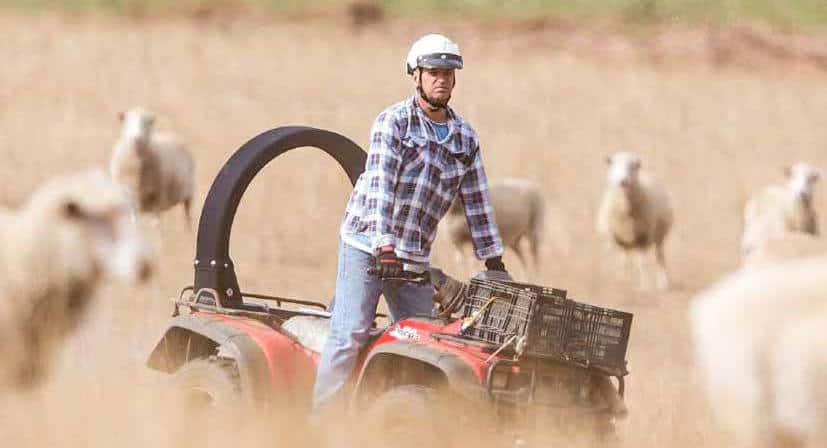
Quad bikes, compliance, mandates, misdirection and rules
Last week it became illegal for a new or second-hand quad bike to be sold in Australia without a crush protection device (CPD) fitted at the point of sale. This achievement has been decades in coming and has involved bitter fighting between advocates of safety and the sellers and manufacturers of this equipment.
This blog has followed this controversy for years. Quad bike safety is a significant illustration of the political and commercial pressures that have argued for a lowered level of safety than was possible. This conflict is perhaps the most public display of a moral conflict whose resolution is at the heart of occupational health and safety (OHS). (This controversy deserves a book similar to those about glyphosate and asbestos)