Business Leaders hear about the Vic Government’s OHS achievements, and about OHS is the Arts

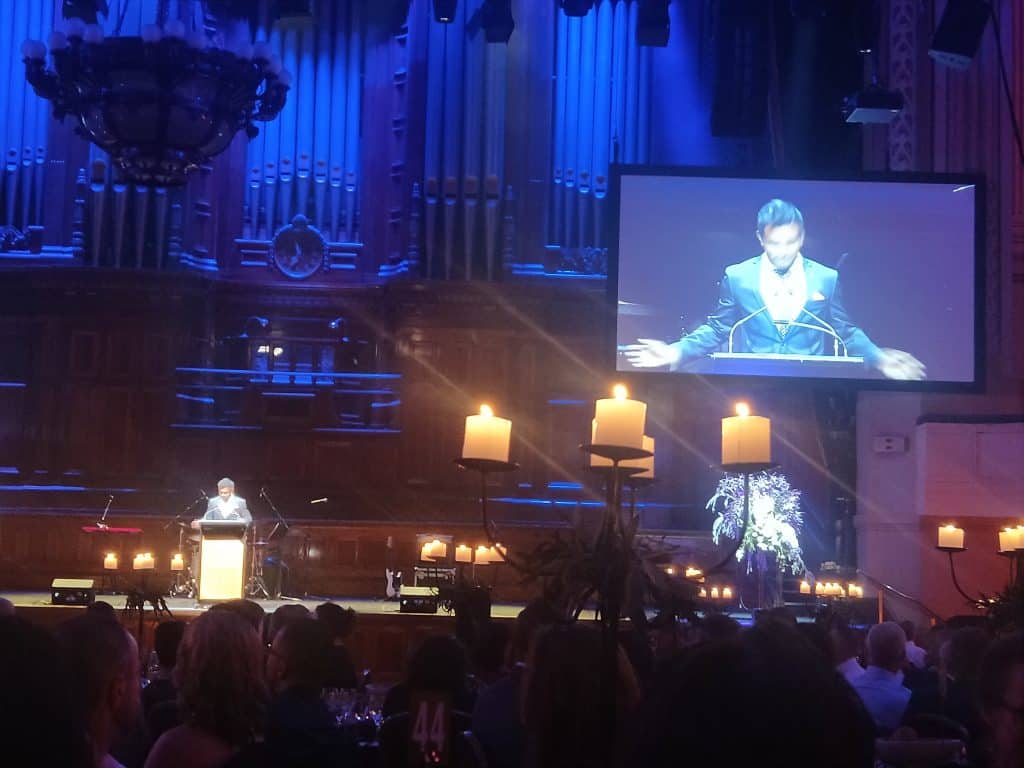
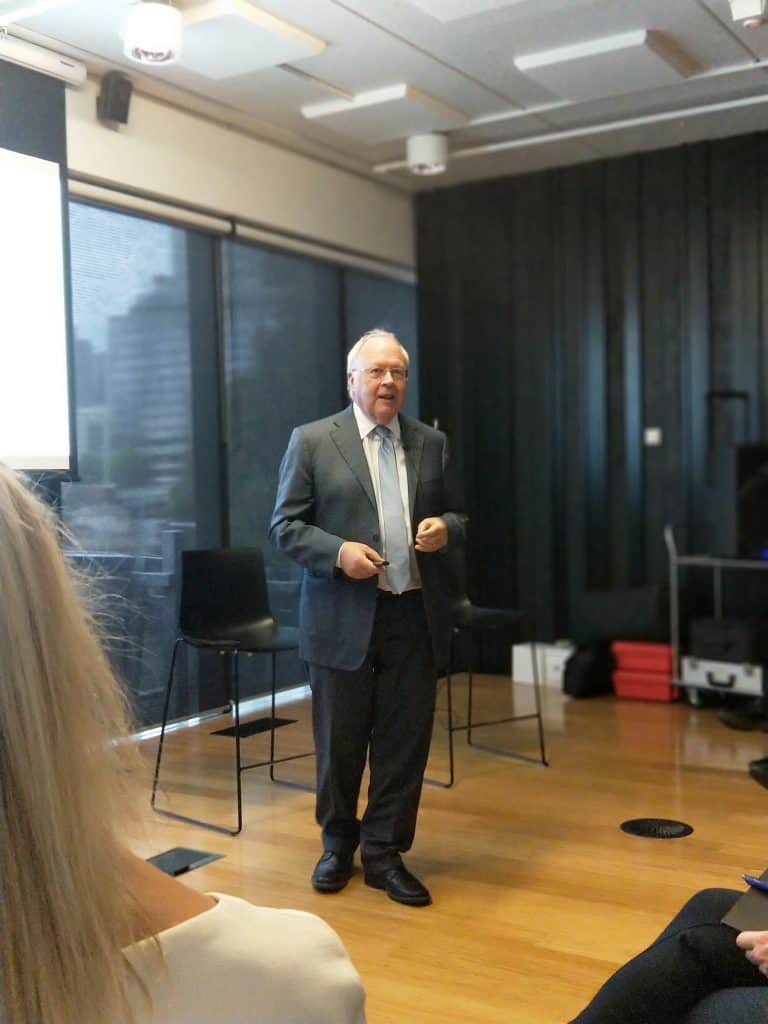
Cameron Ling and Claire Spencer (top) and Natalie Hutchins (below)

October is Australia’s workplace safety month. It operates under different names in different States, but they all started on October 1 2019. These months are almost exclusively about marketing and SafetyAtWorkBlog’s Inbox has received a lot of generic statements about the importance of occupational health and safety (OHS) but with little information about how to improve it. The best we can do about this is to seek knowledge in some of the physical events and seminars scheduled during October.

On October 2 2019, WorkSafe Victoria held a Business Leader’s Breakfast at which there were two featured speakers – the Parliamentary Secretary for Workplace Safety, Natalie Hutchins, and the CEO of Arts Centre Melbourne, Claire Spencer. Hutchins spoke about the occupational health and safety achievements of the Victorian Government and Spencer spoke about the significance of the Arts Wellbeing Collective. They provided a good mix of politics and practice.

Hutchins spoke about

  • Silicosis
  • Hazardous Chemicals and Dangerous Goods
  • Workplace Manslaughter Laws, and
  • Mental Health.
Subscribe to SafetyAtWorkBlog to continue reading.
Subscribe Help
Already a member? Log in here

Shared Value and Mental Health

This morning SafetyAtWorkBlog attended the launch of a whitepaper called “Creating shared Value: the business imperative to improve mental health in Australia” produced by the Shared Value Project. Just after the launch I had the opportunity for a quick interview with Shared Value Project CEO Helen Steel. Below is that audio as a short Safety At Work Talks podcast.

A longer article on the white paper and the comments of Victoria’s Minister for Mental Health, Martin Foley, at the launch will be available next week.

Kevin Jones

Does “Meaningful Work” mean anything useful?

In September 2019 an Australian recruiting firm, Beaumont People, has commissioned a research project to identify what constitutes meaningful work. The company places meaningful work in the context of at least one of the United Nations’ Sustainability Goals (SDGs) – Decent Work and Economic Growth, but it is difficult to understand what is meant by “meaningful work”. Couldn’t the survey have used the UN Decent Work criteria?

The Beaumont People website says this of Meaningful Work:

“Meaningful Work is the importance an individual places on their work meeting their current personal beliefs, values, goals, expectations, and purpose in the context of their social and cultural environment.

Despite the vast amount of research undertaken on the concept and measurement of meaningful work, there remains no consistent definition of meaningful work nor consensus on the scales designed to measure it.”

Subscribe to SafetyAtWorkBlog to continue reading.
Subscribe Help
Already a member? Log in here

Australian silicosis research mirrored in the US

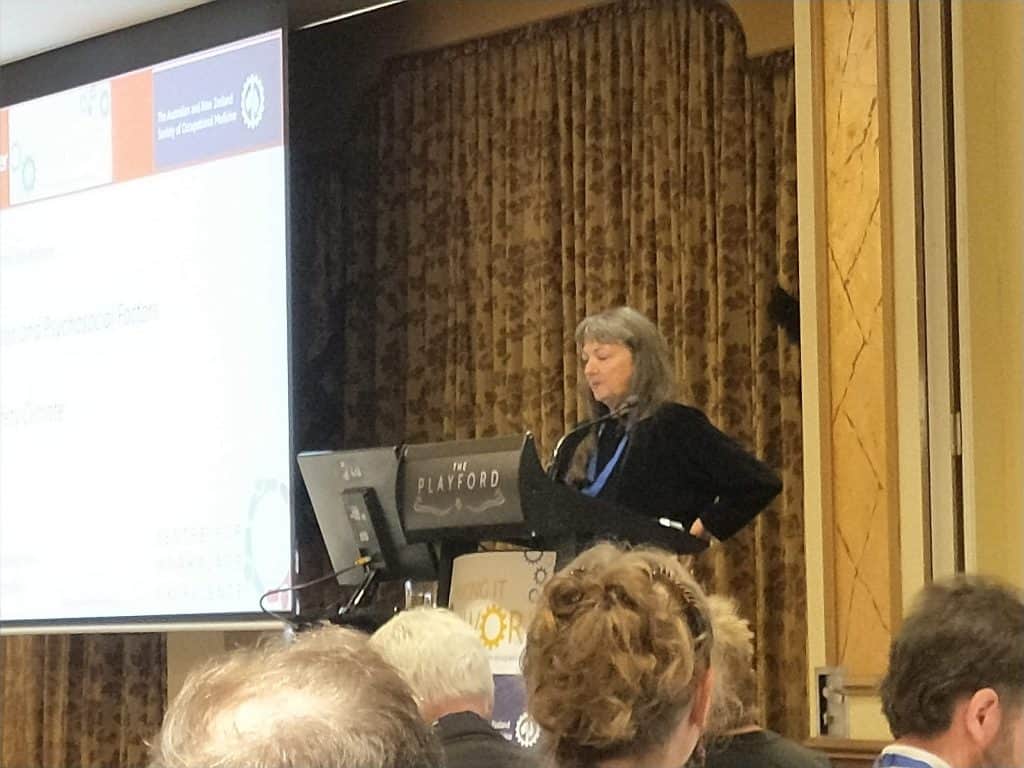
At the end of October 2019 the Australia New Zealand Society of Occupational Medicine (ANZSOM) will be conducting its annual scientific meeting in Adelaide. There are many issues on the agenda but silicosis is likely to figure prominently as it did last year, and as it should. The politics, knowledge and regulatory action has changed in the intervening twelve months.

Australia has new guidances from several occupational health and safety (OHS) regulators and agencies which restrict or ban dry-cutting of engineered stone and change other safety-related practices. There is also at least one political move to ban the use of engineered stone. But perhaps more important is that new research on silicosis risks is appearing and not just from Australia. The United States’ Centers for Disease Control and Prevention published new research on 27 September 2019 based on medical assessments and several silicosis-related deaths.

Subscribe to SafetyAtWorkBlog to continue reading.
Subscribe Help
Already a member? Log in here

Small packages, big info

Face-to-Face communication trumps electronic communication every time. This is true for telling stories to trauma counselling to telling someone you love them.

Prof. Michael Quinlan and Alena Titterton Akins at the 2019 Tasmania Health & Safety Symposium

Sixty delegates attended the one-day occupational health and safety (OHS) symposium in Tasmania yesterday. These symposia seem to be the modern equivalent of the traditional conference, especially in Australia, and offer the opportunity for better conversations about OHS. This format still has some need for refinement but it seems more informative than a lecture and less confusing than a multi-streamed big conference of thousands of people.

Subscribe to SafetyAtWorkBlog to continue reading.
Subscribe Help
Already a member? Log in here

Truths? Maybe. But Hard? Nah.

Professions often learn more from those in other professions that they do from their own. As such SafetyAtWorkBlog looks in lots of places for insights that may help the occupational health and safety (OHS) profession.

Recently the Australian Human Resource Institute published a discussion paper called “5 Hard Truths about Workplace Culture”. OHS operates in the same workplace culture so there may be lessons for all.

Subscribe to SafetyAtWorkBlog to continue reading.
Subscribe Help
Already a member? Log in here

Important discussion of moral harm, moral repair and what can be done

Occupational health and safety (OHS) needs to talk more about failure, in a similar way that other business processes are dissected and reported. But the challenge to this, and I think the main reasons failure is not discussed, is that OHS failures result in serious injuries, life-altering conditions and deaths. OHS shares something with the medical profession which “buries its mistakes”. There appears to be something shameful in talking about these failures in public, although the OHS profession is full of chatty anecdotes in private.

One of the ways for OHS to discuss these uncomfortable experiences is to focus on Harm rather than legalities and the chase for compliance.

The first paragraph in Derek Brookes‘ new book, “Beyond Harm“, seems to speak to the OHS profession:

Subscribe to SafetyAtWorkBlog to continue reading.
Subscribe Help
Already a member? Log in here
Concatenate Web Development
© Designed and developed by Concatenate Aust Pty Ltd