Where’s the harm in bullying?

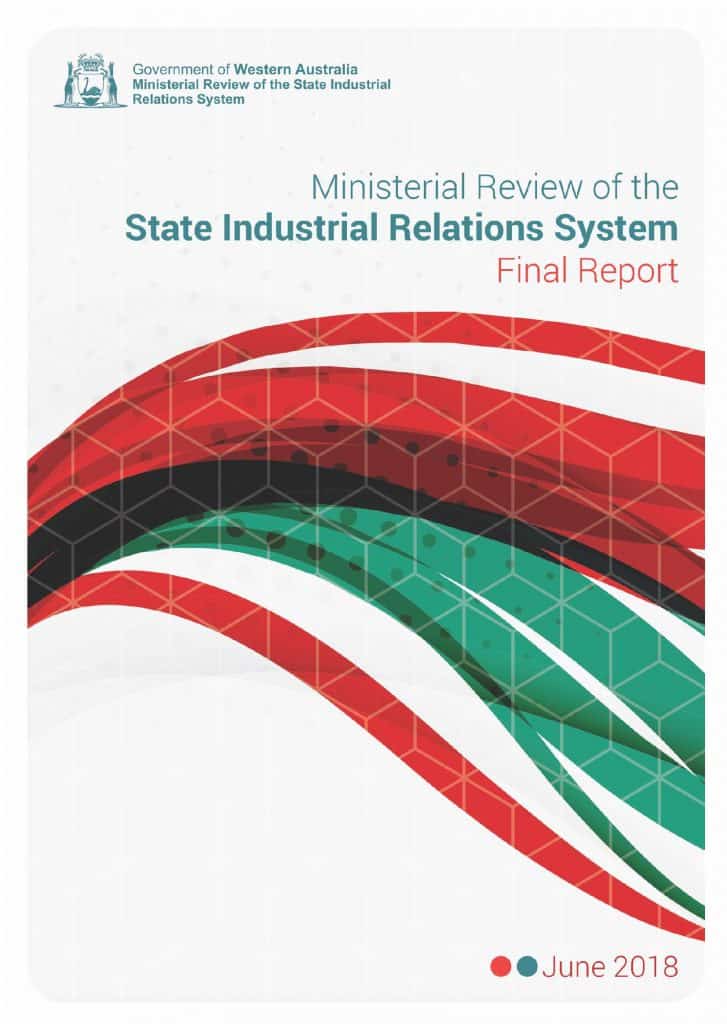
The West Australian Government has released its the report on its Ministerial Review of the State Industrial Relations System. There are a few interesting bits that relate to occupational health and safety (OHS) and bullying.

The Fair Work Commission has been able to accept applications to stop workplace bullying for a few years now. Western Australia’s State system will soon also allow this, if the Government accepts the recommendations, but workplace bullying is a little different from the OHS approach. The report says:
Subscribe to SafetyAtWorkBlog to continue reading.
Subscribe Help
Already a member? Log in here

Better jobs should also be safer jobs

The impending election in Australia has started to generate various position statements and discussion papers from various lobbyists. The Australian Industry Group (AiGroup) and the Business Council of Australia (BCA) are the latest of these.

The AiGroup released its Productive and Fair Workplace Relations statement in late March 2019. Surprisingly there is no mention of occupational health and safety (OHS) even though its contribution to a productive workforce is well established. Its omission is doubly surprising given the political stink in some States about the introduction of Industrial Manslaughter laws.

Subscribe to SafetyAtWorkBlog to continue reading.
Subscribe Help
Already a member? Log in here

Release of authoritative quad bike safety report is still not enough for the Federal Minister

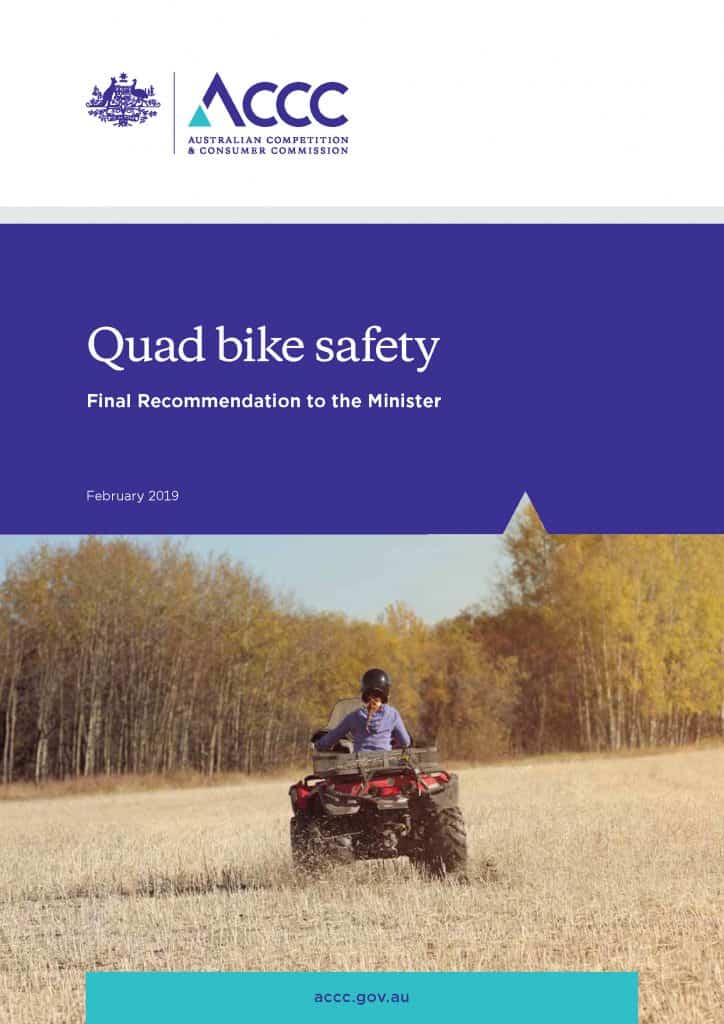
On April 6 2018 Australia’s Assistant Treasurer Stuart Robert released the report into Quad Bike safety prepared by the Australian Consumer and Competition Commission (ACCC). The report makes unsurprising safety recommendations, many of these have been coming for years. The surprise is the Minister’s decision to begin another round of consultation:

“The Government is inviting stakeholders to review and comment on the ACCC’s recommended safety standard.”

The previous paragraph in the Minister’s press statement acknowledged:

“Extensive consultation has been undertaken including with technical experts, farmers, the recreational and tourism sector, consumer groups, health and medical experts, industry and government bodies. The majority of stakeholders support a new mandatory safety standard. The ACCC’s report highlights how these safety measures including installing an operator protection device can significantly reduce the frequency and severity of injuries, particularly from rollover incidents”

An indication of the level of “extensive consultation” can be seen through the process the ACCC has been running since at least November 2017. The only possible reason for this extraordinary decision is the political desire to release the ACCC report prior to the Federal Election, only just announced as occurring on May 18, 2019.

Subscribe to SafetyAtWorkBlog to continue reading.
Subscribe Help
Already a member? Log in here

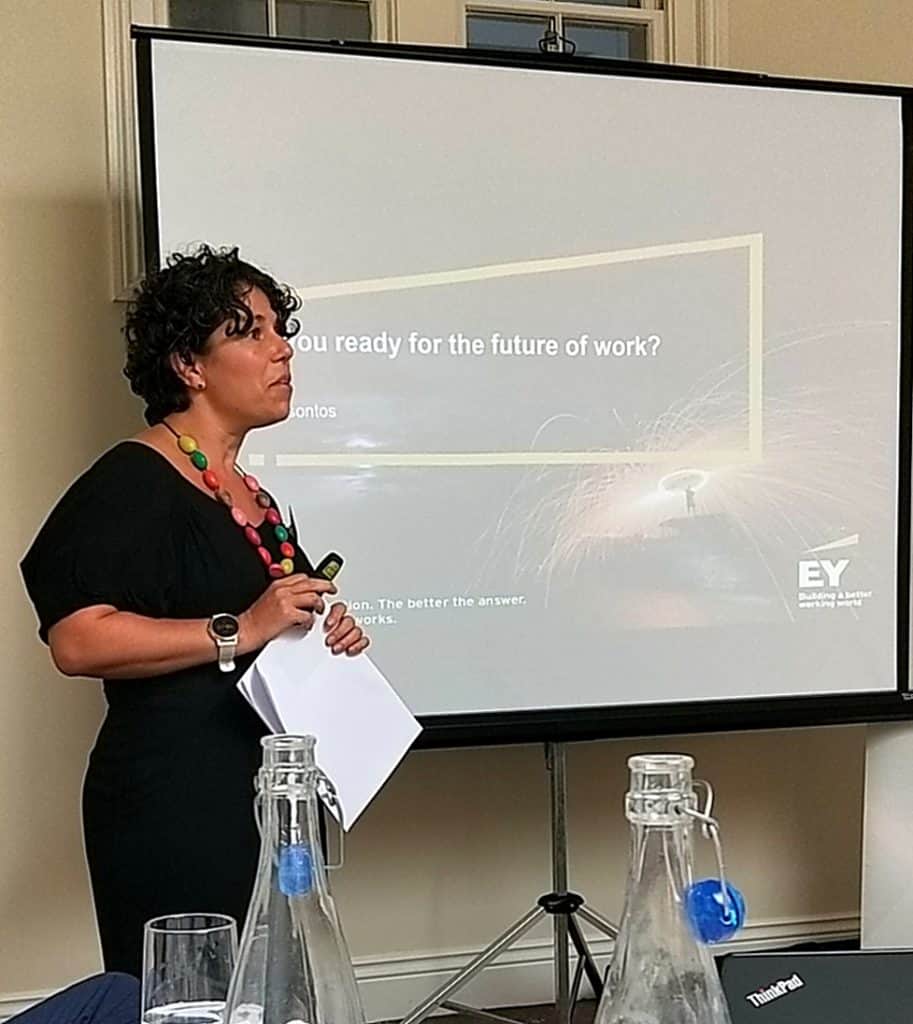
Andi Csontos, OHS futurist

Andi Csontos

The future of work is usually portrayed as a future dominated by Artificial Intelligence (AI) and electronic technology, and one with which humans will struggle to cope. As other industrial sectors panic over potential job losses, it may be good news for the occupational health and safety (OHS) profession which feeds on the potential for harm. The future will still contain harm, but probably new types.

Consultation has been critical to OHS and its ability to improve health and safety, but many OHS people do not have to leave the office. There activities revolve around complicated Excel spreadsheets of intricate injury classifications and risk calculations. But OHS existed long before these technological burdens, which some would describe as dead-ends and others as the accumulation of valuable data. However, talking about safety and, more important, listening to others discussing safety is the most important tool an OHS profession has and will have in the Fourth Industrial Revolution.

This was reinforced recently by EY’s EHS Partner Andi Csontos (pictured above) at a seminar in Ballarat Victoria. Csontos paraphrased a recent EY discussion paper:

Subscribe to SafetyAtWorkBlog to continue reading.
Subscribe Help
Already a member? Log in here

Journalism survey data on how to communicate most effectively

The Australian Associated Press Medianet has released it 2019 survey on journalism and social media (not currently publicly available). It is an important survey as it illustrates journalists’ preferred ways of being contacted but also shows what media they watch and read. This knowledge is useful for anyone who is trying to create or improve their social and public voice, as the occupational health and safety (OHS) profession and Regulators are trying to do.

For instance, it is surprising that 81% of survey respondents still want to be contacted by email. Also, of the social media platforms – Facebook, Twitter, Instagram and LinkedIn, – only 7% of respondents have LinkedIn as a communication preference (Facebook – 50%, Twitter – 29%, Instagram – 14%).

Subscribe to SafetyAtWorkBlog to continue reading.
Subscribe Help
Already a member? Log in here

Scarlet M for Manslaughter

In March 2019, the Northern Territory government released its “Best Practice Review of Workplace Health and Safety in the Northern Territory”. This report was written by Tim Lyons who reviewed the Queensland work health and safety (WHS) Laws not so long ago. Lyons is creating a career path as sustainable as Alan Clayton who seems to have reviewed all the workers’ compensation systems in the Asia Pacific!

There are many similarities between the two reports which is not surprising – same Model WHS laws, same reviewer….. Yes, Industrial Manslaughter laws were recommended but this is almost a pro forma recommendation at the moment, as it has been supported by at least two State governments, recommended in a Senate inquiry into industrial deaths and pragmatically recommended by the Boland Review. In many ways these WHS-related reviews are feeding off each other.

Subscribe to SafetyAtWorkBlog to continue reading.
Subscribe Help
Already a member? Log in here

Business groups miss the target on sexual harassment

Two business associations have released the submissions they provided to Australia’s National Inquiry into Sexual Harassment in Australian Workplaces – the Australian Chamber of Commerce and Industry (ACCI) and the Australian Industry Group (AiG). These submissions have been eagerly anticipated as these two groups are politically influential.

ACCI has based its submission on 13 “principles”:

  • Employers oppose sexual harassment
  • Sexual harassment is not good business
  • More Australians need to be able to recognise sexual harassment
  • We need to improve the attitudes Australians bring to work
  • The law needs to support employers in turning values into action
  • We need to recognise/reward learning and change
  • Individuals must be made more accountable for their own behaviour
  • Greater effectiveness does not demand more law
  • Regulation needs to be smart, simple, clear and balanced to be effective
  • Jurisdictional overlap / repetition detracts from effectiveness
  • Businesses have differing capacities and cultures
  • Sexual harassment can be challenging to manage
  • This is a moving target; new sexual harassment risks are emerging

Each one of these sound positive but can be argued over. For instance “sexual harassment can be challenging to manage”. This is less of a principle than a reason, or even an excuse. Sexual harassment is complex to manage as it is not just about poor relationships, it involves a sexual element which involves power and disrespect; power that is sometimes misinterpreted as leadership or part of a manager’s entitlement.

Subscribe to SafetyAtWorkBlog to continue reading.
Subscribe Help
Already a member? Log in here
Concatenate Web Development
© Designed and developed by Concatenate Aust Pty Ltd