Another generation of safety thinking

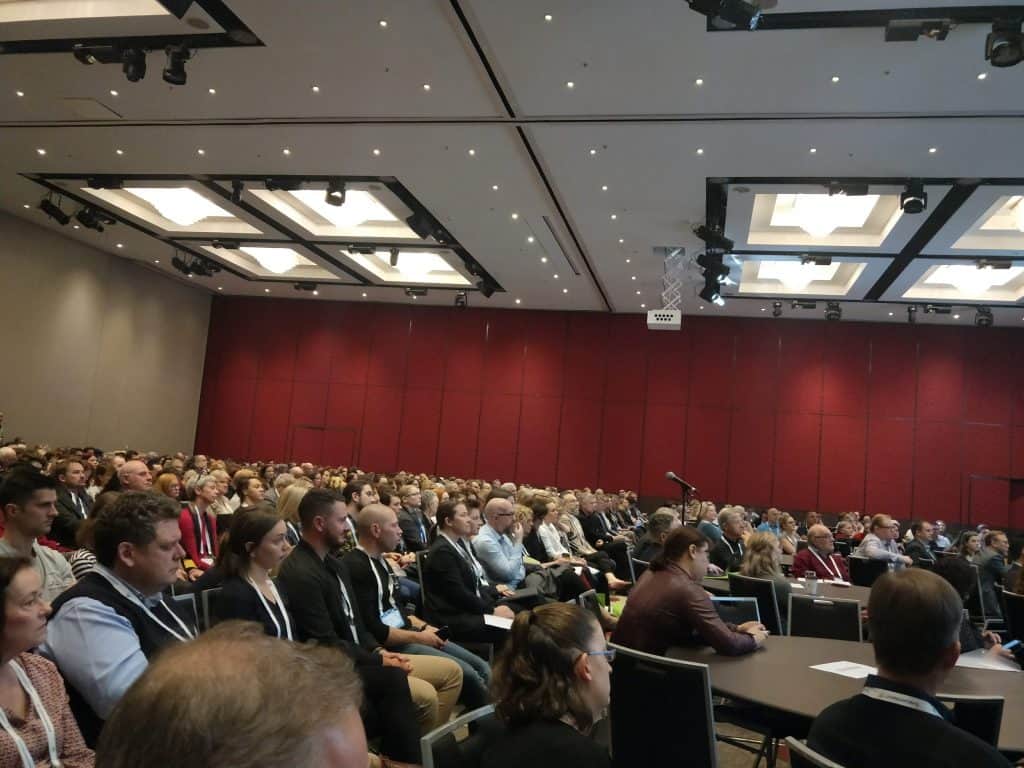
Several years ago I attended an occupational health and safety (OHS) conference at which Cristian Sylvestre was speaking. He was in one of the secondary rooms, it was packed with conference delegates and he was talking about neuroscience and its potential to affect safety. In 2017 he self-published a book called “Third Generation Safety: The Missing Piece“.

OHS has a lot of people talking about new approaches to address the plateauing of safety performance. We are pushed to reassess how we got here and how we look at OHS – Safety II, psychology of risk and others, or we need to have OHS fit with the Fourth Industrial Revolution. Sylvestre advocates a third generation of safety. This is his take on the previous two generations and how we should progress in the future.

Subscribe to SafetyAtWorkBlog to continue reading.
Subscribe Help
Already a member? Log in here

New film provides an update on legal action over the 2014 Hazelwood mine fire

An independently-produced documentary, Our Power, about the Hazelwood mine fire had its Victorian premiere on March 2 2019. The Hazelwood coal mine fire was a major workplace disaster than generated substantial public health damage in the neighbour communities in the Latrobe Valley. An early record of the event and its impacts can be found in Tom Doig‘s book The Coal Face.

https://vimeo.com/228587208

The documentary provides unique vision of the fire and how it burned and polluted the neighbourhood for over a month in 2014. As time goes on, the fire is seen more as an environmental disaster as it is workplace incident and speakers in Our Power are certainly confident in linking the fire with the privatisation of State-owned assets and the social injustice that underpins neoliberalism.

Subscribe to SafetyAtWorkBlog to continue reading.
Subscribe Help
Already a member? Log in here

Workplace sexual harassment inquiry releases more submissions

The National Inquiry into Sexual Harassment in Australian Workplaces has released another block of public submissions. many of them involve examples of horrible harassment and psychological harm, but several offer research, suggestions for improvement and, a little bit of, prevention.

Those making the recently released submissions seem to be realising that the inquiry’s terms of reference focuses on Australian workplaces.

Non-disclosure agreements and communication barriers

One submission is from Professor Judith Bessant, AM, of RMIT University (Submission 188) in which she addresses the application of Non-Disclosure Agreements (NDAs). NDAs have been in the press lately as some of those who experienced sexual harassment were unable to make submissions to this Inquiry without contravening the NDA they had with their employer. Professor Bessant asserts that

Subscribe to SafetyAtWorkBlog to continue reading.
Subscribe Help
Already a member? Log in here

Responses to the Boland Report into Australia’s Work Health and Safety Laws

The mainstream Australian media has almost entirely ignored the release of Marie Boland’s Final Report of the independent Review of Australia’s Work Health and Safety laws. but some of the usual players in the workplace relations sector have responded. Below is a longer responsive from the Australian Chamber of Commerce and Industry (ACCI) but first some simpler responses.

The trade union movement has almost entirely focused on the Industrial Manslaughter recommendations in the Boland Report. As well as a couple of media statements, the Australian Council of Trade Unions released a video on February 25 2019 with Assistant Secretary Liam O’Brien accompanied by the parents of two deceased workers. The first to speak were Tony and Robyn Hampton whose son, Jarrod, died while working for Paspaley Pearls. The second couple were Janice and Mark Murray whose son, Luke, died when parts of a crane that was being unpacked fell on him.

Subscribe to SafetyAtWorkBlog to continue reading.
Subscribe Help
Already a member? Log in here

Boland’s WHS Report recommends a practical update of laws and practices

The Australian Government has released the final report of the Independent Review of its Work Health and Safety (WHS) laws, conducted by Marie Boland. Importantly, the Government has not issued its response yet and, given that there is a Federal Election in a couple of months’ time, is unlikely to. Why have another issue complicate the campaign particularly when that response may have to address Industrial Manslaughter laws which would focus on the accountability of business leaders? This Government has already been bruised on a similar issue through a Banking and Finance Royal Commission.

Regardless of this Government’s future treatment of the Boland Report, the report does progress occupational health and safety (OHS) and the operation of the WHS laws, reinforcing some aspects and challenging other. It is obligatory reading for those interested in OHS in Australia.

(SafetyAtWorkBlog is preparing an exclusive interview with Marie Boland for next week)

Subscribe to SafetyAtWorkBlog to continue reading.
Subscribe Help
Already a member? Log in here

In order to grow, OHS needs economists, philosophers, ethicists and gender specialists

The occupational health and safety (OHS) profession is being affected by demographic changes as much as any other profession. Younger people seem to have a very different expectation on how to interpret and apply OHS, and older people are tired of being lectured to, and this is putting pressure on those who organise events, seminars and conferences and those who mentor and educate in a range of ways.

Some organisations and conferences are responding by reconfiguring the provision of information away from the lecture format of an expert to a mix of communication methods. This blog has written about some of those that occurred in the last two years. These conferences are less academic than in earlier days. Rarely is a conference accompanied by a handbook of research-based conference papers; some provide no papers at all and slideshows delivered a fortnight after the event are devoid of context and next to useless.

Continue reading “In order to grow, OHS needs economists, philosophers, ethicists and gender specialists”

New OHS conference with prominent speakers

One of the hottest occupational health and safety (OHS) issues at the moment is Industrial Manslaughter but this is just one aspect of the enforcement of OHS and prosecution for breaches. In June 2019 a two-day conference on OHS/WHS Prosecution and Enforcement is being held in Melbourne, Australia with a list of respected speakers who are prominent in Australian labour law circles.

The conference is more expensive than some other OHS conferences but the list of speakers is impressive and the theme could not be more topical. (A brochure is available for download) Until March 15 2019, Criterion Conferences is applying an Early Bird discount of $500 for each delegate. SafetyAtWorkBlog has negotiated a further discount applicable to Subscribers only.

Subscribe to SafetyAtWorkBlog to continue reading.
Subscribe Help
Already a member? Log in here
Concatenate Web Development
© Designed and developed by Concatenate Aust Pty Ltd