Old books, contemporary advice

Recently I searched the book shops online for some old and rare occupational health and safety (OHS) books.  I often bang on about needing to understand OHS beyond our own professional and academic life times, as OHS, like any other discipline, continues to evolve.

Below are a few of the books I purchased.  I am not going to have time to read them all but there are snippets of interest in each of them.

There are many books that I buy new but when some of them are a couple of hundred dollars, the only option is to look at secondhand shops or head to the local WorkSafe library.
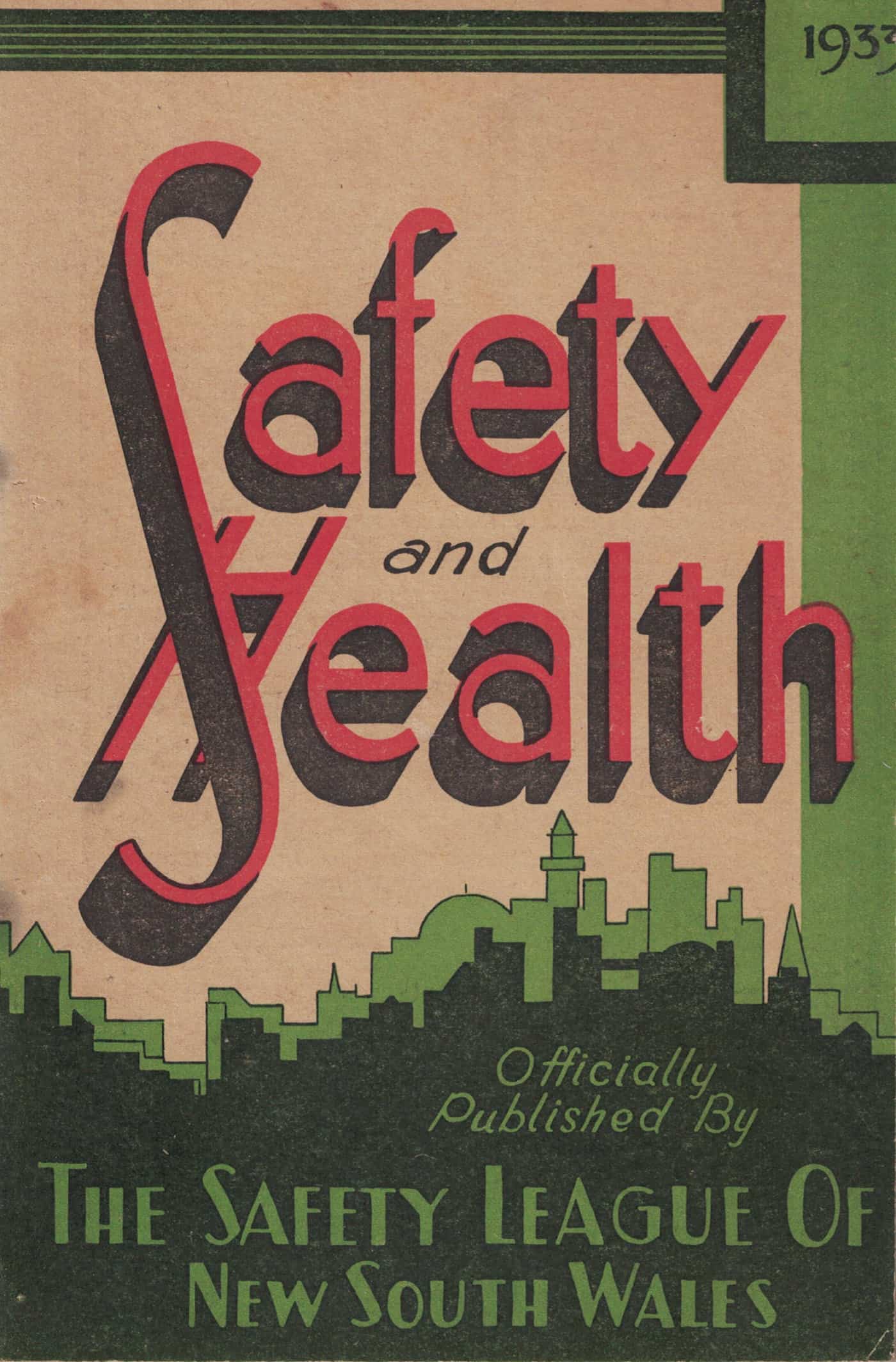
The Safety and Health guide was published in 1993 by The Safety League of New South Wales.  It includes many archaic recommendations for public and personal health but in “Safety and Health in Industry” it says this:

Subscribe to SafetyAtWorkBlog to continue reading.
Subscribe Help
Already a member? Log in here

New workplace mental health clinical guidelines provide clarity

In 2016, a survey of General Practitioners (GPs) conducted by Monash University identified that GPs frequently struggled with patients involved with workers compensation and that mental illnesses were particularly problematic.

In January 2018 Monash University, with the support of major institutions and safety

Subscribe to SafetyAtWorkBlog to continue reading.
Subscribe Help
Already a member? Log in here

Farm newspaper supplement gets a good wrap

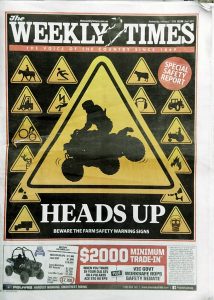
The Weekly Times newspaper has included an 8-page wraparound to its 7 February 2018 edition about workplace safety. The supplement is timely, the contents are indicative of cultural and political changes and the supplement is a nice summary of the multiple hazards and management approaches needed in agriculture (the same as in most industries, really).

Data quoted liberally from

Subscribe to SafetyAtWorkBlog to continue reading.
Subscribe Help
Already a member? Log in here

New farming incident statistics

The latest statistics of farm injuries from the Australian Institute of Health and Welfare provide a useful insight in to the workplace risks of Australian farms. Given the workplace focus of the SafetyAtWorkBlog, and the articles written about the risk of working with quad bikes, the following statistics are of great interest:

For quad bikes, almost 90% of injuries were sustained by the driver in people aged 15 and over.” (page 9)

For injuries involving quad bikes, males accounted for two-thirds (66%) of all hospitalisations for children aged 0–14 and almost 80% of all hospitalisations for people aged 15 and over.” (page 9)

Subscribe to SafetyAtWorkBlog to continue reading.
Subscribe Help
Already a member? Log in here

The reality is all about perception

Occupational health and safety (OHS) policy makers are keen on making decisions based on evidence.  But evidence seems hard to get, for many reasons.
Some people, including those in workplace relations and OHS, often fill the evidence gap with “anecdotal evidence”.  Frequently people being interviewed are asked for evidence to substantiate their claims and respond that “anecdotally” there is a problem yet there is no sample size for this evidence, there is no clarity or definition of the incident or issue – it is simply “what I heard” or “what I’ve been told”.  Using anecdotal evidence is okay as long as its inherent uncertainty is acknowledged and it is not used as a basis for substantial change.

Subscribe to SafetyAtWorkBlog to continue reading.
Subscribe Help
Already a member? Log in here

When workplace behaviour becomes insidious

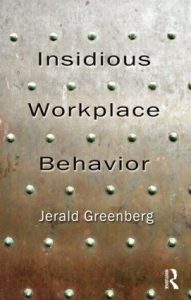
In previous writings about gender and occupational health and safety (OHS), the work of Jerald Greenberg was mentioned, particularly his book “Insidious Workplace Behaviour”.  His perspective seems even more pertinent today as many of us are weaving our way cautiously through communications and interactions with our work colleagues as we clarify what is acceptable behaviour so as to avoid offence or accusations of bullying and sexual harassment.

SafetyAtWorkBlog’s position is that sexual harassment is part of OHS and safety management systems due to the potential physical and psychological harm, in a similar way that bullying became an OHS concern.

Greenberg researches organisational behaviour and has written about corporate misdeeds and misbehaviour but he identified many precursors to some of these incidents. Continue reading “When workplace behaviour becomes insidious”

OHS is not all about workers compensation data

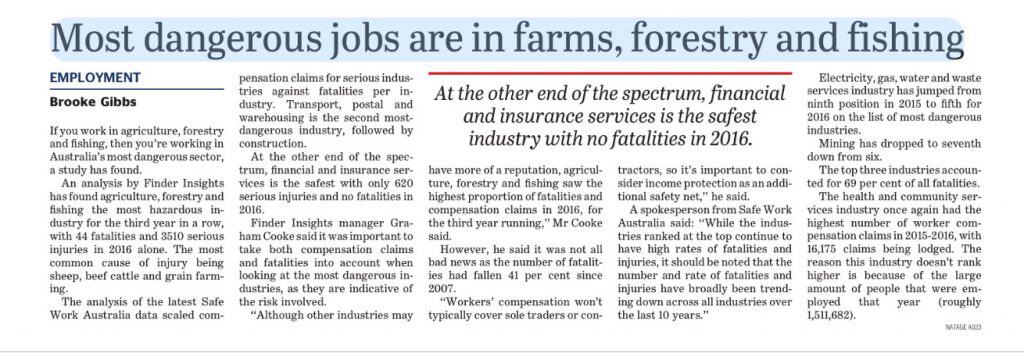
Every couple of months, after the release of official workplace fatality figures and serious injury, the Australian media reports the three most dangerous industries as Agriculture, Fishing and Forestry.  The latest article appeared in Australia’s Fairfax Media on 17 January 2018.  It is good that occupational health and safety (OHS) is gaining attention.  When so little media attention is given, any publicity is useful.

However this type of article also presents some negatives, including that it may be only representing 60% of all workplace fatalities and serious injuries.

Subscribe to SafetyAtWorkBlog to continue reading.
Subscribe Help
Already a member? Log in here
Concatenate Web Development
© Designed and developed by Concatenate Aust Pty Ltd