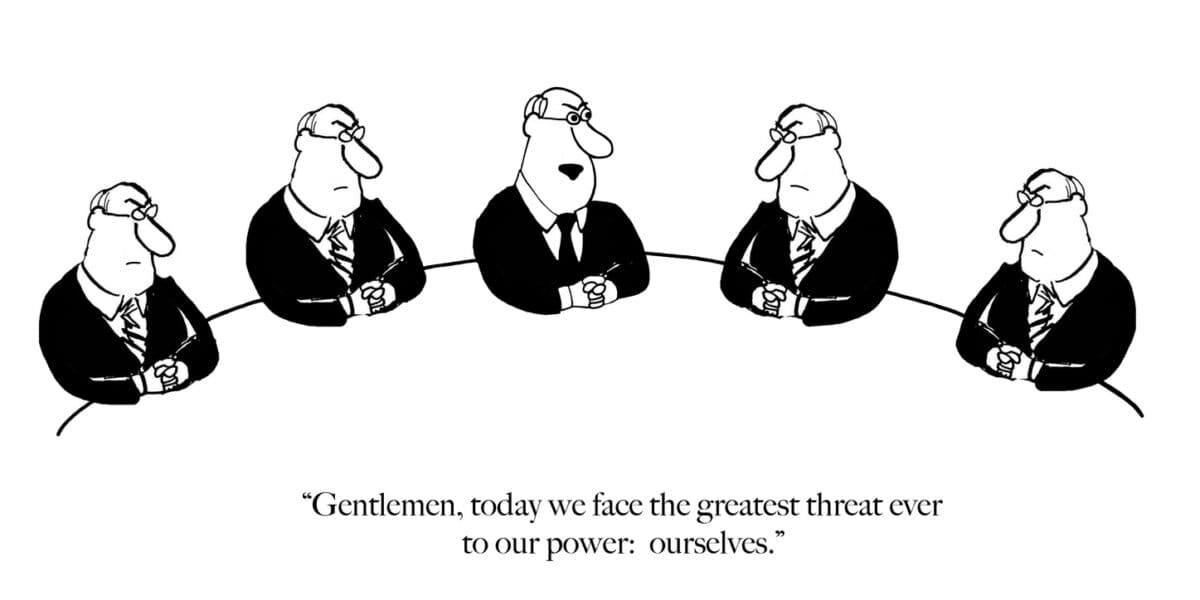
A not-for-profit organisation, Grapevine, released a short annual report on workplace discrimination and harassment notifications. The report received some attention in Australian media as these workplace hazards continue to be topical. The issues blend into the occupational health and safety (OHS) discipline, but the discussions were marked for omitting the OHS and regulatory context.
Category: risk
If it cannot be done safely, it should not be done at all
“If it cannot be done safely, it should not be done at all.” I have heard this phrase repeatedly over the last 12 months in particular. It is a truth, but it also avoids all of the flexibility our occupational health and safety (OHS) laws, institutions and interpretations have allowed for decades. Perhaps our tolerance of this flexibility is fading.
I was reminded of the quote above when reading an article (paywalled) in The Times on October 17, 2024, written by Will Humphries titled “Army sexual harassment: ‘People wouldn’t join if they knew the truth’”.
Plenty of what and how with a little bit of why
Psychosocial hazards are gaining attention online, but the pace of change remains sloth-like. Two recent online events provide good, basic occupational health and safety (OHS) and organisational psychology information and some insight into the slow pace.
HWSA’s manual handling challenge
Recently, Australia’s Heads of Workplace Safety Authorities (HWSA) produced a position paper that said:
“‘How to lift’ training programs do not reduce the incidence of musculoskeletal disorders. Despite this, a recent survey found that almost 80 percent of employers had provided ‘how to lift’ training to their workers in the past two years…
Providing ‘how to lift’ training does not prevent work-related musculoskeletal disorders. ‘How to lift’ training does not change any of the hazardous manual task risk factors that workers are exposed to, nor does it address the source/s of the musculoskeletal disorder risk…”
This is a further example of employers being sucked into occupational health and safety (OHS) related programs that do not work. Wellness has been seriously questioned, gym ball seating, back belts… and more. However, it seems that research is less of a challenge than communication.
“Does my business comply with the OHS/WHS law?”
Employers struggle to know if their businesses comply with the local occupational health and safety (OHS) or work health and safety (WHS) laws. They always have and, likely, always will. Employers are hungry for certainty and are often annoyed with OHS advisers who refuse to give a definitive answer to the question in this article’s title.
In the 1990s, particularly in Victoria, there was almost a frenzy for a simple audit tool developed through WorkSafe Victoria called SafetyMAP. It disappeared well over a decade ago, but my Goddess, it was popular, and small business operators especially wanted it. Even when its effectiveness was questionable.
Positive duties everywhere
One area where human resources (HR) and occupational health and safety (OHS) do not overlap in practice is diversity, equity, and inclusion (DEI), but they should. OHS cannot operate without effective consultation, and part of that effectiveness comes from a diversity of information, respectful conversations, and the inclusion of sometimes uncomfortable perspectives or truths.
Recently, the Victorian Equal Opportunity and Human Rights Commission (VEOHRC) published a guideline on race discrimination in the workplace, which illustrated the need for HR and OHS to begin talking (and listening to) the same language.
“Can I afford OHS?”
When you fail to speak in support of occupational health and safety (OHS) or, perish the thought, speak against OHS, you must be speaking in support of profit. Some would say the connection is not that simple, but really, it is.
Employers’ critical concern is, “Can I afford OHS?” This question shows a misunderstanding of OHS’s role in business success and continuity. The question would not occur if OHS had been integrated into the design of the business, its operations, and profit forecasts. OHS costs a lot more when it needs to be retrofitted to an existing company.