Parliamentary culture must change

Australia is in the midst of a murky investigation into an alleged rape that occurred out-of-hours in an office of a Federal Minister in Australia’s Parliament House. The incident has raised discussions and debates about workplace culture, the reporting of crimes, the uniqueness (?) of the parliamentary workplace, the rights of women, the role of the media in reporting the allegations or in being complicit in the workplace culture…….

Prime Minister Scott Morrison has got himself into a pickle about how to respond, how to investigate and what he should have known and what he was expected to do. One of the actions that he and his government could do, and should have done, was to accept, and act on, the findings of the National Inquiry into Sexual Harassment in Australian Workplaces conducted by the Australian Human Rights Commission (AHRC) early last year. The relevance of this report is obvious:

Subscribe to SafetyAtWorkBlog to continue reading.
Subscribe Help
Already a member? Log in here

Business continuity planning by another name

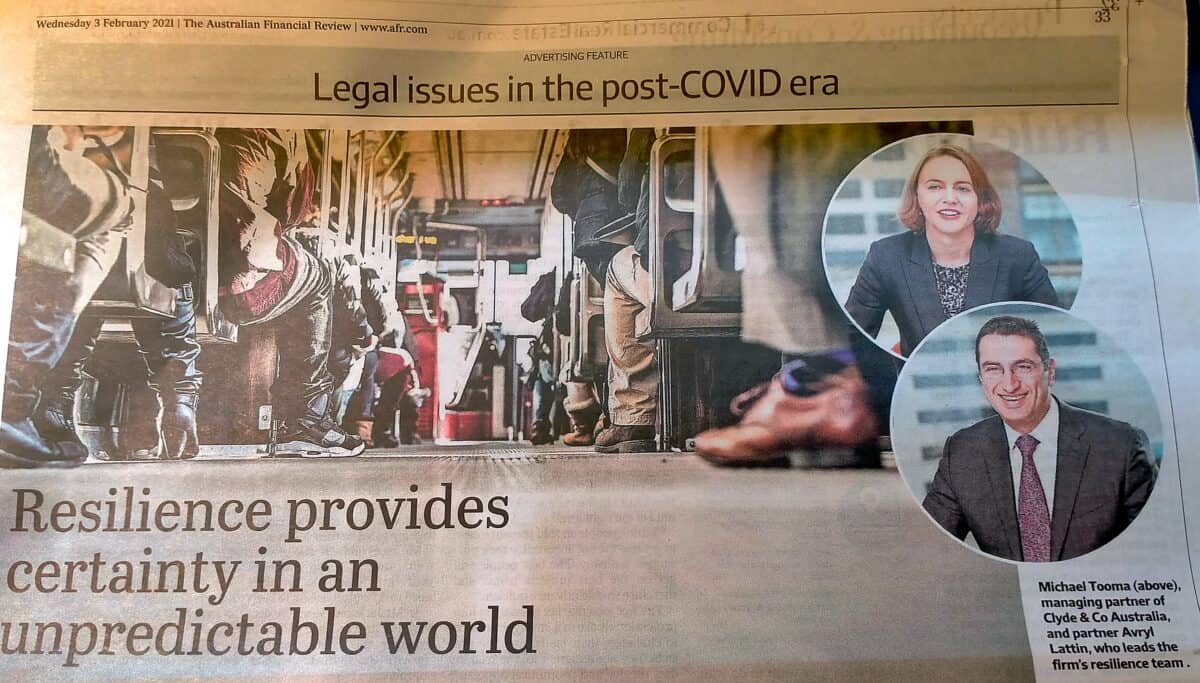
Occupational health and safety (OHS) gets a mention in a full-page advertorial in the Australian Financial Review (AFR) (February 3 2021, page 33) revolving around the legal and business services of Clyde & Co. The advertorial contains a good example of the contemporary business jargon such as “organisational resilience” – a concept that has come to the fore during the COVID-19 pandemic.

“Organisational resilience” has several definitions but here is one used by the British Standards Institution:

“….the ability of an organization to anticipate, prepare for, respond and adapt to incremental change and sudden disruptions in order to survive and prosper.”

This has very strong similarities to the much longer-established concepts of “business continuity” or sustainability within which OHS has dabbled for decades.

Subscribe to SafetyAtWorkBlog to continue reading.
Subscribe Help
Already a member? Log in here

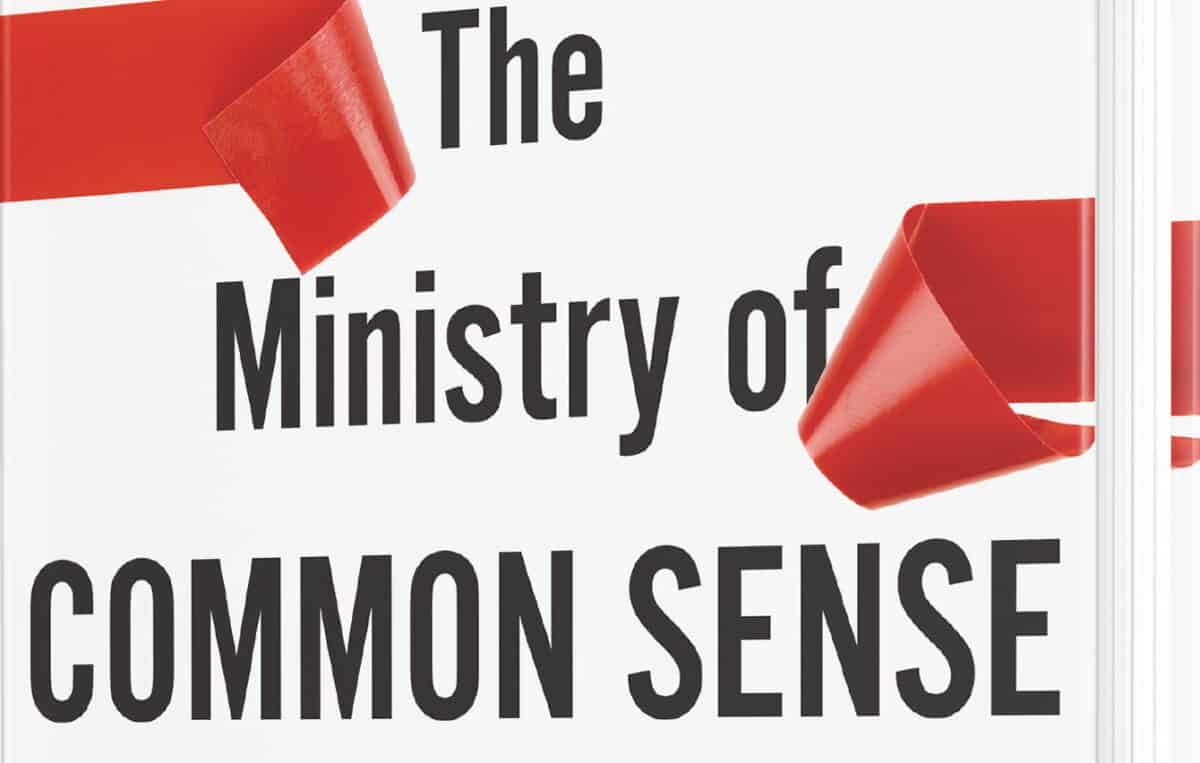
Lindstrom, Common Sense and OHS

I found Martin Lindstrom’s latest book, The Ministry of Common Sense, very funny, then anger replaced funny and I had to put down the book and come back to it later. The book is excellent but all the examples of corporate nonsense that Lindstrom provides can be overwhelming. It also contains dozens of examples that are very close to my own experience and, in many cases, nonsense that I have created or supported when advising clients about occupational health and safety (OHS). SafetyAtWorkBlog asked Lindstrom about how Common Sense fits with OHS.

Subscribe to SafetyAtWorkBlog to continue reading.
Subscribe Help
Already a member? Log in here

Culture, greed and safety heckles

More business “gems” from the Australian Financial Review (AFR).

The potential for corporate change from Australia’s Royal Commission into Misconduct in the Banking, Superannuation and Financial Services Industry is fading fast. Back in July 2020, the Australian Financial Review (AFR) reported on an investigation by the Australian Prudential Regulation Authority (APRA) that found, according to the AFR’s headline, that Westpac bank’s culture was immature and reactive.

Safety culture, or an organisational culture that integrates safety, has been a running theme in Australian occupational health and safety (OHS) circles for several decades now but it has rarely gained traction. Partly this is due to the distraction presented by corporate wellbeing programs which address symptoms of ill-health and un-safety and provide a comfortable excuse for company executives who can then claim some action even if the results are dubious.

Subscribe to SafetyAtWorkBlog to continue reading.
Subscribe Help
Already a member? Log in here

‘No Bystanders Rule’​ Bullshit

Guest Post by Dr Rebecca Michalak

About couple of weeks ago, the Australian Financial Review (AFR) featured a piece on a law firm that had introduced a mandatory approach to reporting sexual harassment – referred to as a ‘no bystanders’ rule. 

To be clear upfront, here is my disclaimer – I am not directly commenting on the law firm in question; there isn’t enough information in the articles to make any objective judgements on that front. The references used from the two media pieces are for illustrative purposes only. Call them ‘conversation starters.’

In the AFR piece, the contractual obligation was outlined to involve: 

“…chang(ing) ‘should’ (report) to ‘must’ – so any staff member who experiences, witnesses, or becomes aware of sexual harassment must report it,” 

with the affiliated claim being,

“That shift really reinforces that there is zero tolerance – and there are no confidences to be kept; it needs to be outed – bystanders [staying silent] will no longer be tolerated.

Continue reading “‘No Bystanders Rule’​ Bullshit”

Fire Flood Plague OHS

2020 is a year of continuing social change, so a book of essays that reflects on 2020 seems a little presumptuous. But just because we are in a state of social flux does not mean we must wait for stability before examining the process of change.

This December Random House Penguin will publish “Fire Flood Plague“, a collection of essays from prominent Australian writers about what Tim Flannery calls the three catastrophes:

“…the unprecedented, climate-fuelled megafires that were extinguished by damaging, climate-influenced floods. Then, in March, the COVID-19 pandemic…..”

page 69-70

There are some parallels between how people responded to these disasters and how workplace safety and health is managed. But more than that, the essays provide an insight into how others feel about what is happening, and these writers’ thoughts will reflect the thoughts of those with whom we work, with those we are obliged to manage and with those whose physical and mental welfare we are obliged to improve.

Subscribe to SafetyAtWorkBlog to continue reading.
Subscribe Help
Already a member? Log in here

More workplace bullshit, but in a good way

Bullshit is starting to gain some serious analysis with four researchers recently publishing “Confronting indifference toward truth: Dealing with workplace bullshit” in Business Horizons. One attraction of this research paper is its focus on workplace business communications and conversations, but it is almost impossible to read it without thinking of the recently ousted United States President and how lies and “fake news” have dominated international political discourse.

Another attraction is that it is not just an analysis but one that also suggests pathways to detect and reduce the bullshit. What I was unprepared for was to start to feel sympathy for the bullshitter.

Subscribe to SafetyAtWorkBlog to continue reading.
Subscribe Help
Already a member? Log in here
Concatenate Web Development
© Designed and developed by Concatenate Aust Pty Ltd