Many workplace deaths for BHP Billiton

The Australian Workers Union are justifiably angry at the latest workplace death associated with BHP Billiton.   According to the company’s media statement on 19 march 2009

“We regret to inform that we have been advised by Mines and Port Development (a Joint Venture of Fluor and SKM), who manage our major construction activities, that there has been a fatal accident involving a John Holland employee at the construction site in Newman.”

The company’s own website provides the background to the union’s concern.

25 February 2009

It is with regret that BHP Billiton Iron Ore advises that an employee, Bob Blake, a track machine operator, aged 56, was fatally injured in a rail accident approximately 74km south of Port Hedland at 3.30am on Tuesday 24 February.

25 February 2009

It is with sadness that BHP Billiton Mitsubishi Alliance (BMA) advises that John Barker, an employee of Nixon Communications working at Blackwater Mine, was fatally injured in a motor vehicle accident at the mine late this morning.   

4 September 2008

We regret to advise that a fatality has occurred at BHP Billiton’s Yandi mining operations involving a HWE Mining employee.

26 August 2008

BHP Billiton Iron Ore regrets to advise that an incident occurred during the night at its Yandi mine site, which resulted in the death of an HWE Mining employee.

29 July 2008

BHP Billiton Iron Ore regrets to advise that an incident occurred at approximately 11.00am today at its Nelson Point operations in Port Hedland, which has resulted in the death of an employee.

17 January 2008

It is with deep regret that BHP Billiton reports that a fatality has occurred today at the Cannington silver, lead and zinc operation in north-west Queensland.

In the “Chairman’s Review” for 2008,  Don Argus wrote about the growth in demand for its products from the Asian region:

Our response has been to streamline our business to enable us to produce as much product as fast as possible within the non-negotiable framework of the highest safety and environmental standards.

The CEO, Marius Kloppers, states that even though the company has achieved its seventh consecutive year of “record attributable profit”

While we can report financial success, I regret to report we have not performed well on safety. In FY2008, 11 of our employees died at work. Many more lives will have been impacted, some forever, by these tragic and avoidable events. We have reflected deeply on what more we must do to reach our goal of Zero Harm. In FY2009, we are making even greater efforts to improve our safety performance.

As shown above, the FY2009 performance statistics are not looking too good.

In the 2008 Corporate Governance Summary, the Directors are lauded.

The non-executive Directors contribute international and operational experience; understanding of the sectors in which we operate; knowledge of world capital markets; and an understanding of the health, safety, environmental and community challenges that we face.

In its 2008 Annual Report under Risk Factors, safety is listed within assets.  It reads like an acceptance that contractors are not living up to their OHS obligations or BHP Billiton standards.  This rings hollow as contractor management should be an area that a company of such size, resources, longevity and experience, manages in an exemplary fashion.

Some of our assets are controlled and managed by joint venture partners or by other companies. Some joint venture partners may have divergent business objectives which may impact business and financial results. Management of our non-controlled assets may not comply with our management and operating standards, controls and procedures (including health, safety, environment). Failure to adopt equivalent standards, controls and procedures at these assets could lead to higher costs and reduced production and adversely impact our results and reputation.

Later in the Risk Factor chapter:

Despite our best efforts and best intentions, there remains a risk that health, safety and/or environmental incidents or accidents may occur that may negatively impact our reputation or licence to operate.

The company is active though.  It has a Code of Conduct that applies to everyone, including contractors.  In it there is a quick test:

If you are in doubt about what to do or whether to speak up, it may help to do the Business Conduct Quick Test by asking yourself some simple questions:

  • The values test: Does it fit with the values in our Charter?
  • The safety test: Could it directly or indirectly endanger someone or cause them injury?
  • The law test: Is it legal and in line with our policies and standards?
  • The conscience test: Does it fit with my personal values?
  • The newspaper test: If the story appeared in the paper, would I feel comfortable with the decision?
  • The family test: What would I tell my partner, parent or child to do?
  • The ‘feel test’: What’s my intuition or ‘gut feel’? If it ‘feels’ bad, then it probably is bad!

Failing any of the above ‘tests’ indicates that you need to talk with someone about the concern you have.

It’s not that BHP Billiton seems to have fallen into a heap in the last couple of years.  Following a major explosion in 2004 at its remote Boodarie Hot Briquette Iron (HBI) plant in Western Australia, it was fined $200,000 plus costs for “failing to provide and maintain a working environment in which employees were not exposed to hazards.”   The explosion killed one worker and injured several others.

The court case revolved around the May 2004 explosion at the Port Hedland Boodarie HBI plant where one man died, and others received severe burns.

The prosecution case was that BHP Billiton undertook two activities, with the potential to cause an explosion, together without a proper risk assessment. This was considered to be a serious and substantial breach of the obligation to provide and maintain a safe working environment.

There is much more OHS performance information available at the BHP Billiton website but it is worth ending this post with the OHS statement included in the Code of Conduct:

BHP Billiton is committed to achieving leading industry practice in health and safety.

In all cases, we will aim to meet or exceed applicable legal and other requirements, as we believe that all accidents and occupational illnesses and injuries are preventable.

Our priority is to ensure that all our people – regardless of where they work or what they do – return home safely.

Kevin Jones

Air Safety Culture – Turkish Style

SafetyAtWorkBlog would not purport to be knowledgeable about airlines, Turkish or Australia but there was a fascinating article published in Europe on 12 March 2009 that discusses the safety culture in Turkish Airlines. The article is entitled “Islam and the art of aircraft maintenance” by Claire Berlinski

SafetyAtWorkBlog would not purport to be knowledgeable about airlines, Turkish or Australia but there was a fascinating article published in Europe on 12 March 2009 that discusses the safety culture in Turkish Airlines.  The article is entitled “Islam and the art of aircraft maintenance” by Claire Berlinski (Thanks to Melody Kemp for bringing this to our attention)

There are some similarities to the current issues running in Australian media and industrial circles over the maintenance services of Qantas aircraft.

The crash of a Turkish Airline flight in Amsterdam on 25 February 2009 gained worldwide attention.  According to Berlinski’s article this crash

“…was caused by mechanical failure, exacerbated by severe pilot error: The aircraft’s altimeter – which had malfunctioned twice in the past eight landings – was faulty, and the pilots failed to note this or respond appropriately.”

A spokesperson for the airline insisted that the quality of servicing was the equal of European airlines.  (God help, airline passengers in Europe.)

Berlinski reported that

“Technicians were given maintenance tasks after two or three hours of training”

and that according to a reputable Turkish publication “Tempo Dergisi”, a technician was interviewed who 

“..claimed to be responsible for engine maintenance: he admitted that he was not licensed to do this job.”

Lastly she reports that

“And in December, 2006, it was widely reported that Turkish Airlines workers had sacrificed a camel on an Istanbul airport ramp as a gesture of thanks for having at last got rid of a batch of troublesome planes.”

There is much more in Berlinski’s article of concern and the full article is recommended but the relevance to SafetyAtWorkBlog is its example of a dysfunctional safety culture in an industry that is used as a positive example throughout the world, principally, as a result of James Reason’s work.

There will be good and bad in every industry and one will always be able to find a poor example of safety management in some country somewhere but the airline industry is different.  It projects itself as well-regulated and operates to international benchmarks of efficiency and safety.  It promotes its maintenance industry as “world’s best practice” but the generalisation is as empty as all generalisations.

OHS professionals are taught to manage safety in a way that includes the lowest common denominator in the workplace.  Safety is built around the highest risk or the stupidest act. 

It is useful to read the Berlinski as an article that reflects the infamous Darwin Awards except that the victim is not only the pilot but hundreds of innocent passengers.

Kevin Jones

Morality in business

A good safety manager is one who is aware of the social context of the job and the social consequences of injury on employees.  The manager also needs to consider the operational parameters of the company.  This is a difficult balancing act that many spend their careers trying to attain.  But what if morality or legislative obligation was removed from the workplace, or was never there in the first place.  How would employees be treated then?

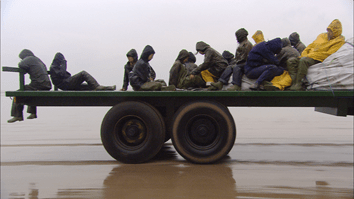
GHOSTS is a movie, ostensibly, about one person, Ai Qin, who travelled illegally from China to England in order to earn a living, a living that she believed she could not achieve in China.  As the opening scenes of the film show, she, and many others, are drowning in Morecambe Bay when the tide comes in rapidly while they are picking cockles.  The reality behind this fictional film radically changed England’s approach to gangmasters and resulted in prosecutions of the operators of the cocklepicking business.  Those operators were found responsible for the deaths of 23 cocklepickers in 2004.

ghosts-19to-the-beach-close-low

As with many memorable films, the story of a single individual can fascinate and shame us at the same time.  GHOSTS is not an enjoyable film as the hardship and the choices faced are uncomfortable to watch but it is an important film for many reasons. One is that gangmasters, and immoral companies, do not exist in a vacuum.  Minor bribery, institutional ignorance, laziness and a disregard for human life are shown by various characters throughout the film.  There are combinations of these elements which push Ai Qin into certain decisions where others would be provided with options.

Another is that we need to be reminded of these events.  Often workplace tragedies fade as quickly as the media’s interest in them.  People often follow events only as long as they are on the telly but this habit provides an extremely skewed view of reality.  People are not expected to follow all issues, or be passionate about all the issues.  That way lies madness, confusion and inaction.  It is necessary to filter our ideological passions while retaining an interest in other related matters.  We categorise our priorities in relation to our resources, emotions and circumstances at one particular time.

But investigations take time and the truth often appears years later, sometimes when the heat in an issue has diminished, or we have had to reprioritize, or the media is looking elsewhere.  Outrage is always more attractive to the media than reason but we need to follow issues to their conclusion.  This is why families revisit the heartache of a fatality by sitting through coronial inquests or prosecutions.  They need to know the truth and find some answer to why the world has turned out as it has.

The conditions for trafficking, illegal migration and unregulated work continue in England today, just as they do in most countries.  GHOSTS is not a film about sex trafficking.  But whether people are being trafficked for sex, fruit picking, working in supermarkets or in take-away kitchens, is irrelevant.  Trafficking is inhumane and must be actively discouraged.

The issue will grow in its economic, human rights and political significance.

It may be heresy to apply the hierarchy of controls outside the workplace safety domain but if safety professionals investigated the contributory factors behind trafficking, it would be hard to argue against the elimination of the hazard for a lower order control measure.  If all physical journeys begin with a single step, then cultural change can begin with a single thought.

Kevin Jones

Victim support fund – http://www.ghosts.uk.com/

Sex trafficking and brothels

Every employee has the right to a safe and healthy work environment.  It was this statement and belief that pushed me to providing OHS advice to the legal brothel industry in Victoria.  The industry is frowned upon by most but used by many, and yet the OHS support for the industry is far less than that provided for many other legal businesses.

Over the years sex trafficking, or slavery, has gained a lot of attention, more so, in my opinion, than other examples of illegal migration and worker  exploitation.  Articles in The Age newspaper today report on approaches to brothel owners and managers from people who have women for sale.  Regardless of the industry in which this occurs, this practice is abhorrent and the full weight of the law should be focused on these slave traders.

But a point that is getting lost in the wilderness is that not all women working in brothels are illegal.  Almost all choose to work there for the same reasons anyone works anywhere.  Many academics, and Australia has some of the most rabid, see all sex work as exploitation, as slavery and degrading to women.

The question for safety professionals and advocates is whether the nature of the work discounts the workers’, and employers’, access to legitimate safety advice?  Can the moral switch be flicked off, even for a short time, in order to provide workers in this industry with the same level of occupational health and safety as any other worker can rightfully demand?  Does the switch need turning off?

The statement at the start of this blog, that is reflected in OHS legislation around the world, is not selective, it applies to all.

The legal brothel industry has a long way to go in achieving the levels of OHS compliance that other small businesses have already gained.  The established hazards of manual handling, ergonomics, noise, etc are largely dealt with but consider those issues that have entered the occupational area over the last decade or so.  

Ask yourselves how would the owner of a legal brothel, a business where (predominantly) women have sex with multiple partners over their shift, deal with these contemporary hazards:

  • Stress
  • Bullying
  • Fatigue
  • Drugs and alcohol
  • Security

And then ask yourselves how the OHS profession and discipline would deal with these workplace issues?

  • Sexually transmitted infections
  • Sprains and strains
  • Hygiene
  • Personal protective equipment
  • Working in isolation

I judge the success of safety management systems in companies by the level of knowledge the most isolated worker has about safety in that workplace.   I ask the teleworkers, the night-shift workers, the security guards, the cleaners, the maintenance staff…  These employees, if a safety management system is working properly, should have the same level of safety knowledge, and the same level of access to OHS support, as those workers on day shift in a  head office.

I also judge the safety profession and the regulators on the success of their safety initiatives, the level of their safety commitment, by looking at how OHS is accepted and implemented at those industries on the fringes of society, like the brothel industry.  If the workers in these industries and the owners of these businesses are treated differently because of the nature of the work, we need to reassess our commitment to safety and the professional vows many of us took to ensure everyone has a safe and healthy work environment.

Kevin Jones

A March 2008 podcast on the issue of sex trafficking in Australia is available HERE 


A sport’s culture of excessive alcohol at work functions

Each November safety publications carry guidances and warnings about unacceptable conduct at company Christmas parties.  Often these warnings are around moderating alcohol consumption and showing due respect to others.  One of the most recent legal advisories was issued in late-2008 by Maria Saraceni of the Australian law firm, Deacons.

This week in Sydney the National Rugby League (NRL)  faced its latest controversy when Brett Stewart of the Manly club was charged with sexual assault at a work function.  The NRL today issued harsh penalties on both Stewart (five match ban) and the club ($100,000).  To understand the context of the penalties and the media hoo-hah surrounding this it would be necessary to look at the many instances of assault and abuse associated with rugby league, and other male-dominated sports, in Australia.

The issue has remained largely on the sports pages of the newspapers except in New South Wales.  The fact that a sporting club was involved and a sport with a sad history in this area has dominated reporting and the OHS, safety management and employer liability angle has been lost in the rush.

The NRL media statement (no direct link available), quoted in part by the ABC, shows that the NRL CEO, David Gallop, is well aware of the safety management issues.

“Brett could not have been in a more high profile position of trust for the game on the eve of a season than he was last week and we believe he should have recognized the honour that he was given and the responsibility that went with it,” NRL Chief Executive, Mr David Gallop, said today.  “By any estimation there was an abuse of alcohol in the aftermath of a club function that has led in some part to the game being placed under enormous pressure.

“The players and the clubs need to know that we are not going to accept that.

“The Manly club has today delivered its report into the function and the measures simply weren’t sufficient to stop drinking getting out of hand in the case of some of the players. Brett was both refused service of alcohol and asked leave the premises.”

Section 20 (2) of the NRL Code of Conduct which states:

“Every person bound by this Code shall, whether or not he is attending an official function arranged for the NRL, the NRL Competition, the Related Competitions, Representative Matches, the ARL Competitions or a Club, conduct himself at all times in public in a sober, courteous and professional manner.”

Peter Fitzsimmons explains why the general conduct of rugby players needs changing.

“They [rugby league clubs] must fix it because they are a powerful tribe within our community, and that community has had a gutful not just of the atrocities, but of the NRL promising to fix it, to educate them, to discipline them, blah, blah, blah, year after year, with no results.”

Kevin Jones

Is there a Mars safety and a Venus safety?

A research paper released last month in Germany caught my attention even though it does not relate directly to research undertaken in a work environment.  

There seems to be an established train of thought that men and women choose to take risks based on some sort of gender criteria.

Alison L. Booth and  Patrick J. Nolen have published “Gender Differences in Risk Behaviour: Does Nurture Matter?”  They researched risk behaviour along gender lines in secondary education, a different sample choice to other researchers who mostly looked at their university students.  Booth and Nolen found

“…gender differences in preferences for risk-taking are sensitive to the gender mix of the experimental group, with girls being more likely to choose risky outcomes when assigned to all-girl groups.  This suggests that observed gender differences in behaviour under uncertainty found in previous studies might reflect social learning rather than inherent gender traits.”

Gender studies are fraught with ideological baggage and it is a brave person who chooses this line of study, as I learnt through studying sociology and Russian literature at university (but that’s another story).

The full report is heavy going for those with no sociology background but the research flags an issue that could be useful to pose to the growing band of workplace psychologists and culture gurus – what are the gender-based variations in unsafe behaviours in the workplace?

Could the available research mean different safety management approaches in workplaces with different gender mixes?  

When people talk about workplace culture, could there be a male culture and a female culture?  (We certainly refer to a macho culture in some industries)  In other words, is there a Mars safety and a Venus safety?

Workplace safety tries hard to be generic but has variations based on industry types.  Perhaps we should be looking more closely at the demographics of these types and varying our safety management approaches?

Kevin Jones

Happiness is a warm million

The Australian newspapers in late-February shared the “outrage” of politicians and then the community over training that was provided to public servants by the American “happiness guru” Professor Martin Seligman.

The cost to the taxpayer seems exorbitant but the psychologist was from the US and was training delegates for many days.  It is not unusual for US experts to charge over $US600 per hour plus travel and accomm0dation.

The Community & Public Sector Union‘s Assistant National Secretary Paul Gepp noted  in a media statement that news of the expensive conference, which paid an American psychologist’s team more than $440,000, came with news of more layoffs of  public servants, as 100 lost their jobs in the Crime Commission. 

“Public servants are working hard to keep essential services going, keep our communities safe and make the stimulus package work,” said Mr Gepp.  “Million-dollar, feel-good conferences don’t help get these jobs done. If the Government is looking to cut, we suggest it starts with junkets like this.” 

The OHS context of this furore comes from the reasons for the training and whether the same benefits could have been obtained at a reduced price.

Media reports say that in parliament on 26 February 2009

“[Deputy Prime Minister, Ms Julia] Gillard attacked Liberal frontbencher Andrew Southcott for attempting to “parody” Professor Seligman, who she described as a “noted educationalist”.
“He is the leader in the development of (a) resiliency program that has been shown to make a difference to mental health issues amongst young people, including issues like anorexia and depression.  That is actually serious and ought not to be cat-called about.”

SafetyAtWorkBlog has written previously about the workloads of the public sector under the Rudd government and how the government has chosen not to set reasonable production targets.  The Seligman seminars are an example of trying to treat the symptoms and not the cause.   Seligman’s programs are not the issue here as the results claimed may be absolutely justified.  

Part of the problem for the government is timing, and in this, it shares a lot with behavioural-based safety programs.  Whenever a company introduces a wellbeing program, or a happiness seminar, or resilience training, or a team-building extreme sports excursion, it indicates to me that either the company is one that has already tried the traditional approaches to controlling workplace hazards, hasn’t  the faintest ides what to do to improve the safety in their workplace , or has too much money in its human resources budget and needs to spend it by the end of the financial year.

Regrettably, the money spent on public service mental health has been poorly targeted and papers over the cracks whilst ignoring the structural instability of how it manages its people.

Kevin Jones

Concatenate Web Development
© Designed and developed by Concatenate Aust Pty Ltd