Part 2 of the Cabbage Salad and Safety podcast’s discussion on managing drugs and alcohol at work is now available.


Part 2 of the Cabbage Salad and Safety podcast’s discussion on managing drugs and alcohol at work is now available.
 On November 15, 2016, the NSCA Foundation (NSCAF) and Westwick-Farrow Media (WFM) announced a new publishing deal for one of Australia’s few remaining occupational health and safety (OHS) publications, National Safety. The media release was very upbeat about the change but the reality is that Australian OHS professionals and business operators will lose a free, hard-copy source of safety information, Safety Solutions.
National Safety magazine is a good magazine that, although long promoted as the journal of the NSCA Foundation, has a good reputation for independent and informative OHS articles and seems to have had a loyal readership amongst OHS professionals. There had been no hint that the magazine was “in trouble” or that a change was warranted. Safety Solutions has more of an advertorial approach and seems to appeal more to the small business owner and OHS professional who is more focused on the manufacturing industry sector. The magazine has existed since 2002 and has been a consistent presence. Continue reading “Another safety magazine bites the dust”
I have tinnitus. There I have outed myself along with 18% of men and 14% of women, according to a research report* from Hearing Research journal published recently. For those unfamiliar with tinnitus it is a persistent buzzing or ringing in one’s ears usually caused by exposure to loud noise. It is relevant to occupational health and safety (OHS) in a number of ways:
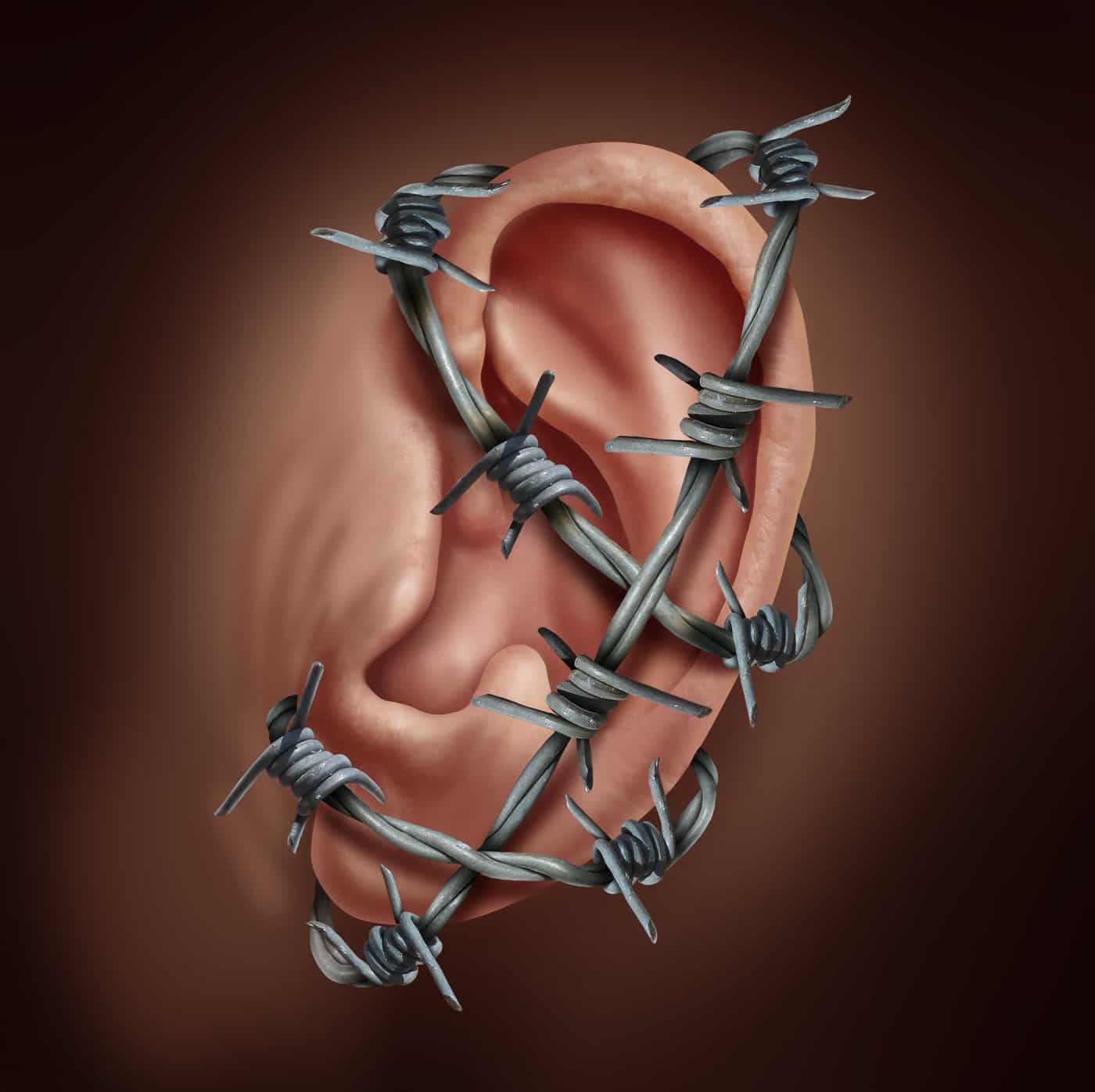 The research study conducted by David Moore and others was focusing on “lifetime leisure music exposure” so workplace noise is mentioned in the report only in passing.
It is common that unless a worker is deaf or seen signing, the default assumption is that everyone’s hearing is undamaged. The research data above shows that the assumption is false.
Episode 6 of the Cabbage Salad and Safety podcast is now available with the discussion centring on drugs and alcohol issues at work. For those looking for information on drug and alcohol testing, this episode is not for you. We thought that the testing issue is dealt with in many workplaces through legislative and regulatory matters and you have to comply with what you have to comply. Continue reading “Cabbage Salad and Drugs”
Proud to be one of ThunderMaps’ “Top 5 health and safety blogs”.
“Direct, holistic, and genuine is what you can expect to find in Kevin Johns (sic) – an award-winning Australian H&S advocate’s blogpost. Kevin has successfully tackled H&S at both macro and micro level. From convincingly arguing workplace safety as a critical part of bigger business environment’s picture and that it “cannot exist outside social, economic and political contexts”, to educating business about specific issues of H&S such as suicide prevention, he has successfully done them all.”
Recently the Victorian Women Lawyers conducted a seminar into the outcomes of Victoria’s Royal Commission into Family Violence. SafetyAtWorkBlog attended even though the topic seems, initially, to have a tenuous link to occupational health and safety (OHS). Family violence is relevant to OHS through its influence on workplace mental ill-health, productivity and the need for cultural…
The Spring 2016 edition of National Safety magazine includes a cover story on leadership written by me. In it John Lacey insists that safety leadership begins at the top. This position is supported by many business and occupational health and safety (OHS) advocates but this seems to me to be based on a misunderstanding of leadership.
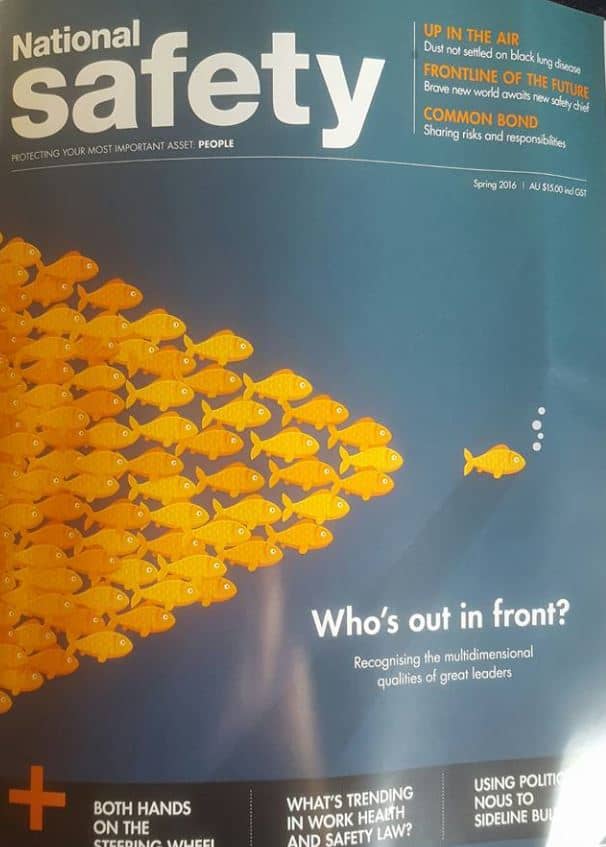 In response to a question about leadership in small- to medium-sized businesses, Lacey said that leadership “applies to all”:
“[Leadership] is not different but how to apply it will be different. The start must be from the top down. The basic values, behaviours, knowledge and systems will be defined by the organisation no matter how large or small it is.”
This is remarkably like safety culture and my response is that leadership can be displayed by anyone at any level of a company or society and can manifest at any organisational level. The fact is that it is easier to sell a commodified leadership to executives as they are expected to show leadership in times of crisis or stockmarket uncertainty and most of us translate that into leadership of safety.
Leadership, as with most elements of OHS, takes time and effort – sometimes over generations. This is particularly so with anything concerning corporations that are wary of change unless that change supports profit and shareholder returns. (I would argue safety increases profits and company value but this is an argument than struggles for traction)
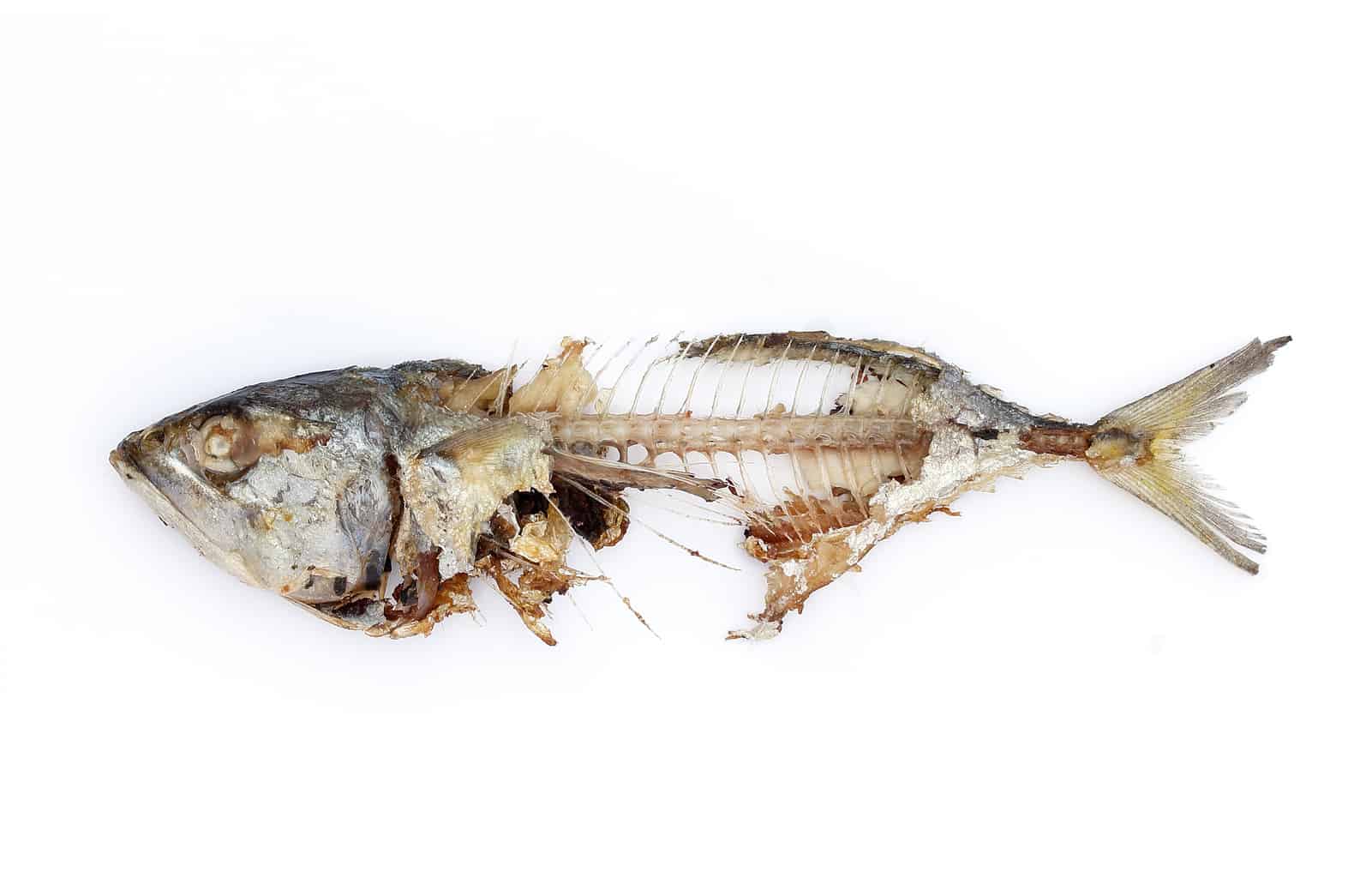
The most abused aphorism used to justify this focus on executive leadership is that “a fish rots from the head down”. Nonsense. As this website states, it is the guts of a fish that rots first.
 The attention given to senior executive leadership is an organisational echo of the economic trickle-down theory which has been roundly dismissed as flawed and, in some instances, has contributed to increasing socio-economic inequality.
Lacey acknowledges that anybody within an organisation can lead although leadership starts from the top. He supports my contention that leadership occurs at all levels of a business and that actions show leadership and safety, probably, more effectively and cheaper than any training session. Lacey says
“…even the gesture of picking-up litter or wearing the correct [personal protective equipment] in front of others in the work team can be seen as a form of leadership. Leading by example is an old but such a true saying.”
These actions are the best way of improving workplace safety and showing leadership, and for the least cost. Safety should be improved by actions rather than PowerPoint.
[Note: please support National Safety magazine if you can. It is not available online and only through subscription but it is one of the few hard copy OHS magazines left in Australia and one of the few, if not the last, that actually pays its writers (not as much as we’d like but that’s the continuous battle of the freelance writer). This stance is keeping advertorials at bay and gives National Safety an integrity that is often missing in other safety publications]