
The Australian Treasurer,
Category: SafeWork
“Old” documents improve the context of modern OHS initiatives
 Several long and involved phone conversations resulted from last week’s articles on Australia’s Occupational Health and Safety (OHS) Body of Knowledge (BoK) and its role in accreditation of tertiary OHS courses. It is worth looking at the origins of some of the issues behind the research on these safety initiatives.
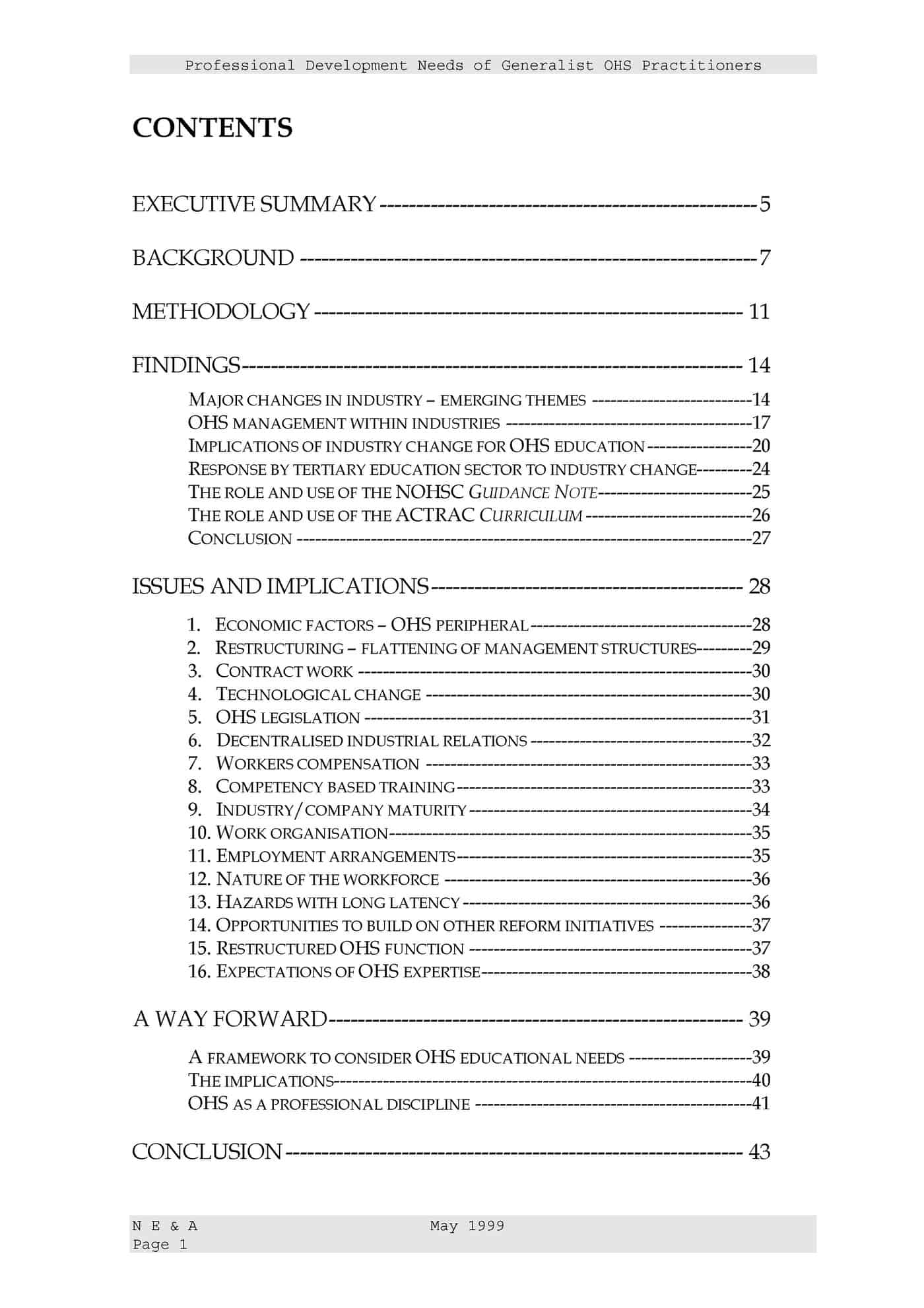
One important document was published by the National OHS Commission (NOHSC, a forerunner of Safe Work Australia) in 1999 – “Professional Development Needs of Generalist OHS Practitioners“* . This NOHSC document continues to be referenced in the continuing debates listed above and illustrates the need to understand our recent OHS past. Continue reading ““Old” documents improve the context of modern OHS initiatives”
Australia’s Safe Work Month launched
The CEO of Safe Work Australia, Michelle Baxter, has launched National Safe Work Month in a video address this morning. This speech is the first of many online Virtual Safety Seminars for 2015. The seminar program is much expanded since last year’s inaugural attempt and a recent discussion on this program’s development is available here. The videos will be good additions to the Australian body of knowledge on workplace safety.
This video illustrates some of the challenges in producing videos and webinars. The lack of commonly used acronyms for workplace safety such as OHS or WHS can disturb the vocal flow by requiring formal and clear speech. The use of an autocue or teleprompter is also a skill that requires practice, as UK politician Jeremy Corbyn has recently acknowledged.
Analysing safety leadership can be distracting
Any blog about occupational health and safety (OHS) will write repeatedly about leadership. Safe Work Australia advocates leadership as beneficial to OHS:
“When leaders make sure all business risks, including work health and safety, are effectively managed, and continually monitor and review all areas of their business’ performance, they will be open to opportunities for innovation, and alert to emerging hazards.”
But leadership requires someone to apply it and often, in the OHS sphere, people wait for others to show leadership rather than seeing their own potential.
Coronial findings and research – another step on the rocky road
 The final report into quadbike safety has finally been released by the University of New South Wales in a series of five papers and in the wake of Queensland coronial findings into nine quadbike-related deaths. (A New South Wales inquiry is currently underway)
It has been a
Safe Work Australia is gearing up for National Safe Work Month
Last year, Safe Work Australia (SWA) gambled on a series of online videos and live events through National Safe Work Month in the form of Virtual Safety Seminars (VSS). VSS provided good online content that continues to be viewed but such a safety communication strategy should stand up to questioning, particularly if it arises from a Government agency.
One of the most important elements of any safety communication strategy is to attempt to measure its success. The strategy may be aimed at raising awareness of an issue, providing information or promoting a service or product but the important part is to structure the strategy so that it can be measured and for that measurement to occur. The OHS sector in Australia has a tradition of trying something because it is a good idea and then considering the effort to be a measure of success. Too many strategies magnify awareness of an issue of which the community is already aware rather than developing a strategy for change, and of tangible change. In some ways the community’s tolerance for awareness over change is starting to wear thin.
With this in mind, SafetyAtWorkBlog posed some questions to Safe Work Australia: Continue reading “Safe Work Australia is gearing up for National Safe Work Month”
Carrillo on leadership and communication
Rosa Carrillo of Carrillo & Associates, describes herself as a “thought leader in transformational leadership for environment, safety and health” with a “unique understanding of safety culture and complex environments”. Prior to her attendance as a keynote speaker at the SIA National Convention in September SafetyAtWorkBlog was able to ask Rosa Carrillo about leadership, trust and communication.
Carrillo is aware of the risk of transferring concepts and practices rather than translating them and tailoring them to local needs. She told SafetyAtWorkBlog:
“I am afraid that one of my core principles is that you can’t just take what someone else did to address human behavior and implement it with “minimal translation” even if it was developed in your own country. You can certainly do that more readily with technology, but even then you must customize its introduction. Most leading edge thinkers in the safety field agree that benchmarking leads you down the rose garden path. You spend lots of money and feel you are doing the right thing until the next disaster emerges.”