
Cabbage Salad and Safety – Episode 5

October is National Safety Month in Australia and episode 5 of the Cabbage Salad and Safety podcast discusses a range of topics to mirror the diversity of National Safety Month.

Siobhan Flores-Walsh and myself talk about:

  • Conferences
  • Culture
  • Gender in Safety
  • Mental Health
  • Simple Safety vs Complex Safety
  • Innovation
  • Marketing and social media

The Gender in Safety conversation is one that I intend to expand upon in the coming weeks and is useful to notion relation to the increasing number of “women in safety”- type events.

KJ SFH HeadshotThis podcast is a mixed bag but I am interested in hearing your thought on the podcast and the topics it contains so post a comment here or email me.

Kevin Jones

The challenge of marketing workplace safety

Safe Work Australia (SWA) has formally launched National Safety Month.  National Safety Month has existed for many years and is ostensibly a marketing exercise about workplace safety. As such it is worth looking briefly at the marketing of occupational health and safety (OHS) messages.

Campaigns can work well when there is a trusted and high-profile figure to be a spokesperson for the cause and, ideally, provides a testimonial or relevant back story. OHS in Australia lacks such a person.  Safety messaging almost always comes from the heads of regulatory agencies or business leaders whose public profiles are minimal.  Some prefer low profiles and when coerced to speak in public, often when on video, have a stilted delivery that limits the appeal.

Prominent support

If National Safety Month really wants to cut through into the mainstream media or to the broadest audience, it should have a message from the current Employment Relations Minister or, even better, the Prime Minister, at least.  National politicians guarantee media attention even if the entirety of the message is not used or explained.  State safety authorities have often been successful in gaining the support of their local Minister.

(A conference organiser trick that is regularly played in Australia is that if you want the Minister to open an event, let them know that if they cannot attend, the Opposition Party’s Shadow Minister has expressed an interest. The Minister then reprioritises the event.)

It is difficult to get Ministers’ time and even harder to have them on television or online video.  People understand this inconvenience and struggle, and the effort to get the Ministers seems to add strength and authority to the issues Ministers talk about. If National Safety Month, or the various State-based events, does not have the relevant Minister speaking at an event or in support of the event, or if the month goes by without, at least, a ministerial media statement, the community can justifiably say that the Minister does not care about workplace safety, even when they have responsibility for the portfolio.

Online

Most Australian OHS regulators have an online strategy in support of National Safety Month.  Over a decade ago when these strategies were introduced, the move online was almost always because it was seen as cheaper.  The minuscule size of the audience was rationalised with “if you build it they will come”.  The supposed success of many of these online strategies has not come from the subject matter, OHS is still seen as boring or a nuisance by most.  Online OHS marketing is, like so many others, riding the wave of technological change rather than affecting change itself.

Growth and success has come from the penetration of Twitter, Instagram, Facebook and other social media that pushes information to the audience bypassing the traditional media controllers who almost always ignored workplace safety unless there was a catastrophic disaster of multiple fatalities.

worksafe-awards-2016Media Disinterest

A minor but recent example of how the longterm media ignorance of OHS has changed media strategies is that WorkSafe Victoria offered no passes to the media for its awards night on October 7*, as it had done for most of the previous awards events.  WorkSafe seems to have become disheartened with the lack of mainstream media attention its awards received so it stopped inviting the media as a whole. The blanket exclusion is an odd decision given that WorkSafe Victoria has a strong online presence which would have been further strengthened by, at least, using the network of social media influencers.

The fact that WorkSafe Victoria has reconfigured its awards event back to an evening event and dinner is a further indication that the current WorkSafe is different from the previous incarnation under a conservative State Government.  However its difference is not new as it is more a return to what occurred in the past and what was seen as successful, just perhaps not in a media sense.  This “return to form” may reflect the expectations of the regulator, its stakeholders, the OHS profession and lobbyists but it has still failed to penetrate the editors’ interests in the next day’s newspapers.  The Herald-Sun newspaper does include a full-page ad (pictured above)about the winners but this would have been paid for.  Even so, it is a greater effort that in previous years where the ad was lucky to be a half-page.

Safety is too hard

The challenge of advertising about workplace safety is that the audience cannot buy safety; they must earn it, they must apply it, they must think about it and they must talk about it.  But largely they don’t.  It is seen as too complex and costly.  This perception has largely come through the politicisation of OHS from both extremes of politics and so OHS marketing has needed to consider the political juggling of its stakeholders, particularly when those stakeholders are embedded in the development of the safety message and the communication of the safety message through the tripartite consultative artefact, as they are in Australia.

So there are few options left available to safety regulators.  Safe Work Australia has chosen to add to the OHS body of knowledge and evidence through continuous release of reference documents and the Virtual Safety Seminars and podcasts which is the SWA’s main National Safety Month activity.  As SWA is not a safety regulatory, it has always had limited marketing opportunities so it is building a contemporary library of thought.

Most State OHS regulators continue to provide, at least, a week of free seminars and suburban and regional events using the internet largely as an administrative tool for event booking rather than a communication medium, but perhaps, SWA simply established its patch early.  And perhaps this is the most sustainable way to market workplace safety – talking face-to-face, showing new products and ideas, telling stories of what went wrong and what went right – reminding everyone that workplace safety is always about people.  After all, Australia’s most successful workplace safety ad, Homecomings, was all about the importance of people.

Kevin Jones

*SafetyAtWorkBlog enquired  with WorkSafe Victoria about media access some time ago but was advised that passes weren’t being issued and then it was too late to buy a ticket.

Does accessing government assistance need to be so hard?

Nothing is ever easy in farming.  Several Australian States have introduced a rebate scheme to help farmers improve the safety of the quad bikes so the vehicles, also inaccurately called All Terrain Vehicles (ATV), should be made safer. The argument over safety has persisted for many years and has resulted, most recently, in rebates for safety improvements provided by the government.  However, two States – Victoria and New South Wales – have different processes to accessing these rebates and the NSW process seems to deter farmers from applying for the rebates.

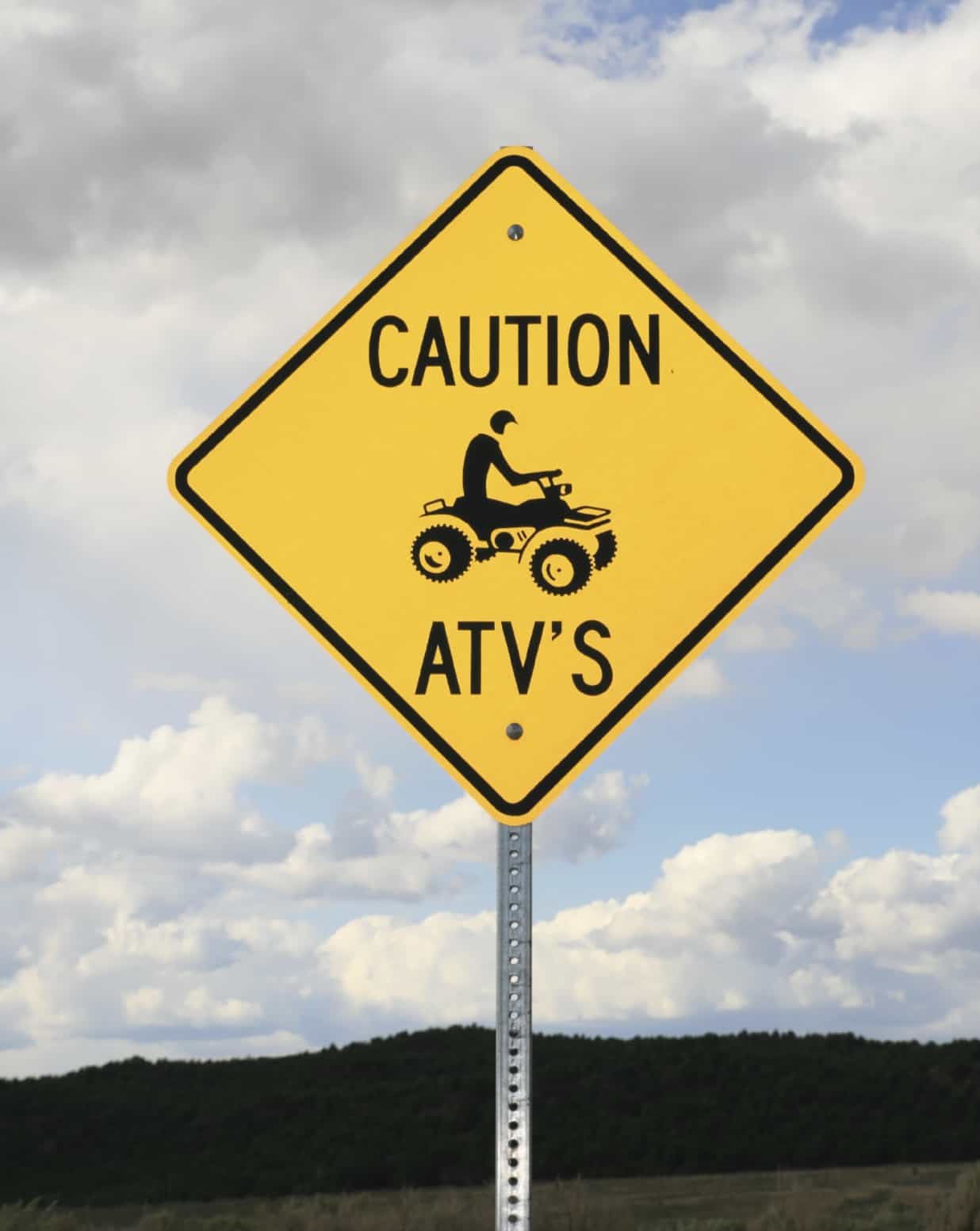
caution ATV signThe Victorian Government’s rebate scheme is administered through WorkSafe who provides a Frequently Asked Questions which is simple and clear.  The dates of activity are listed and, primarily, proof of purchase is the main document for eligibility. Victorian farmers can obtain a rebate for:

“$1200 for the purchase of an alternate vehicle such as a side-by-side vehicle (SSV) or a small utility vehicle (SUV). The alternate vehicle must be designed for use in agriculture and at point of sale have rollover protection and a fitted seatbelt. Sport vehicles and small commercial vehicles, such as utes, are excluded.

Up to $600 for the purchase of up to two operator protection devices (OPD). The OPD must have been designed and manufactured in accordance with approved engineering standards and independently tested to be eligible for the rebate. There are currently two OPD devices that meet this criteria and are eligible for the rebate. They are the Quadbar™ and the ATV Lifeguard.”

The NSW process is funded by SafeWork NSW with a complex set of terms and conditions.  The purchase options seem narrower but the major difference in the two rebates schemes is New South Wales’ insistence that farmers must attend an “educative interaction”.  According to a SafeWork NSW FAQ farmers are required to:

  • “get along to a Farm Safety Day run by SafeWork NSW or one of its program partners
  • visit the SafeWork NSW stand at an Agricultural Field Days
  • request a free on-farm Workplace Advisory Visit and we will come to you
  • attend one of the 100 training events being offered by Tocal College.”

SafetyAtWorkBlog has been told that farmers find this to be condescending and are suspicious of SafeWork NSW’s intentions, particularly in relation to the “free on-farm Workplace Advisory Visit”. Such visits are likely to be SafeWork NSW’s preferred option as there are only a limited number of Field Days available every year. WorkSafe Victoria does not insist on educative interactions as part of the rebate scheme which increases NSW framers’ suspicions.

The Federal Chamber of Automotive Industries (FCAI) recently released a new video to support its claims that Operator Protection Devices (OPD) or Crush Protection Devices (CPD) “are not the answer“.  The FCAI has been out of step with the issue of quad bike safety for many years and it is difficult to sympathise with its position when governments are “endorsing” OPDs through rebate schemes.

The FCAI’s position seems to be shortsighted as the rebates are encouraging farmers to apply a Gordian Knot solution to the bickering over quad bike safety.   Both the NSW and Victorian rebate schemes encourage farmers to purchase side-by-side vehicles (SSV) which, due to the framework over the driver, have no need for the OPDs on offer.  SSVs are more expensive than quadbikes but can be seen as endorsed safer options by the regulators of safety in each of the States.

Having dug in to a contrary position of additional safety measures on quad bikes, the FCAI is getting more out of step with the regulators’ positions and the safe desires of farmers and farming families.  But perhaps criticising the FCAI is unfair, after all, it is a body representing the interests of automotive manufacturers.  Generations have grown up equating motor vehicle manufacturing with safety, ever since “Unsafe at Any Speed” was published in the 1960s, but the FCAI seems different.  It has its own definition of workplace safety that is not in step with government or safety regulators.

Farmers, like all business operators, need to decide for themselves who they trust more for their own safety – regulators or salespeople.

Kevin Jones


Podcast tackles Safety Culture

Cabbage Salad BannerThe latest episode of the Cabbage Salad and Safety podcast is now available and includes a discussion on the perennial occupational health and safety (OHS) debate over Safety Culture.

Siobhan Flores-Walsh and I discuss the role of safety culture and its influence on contemporary safety management.  The definition is fluffy and this is part of the challenge in improving a company’s safety culture.  I think the podcast episode is a useful primer on the issue to those who are just making contact with the concept and of interest to those of us who are already dealing with safety culture and people’s expectations for it.

Cabbage Salad and Safety podcasts are changing all the time and we read all the feedback and comments that listeners have emailed in. Please have a listen and email me your thoughts for future episodes or please comment below if you prefer.


Kevin Jones

NSW Gov’t announces first quad bike safety rebate program

On 10 June 2016, the New South Wales Minister for Innovation and Better Regulation Victor Dominello announced a $A2 million rebate program to improve safety associated with the use of quad bikes on farms.  According the media release (curiously released late on the eve of a national long weekend):

“The NSW Government will be offering rebates of up to $500 towards the purchase of compliant helmets, Operator Protective Devices, the purchase of a safer vehicle, such as a side-by-side vehicle, and undertaking training courses tailored to farmers.”

The rebate package seems to tick all the safety boxes and should make a difference. Continue reading “NSW Gov’t announces first quad bike safety rebate program”

Miserable failures in OHS of labour hire workers

Two recent occupational health and safety (OHS) prosecutions in South Australia related to labour hire employees and providers indicate changes in enforcement approach and clues for change as they illustrate how some people and companies have almost no regard for the safety of its employees.

According to a SafeWorkSA media release dated 28 May 2016 (not available online at the time of writing):

“The Industrial Court convicted Queensland based labour hire company, Fix Force (Qld) Pty Ltd, and imposed a penalty of $150 000 plus court costs.

On 22 October 2012, Mr Clinton Benson, a contracted employee on the South Road Superway project, suffered life threatening injuries when his head was crushed between a lifting arm and welding table.

Following investigation by SafeWork SA, Fix Force (Qld) Pty Ltd was charged with offences under the then Occupational Health Safety and Welfare Act 1986 (SA), for failure to ensure its employee was safe from injury and risk to health whist at work, as far as was reasonably practicable.”

Continue reading “Miserable failures in OHS of labour hire workers”

OHS consultant guilty of impersonating a SafeWork SA inspector

There are several important lessons from a recent conviction of an occupational health and safety consultant (OHS) in South Australia for impersonating a SafeWork SA inspector on multiple occasions.

According to SafeWorkSA’s media release, Sam Narroway has been found guilty of impersonating a SafeWork South Australia Inspector and fined $A15,000.  Presiding Industrial Magistrate Lieschke stated that

“In my view these are serious offences – they involved risk to the community, damage to the credibility of SafeWork SA and to professional work health safety consultants”.

According to LinkedIn and as acknowledged in the Court judgement, Sam Narroway is now the Chief Executive Officer of Australian Workplace Safety Group.  Narroway has described this new company as a successful venture and indications are that he intends to restart his career.

Subscribe to SafetyAtWorkBlog to continue reading.
Subscribe Help
Already a member? Log in here
Concatenate Web Development
© Designed and developed by Concatenate Aust Pty Ltd