Not all suicides have a mental health condition

Most suicide prevention conferences I have attended have been dominated by mental health analyses, strategies and spruikers. The slow change in that dominance began around Professor Allison Milner’s research in 2018 and her questioning of the evidence of a mental health base but stalled with her untimely death a year later. A recent research paper in the American Journal of Preventive Medicine may be the spark to reignite the discussion on suicides that do not have a mental health connection.

Subscribe to SafetyAtWorkBlog to continue reading.
Subscribe Help
Already a member? Log in here

On psychosocial hazards, HR and OHS are getting closer……. slowly

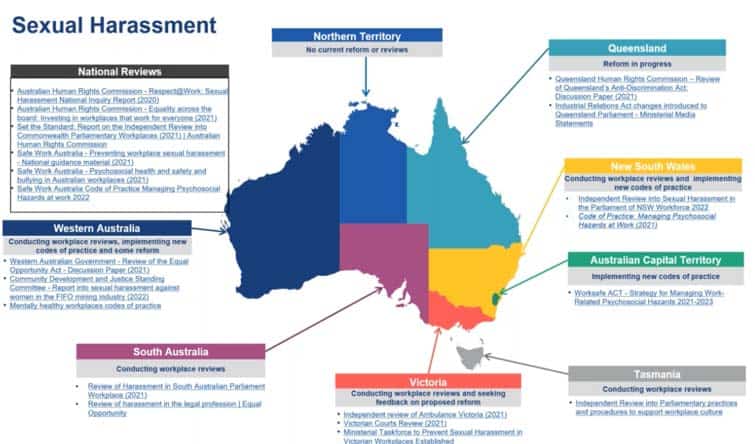
In narrow terms, the occupational health and safety (OHS) profession has largely neglected the management of psychological harm in workplaces. Human Resources (HR) has been the “go-to” on this issue, but various government inquiries have identified major shortcomings in the HR approach. In a recent podcast, Tony Morris of law firm Ashurst interviewed an HR and OHS professional on sexual harassment and psychosocial risks at work.

In response to the question of whether these risks are no being accepted as work health and safety risks, Julia Sutherland responded that this reality has been accepted by OHS regulators but implies that the acceptance has not been to the same extent by employers. She reassures employers who have not been approaching these hazards through OHS laws and guidance that they should not be alarmed as the OHS context has only existed for “a couple of years”.

Subscribe to SafetyAtWorkBlog to continue reading.
Subscribe Help
Already a member? Log in here

Australia’s Wellbeing Budget and Living Standards Framework is on its way

Australia’s new Treasurer, Jim Chalmers, shows an awareness of the importance of good mental health in Australia’s citizens and workers but his strategy, which remains in its infancy, has some problems.

In one of Chalmers’ first interviews after the Australian Labor Party won power last month, he was asked about the Budget he will be releasing in October 2022 (the same month as National Safe Work Month!):

Subscribe to SafetyAtWorkBlog to continue reading.
Subscribe Help
Already a member? Log in here

Research shows the danger of overconnection

Many companies are starting to settle into hybrid working arrangements where workers are in the office for part of their time and at home for others. The occupational health and safety (OHS) impacts are still being discovered and refined. The flexibility of these hybrid arrangements is both good and bad, as identified recently by the European Foundation for the Improvement of Living and Working Conditions (Eurofound) in its analysis of the Right-To-Disconnect.

This could/should become a significant consideration when complying with Australia’s OHS regulations for psychologically safe workplaces currently under development.

Eurofound’s Executive Summary states:

“Digital technologies have made it possible for many workers to carry out their work at any time and anywhere, with consequent advantages and disadvantages. Potential advantages include greater autonomy, better work–life balance, improved productivity and environmental benefits. However, the constant connection enabled by information and communications technology (ICT)-based mobile devices can pose risks to health and well-being, as well as causing work–life balance conflict linked to longer working hours and the blurring of boundaries between work and private life.”

Subscribe to SafetyAtWorkBlog to continue reading.
Subscribe Help
Already a member? Log in here

The new approach to mental health at work may need a new profession

Managing psychologically healthy and safe workplaces makes me extremely nervous. I don’t think that anyone in Australia is suitably qualified to meet the new occupational health and safety (OHS) regulations and expectations imposed by OHS regulators in response to community demands and needs. Perhaps we need a new category of professional.

Continue reading “The new approach to mental health at work may need a new profession”

Prohibition on Administrative Controls for psychological health at work

The Australian Institute of Health and Safety (AIHS) and Herbert Smith Freehills (HSF) annual breakfast physically returned this month after a few years of enforced absence. It kept its traditional structure – speeches from the local OHS regulator WorkSafe Victoria, representatives from HSF and AIHS and a summary of a salary survey report focused on occupational health and safety (OHS) professionals. The presentation that made the expense worthwhile came from one of HSF’s Regional Heads of Practice, Steve Bell, concerning new regulations for psychologically healthy workplaces.

Subscribe to SafetyAtWorkBlog to continue reading.
Subscribe Help
Already a member? Log in here

Assessing the best places to work

On April 27 2022, a leading Australian business newspaper, the Australian Financial Review (AFR), included a supplement called the “Best Places to Work” (paywalled). I purchased a hard copy (yes, they are still available) to look for occupational health and safety (OHS) mentions.

“Best” is hard to define. It could mean safest, it could mean best paid, it could mean friendliest. Because the supplementary allocates awards for the best places to work, the judging consultants, Inventium, included its criteria. You can already guess some of the focus of the awards as Inventium is described as “Australia’s leading behavioural science consultancy”. The assessment of the applicants involves:

Subscribe to SafetyAtWorkBlog to continue reading.
Subscribe Help
Already a member? Log in here
Concatenate Web Development
© Designed and developed by Concatenate Aust Pty Ltd