
Jim Chalmers has completed his first week of Australia’s Parliament as Treasurer. On Thursday, he presented a statement of the country’s finances without mentioning his well-being intentions (which some are claiming to be a gimmick). This does not mean that well-being is dead, as the “Wellbeing Budget” is not due until October; Chalmers needs to establish his authority, but it illustrates a common perspective on occupational health and safety (OHS) in the minds of many small business people.
Category: stress
Psychological regulations and control
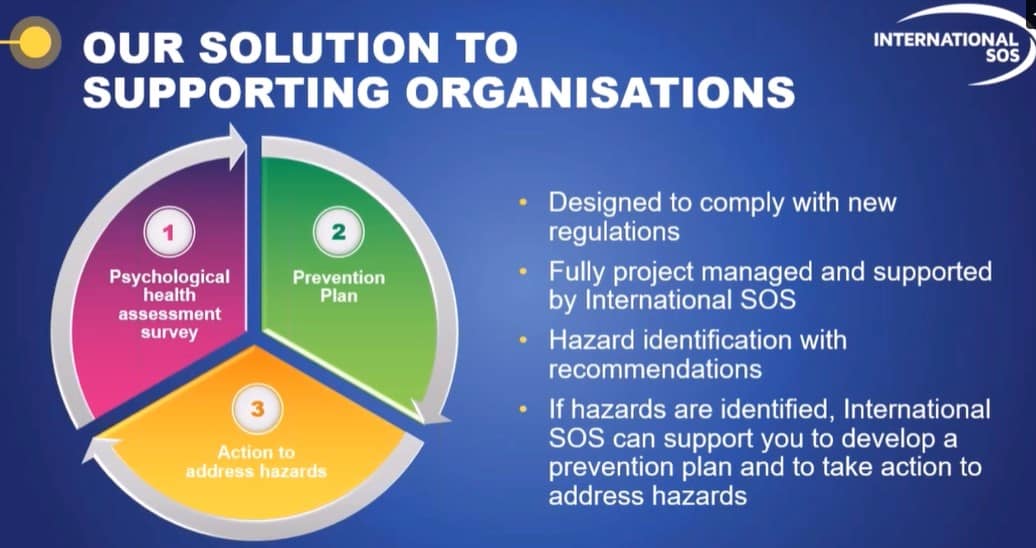
Recently International SOS conducted a webinar on workplace psychosocial hazards and controls. Parts of it were clearly marketing and promotional, but some of the speaker’s content was fascinating and useful.
The seminar’s structure was good because it included a global perspective and a local Australian. The speaker from a worldwide standpoint, Dr Rachel Lewis, used financial figures to illustrate the seriousness of workplace mental health risks. These involved annual costs to employers, costs of workplace stress and other figures in the billions. This approach encourages a misunderstanding of the audience for workplace mental health seminars and the occupational health and safety (OHS) approach to the hazard.
What’s not worked on workplace mental health
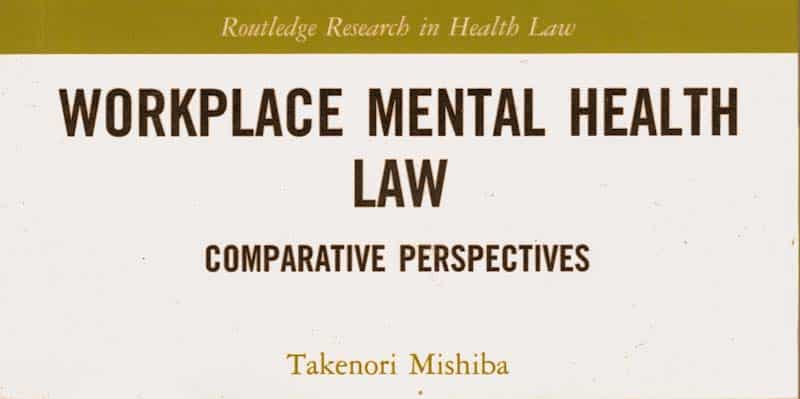
We need to seek alternative perspectives to better understand ourselves and our place in the world. In 2020,Takenori Mishiba wrote about comparative perspectives of workplace mental health laws. The book has been published in a more affordable paperback edition very recently. The attraction of this book is that Australia was not part of Mishiba’s research.
On the first page, Mishiba states that:
“…there is currently no precise legal definition of mental health.”
This alone should generate great concern in the occupational health and safety (OHS) discipline.

Possible Treasury and Industrial Relations white papers before the Job Summit and October Budget
So what level and type of well-being budget did Dr Jim Chalmers commit his government to? A lot less than we anticipated last week. Dr Chalmers gave a nod to the work of his New Zealand counterpart but seems to be waiting for further discussion in the “jobs summit” in September 2022.
Michelle Grattan has written that:
“A coming test for consensus will be the September jobs summit. This will be an ideas-gathering exercise, but the government will also want to shape it as a prelude to the October budget, and that will require some common messages.”
Regardless of Dr Chalmers’ intention to develop a well-being budget, the jobs summit will have the same tripartite of industrial relations and occupational health and safety (OHS) invitees. Unless Dr Chalmers and Treasury offer up something fresh, like an OHS perspective on the prevention of mental health, innovation is unlikely. Little more than “in-principle” agreements should be anticipated.

Sunlight on “an atmosphere of fear’
The Queensland Government and Premier Annastacia Palaszczuk have been under heavy criticism for their workplace cultures and leadership since the release of the Coaldrake report last week – a “review of culture and accountability in the Queensland public sector”.
The report is very critical of the Queensland government’s management of the public service, identifying problems with the overuse of external consultants, issues of unfairness, the lack of transparency and openness, bullying and more. These findings could apply to most of the contemporary public sectors in Australia nationally and locally (as well as most medium- to large-sized companies).

Update on the status of national psychologically healthy workplace regulations
The Australian Chamber of Commerce and Industry’s Jennifer Low appeared on a recent episode of the Psych Health and Safety Podcast and, as a member of the Safe Work Australia (SWA), was able to provide an update on the new psychosocial regulations section, which is to be inserted into the Model Work Health and Safety Laws this year.
‘Enough was Enough’ over a decade ago and the mining industry failed to act then
The recent report on sexual harassment at West Australian mine sites deserves national attention for several reasons. The stories are horrific, partly because many of us thought such stories were in the distant past. The fact that many are recent should shock everyone into action.
The report “Enough is Enough”is highly important, but its newsworthiness seems disputable. Some media have covered the report’s release but the newsworthiness, in my opinion, comes less from this one report but from the number of reports and research on sexual harassment, bullying, abuse, disrespect and more in the mining sector over the last twenty years that have done little to prevent the psychosocial hazards of working in the mining and resources sector and especially through the Fly-in, Fly-Out (FIFO) labour supply process.