
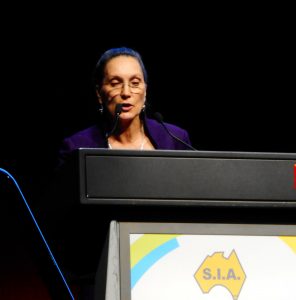
 Peta Miller has worked at Safe Work Australia (SWA) for around 17 years. She leaves there at the end of June. One of her last public appearances for SWA was the National Health and Safety Conference in Melbourne in May 2018 at which she provided an outline of the new work-related psychological injuries guidance that has been signed-off by SWA but not yet released to the public.
This guide is said to be a large one but not one that requires a re-education on safety and psychological terms. There is discussion about applying the risk management Hierarchy of Controls to psychosocial hazard identification, the prevention of psychological harm through the design of good work and the identification of psychological hazards without the need to diagnose a medical condition.
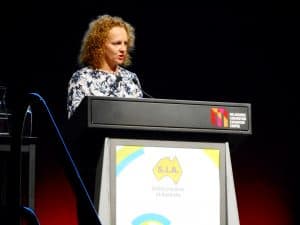 Throwing chocolates to delegates, audience participation, push-ups, book giveaways, hand-eye coordination exercises – not the usual elements of the opening keynote speaker of a safety conference. Day 2 of the Safety Institute of Australia’s
  Dr Rebecca Michalak
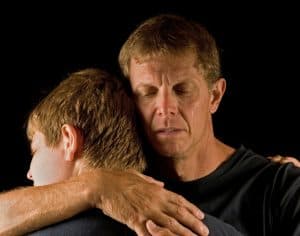 Today the Medical Journal of Australia released a
 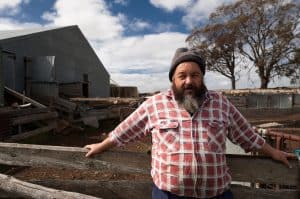 Australia’s occupational health and safety (OHS) agenda seems largely dictated by high risk industries like construction in some States and the mining sector in others. But agriculture is common to all Australia States and is consistently included in the official and unofficial workplace fatality data. New research has been released into serious farm injuries and which voices are the most effective in improving the situation.
 Australia’s occupational health and safety (OHS) profession was late to the process of certifying its members. The