Powerful OHS stories on YouTube

Yossi Berger recently criticized the award-winning “Homecoming” ads of WorkSafe that have been rebroadcast in the US.  Berger said that the awareness raising ads do not contribute to saving lives.

Workplace Health & Safety Queensland has produced a series of survivor stories that, if the wider working community gets to see them, are an enlightening view of the reality of work-related injuries.  The latest film in the series is “Between a rock and a hard place – The Garry Nichols story” and concerns the impact of a tractor roll-over.

The films benefit enormously from the analysis of contributing factors to the incident.   Continue reading “Powerful OHS stories on YouTube”

Of stunning, short-lived cactus flowers and quad bikes

The smoke from the mine:

It has been a frighteningly bad month in the mining industry internationally.  OHS meetings I attended during this period have been hushed as a result of the New Zealand tragedies.  Discussions about OHS have become more pertinent and more accurate – for the time being.  But this, like stunning but short-lived cactus flowers, will quickly disappear.

Because I’ve had close involvement with the Beaconsfield Gold Mine rockfall that killed Larry Knight, and years earlier with the Esso Longford explosions and fires in Victoria, the CrossCity tunnel fatality in Sydney… and many other tragedies or near misses, such events, like a sudden cramp, re-focus my thinking on current issues.  Another OHS failure that we didn’t stop.

Quad bike safety:

One such issue I’ve been involved in for some time has been the quad bike safety issue. The fatality statistics I have on these machines in Australia show that over the last 10 years 13 people (on average) are killed per year.  130 people, most of whom, the industry will have you believe, were ‘mis-users’ of the machines (see below).  The trend is up not down.

I have just resigned from the TransTasman Quad Bike safety committee created by the regulators last year.   The OHS and quad bike interest group in the community may be interested in some of the difficulties I see with the current work on this issue.

The obvious and useless in practice:

I think a much greater degree of transparency and openness – including a high level public conference – ought to take place.  And neither the regulators nor industry will be interested in that; Continue reading “Of stunning, short-lived cactus flowers and quad bikes”

Queensland safety magazine released

The Queensland Division of the Safety Institute of Australia regularly produces a newsletter/magazine of consistent quality and the November 2010 edition is available online.

This edition includes an article by Warwick Pearse on the Montara oil spill.  Pearse did not have the luxury of access to the final reports or government’s response but he makes sound recommendations.

Kevin Jones

Computer simulations of quad bike risks do not reflect reality

Guest contributor David Robertson discusses the  differences between risk simulations and real risk data in relation to quad bike safety:

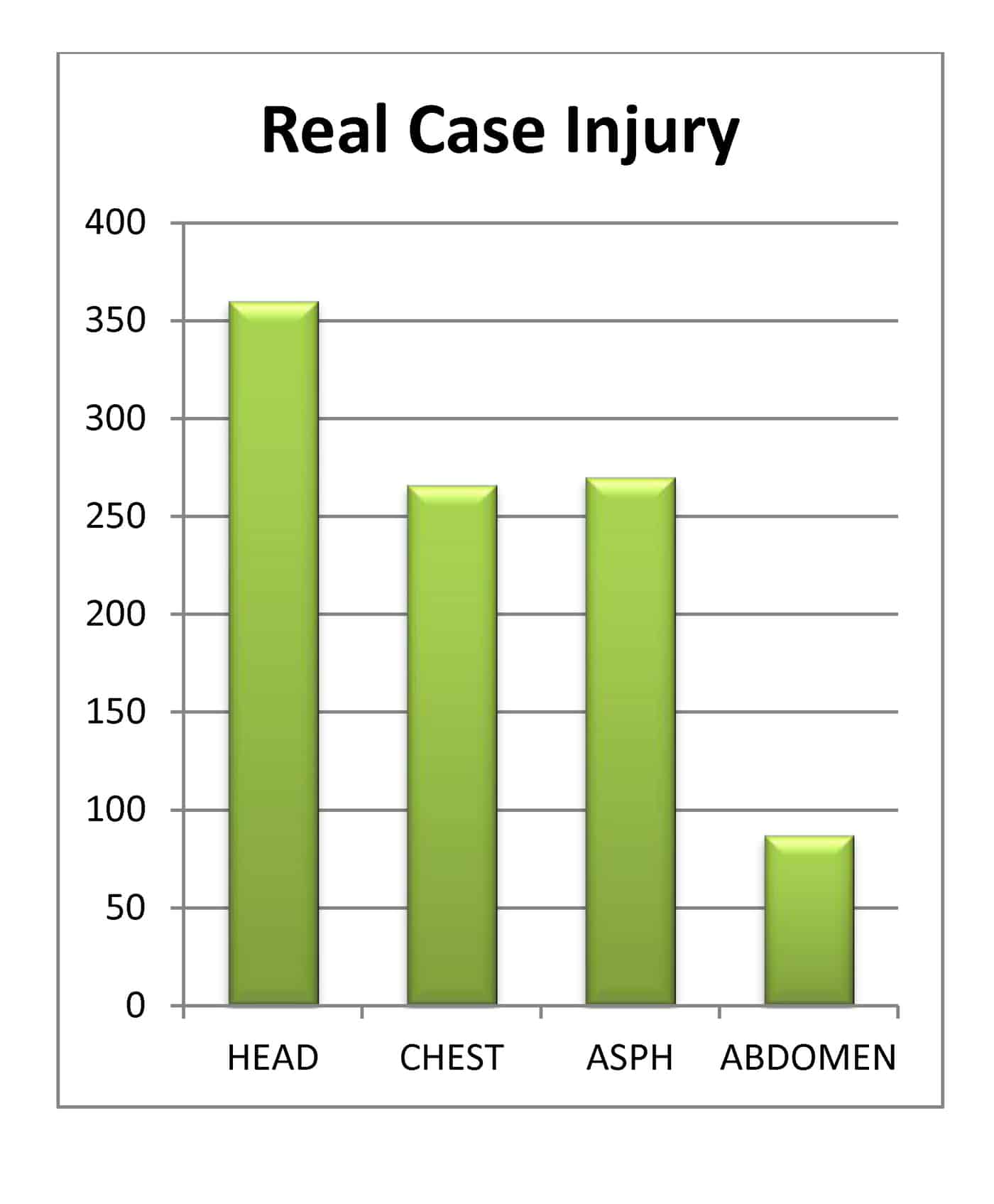
“The motion picture blockbuster “Avatar”, for the time we are in the cinema, would have us believe that Sam Worthington can turn into a giant blue man on a faraway planet.  James Cameron used computers to deliver us this illusion. In science (and particularly with safety) we must be able to distinguish between computers that are valuable tools and computers that don’t represent reality.  Dynamic Research, Inc.(DRI) chose 113 actual quad bike (ATV) accidents to simulate in a computer model.

The first table below shows the injuries DRI record as what really happened from all the 113 cases, but represented as approximate normalized injury cost (ANIC)*.   When DRI’s computer runs the same cases, one would expect a similar result.  The results are shown in the second table (ANIC), note the scale on the left has had to be changed (table 2 should be about 10 times taller if the same scale in table 1 was used) because head injuries rose from 360 points to well over 3000. Equally astonishingly is that abdomen injuries have vanished altogether and chest injuries dropped from 266 to a next to nothing (23). Asphyxiation was not even included in the computer model. Continue reading “Computer simulations of quad bike risks do not reflect reality”

Radio National OHS program

On 21 September 2010, Radio Australia’s regular program Australia Talks conducted a live interview concerning occupational safety and health.

For those who have been listening to the show for some time would have been surprised that the program covered much of the same old OHS ground.  Similar statistics, similar questions of what are the most dangerous occupations, similar assumptions and the same misunderstanding that discussions about OHS law are the same as discussions on safety management. Continue reading “Radio National OHS program”

UK case exposes the hypocrisy of leadership commitment

Most safety professionals can tell stories about how workplace injuries are hidden so that bonuses or rewards are still distributed even though they are not warranted.  Most of these examples are at the shop-floor level where rewards, although much anticipated, are minor – first aid kits, movie tickets, sometimes money – and where peer pressure can be quite overpowering.  But occasionally a situation is revealed where senior executives also rort the system in order to obtain a reward or a bonus.  In September 2010, the UK union Unite has revealed just such a case in Network Rail, a case where the chairman has acknowledged that greed played a role. Continue reading “UK case exposes the hypocrisy of leadership commitment”

Confusion over bullying and sexual discrimination on display in air traffic controller media reports

The Australian media is providing considerable coverage to the legal claim by two female workers against Airservices Australia over bullying and sexual discrimination.  Airservices Australia is a government organisation that control aircraft movement over Australian airspace.

The details of the harassment mentioned in the media are quite offensive and have no place in the modern workplace.

There are a couple of OHS related issues that pertain to the legal action and the media articles.  Firstly, the media struggles to differentiate between sexual discrimination, sexual harassment and workplace bullying.  Bullying has the most direct relationship to occupational health and safety but the others generate stress in the workplace and therefore the impacts, if not the actions, fall within the OHS purview.  The Australian Financial Review (AFR) (page 7, not available online) has a headline “Flight controllers sue for sexual discrimination” yet the article reports on bullying.   Continue reading “Confusion over bullying and sexual discrimination on display in air traffic controller media reports”

Concatenate Web Development
© Designed and developed by Concatenate Aust Pty Ltd